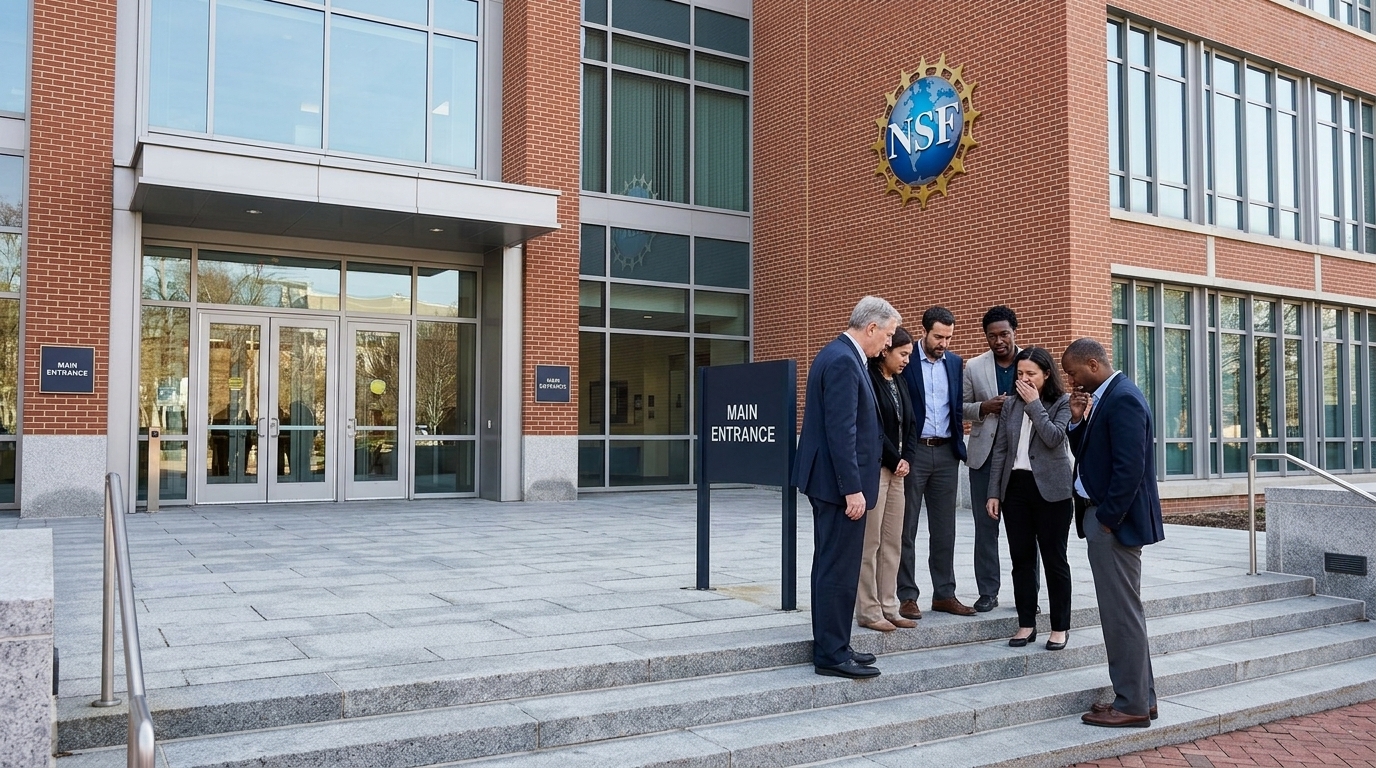
The news hit the scientific community like a shockwave. According to multiple sources and reporting by The Verge, the Trump administration has moved to summarily dismiss every member of the National Science Board (NSB). This action is unprecedented in the history of the National Science Foundation (NSF), the agency that has served as the backbone of basic scientific research in the United States for over seven decades.
The NSB consists of 24 distinguished scientists and academics, appointed by the President for staggered six-year terms. Their role is twofold: they serve as the governing body of the NSF and act as independent advisors to both the President and Congress on matters of science and engineering. The decision to fire the entire board represents a radical departure from established norms of scientific autonomy and raises profound questions about the future of American innovation.
The 'Scorched Earth' Strategy in Federal Science
This move cannot be viewed in isolation. It is part of a broader administration strategy to restructure the federal government and purge officials perceived as part of the 'establishment.' However, in the case of the NSB, the implications are particularly dire. The Board was historically designed with staggered terms specifically to ensure that no single President could replace the entire body at once, thereby preserving institutional memory and non-partisan integrity. By shattering this norm, the administration is sending a clear signal: scientific expertise must align with political will.
The impact on the National Science Foundation is already being felt. The NSF, which manages a multi-billion dollar budget for research ranging from climate science to quantum computing, is already in a precarious state. Funding has dropped to historically low levels, and major research initiatives are facing significant delays. Without a functioning Board to approve strategic directions and major expenditures, the agency risks falling into a state of paralysis.
Political Pressure and Research Priorities
Analysts suggest that the administration intends to pivot NSF resources away from fields such as sociology, climate science, and sustainability studies, focusing instead on technologies with immediate military or commercial applications. 'Science for the sake of science' appears to be losing its place on the White House agenda. 'This is an attempt to turn basic research into a tool of industrial policy,' commented a senior member of the scientific community who requested anonymity.
Furthermore, the mass dismissal creates a leadership vacuum at a critical moment in global competition. With China investing billions in research and development, weakening the primary funding arm of the U.S. could have long-term consequences for the nation's technological edge. The scientific community warns that trust in the peer-review process—the cornerstone of the NSF—could be undermined if funding decisions begin to be made based on political criteria rather than merit.
The Aftermath: Reactions and Legal Challenges
Reaction from Congress is expected to be swift and fierce, although the legal grounds for challenging the President's decision are complex. While the President has the authority to appoint members, the mass dismissal before the expiration of their terms could be interpreted as an abuse of power or a violation of the NSF's statutory framework. Already, scientific associations and academic institutions are drafting joint statements of condemnation, calling it a 'dark day for American science.'
In an era where humanity faces challenges such as pandemic preparedness, artificial intelligence, and the energy transition, removing top minds from the decision-making process seems like a self-inflicted wound. The remaining question is who will replace these scientists. If the new appointments are based solely on political loyalty rather than scientific excellence, the National Science Foundation could transform from a beacon of knowledge into a mere bureaucratic extension of the executive branch.
In conclusion, the firing of the National Science Board is more than just an administrative change. It is a statement of intent regarding the role of truth and evidence-based knowledge in public life. History has shown that when science is subordinated to ideology, the cost to society is always high.