As we navigate the digital landscape of April 2026, a new term has cemented itself in our vocabulary: 'AI slop.' Much like the 'pink slime' of the industrial food industry, AI slop refers to the low-quality, mass-produced synthetic content that is increasingly clogging the arteries of the internet. From nonsensical SEO-driven articles to distorted AI imagery filling social media feeds, the phenomenon represents a significant challenge to the integrity of our information ecosystem. A recent analysis by the Deccan Herald highlights a critical pivot point: the quality of AI output is not a given, but a direct reflection of human prompting and, more importantly, human judgment.
The rise of slop is an inevitable byproduct of the 'efficiency at all costs' mindset. When Large Language Models (LLMs) are deployed to generate content without rigorous oversight, they default to statistical averages. They produce what is probable, not what is true, insightful, or creative. This leads to a degradation of the digital commons, where finding genuine human connection or verified facts becomes an exercise in frustration.
The Mechanics of Mediocrity
AI slop thrives on the path of least resistance. It is generated by users—or bots—who provide vague, low-effort prompts and publish the results without a second thought. The ethical implications are staggering. We are witnessing the industrialization of misinformation and mediocrity. When the internet is flooded with 'filler' content designed only to capture attention for a fraction of a second, the value of deep work and expertise is systematically undermined.
However, as the Deccan Herald points out, the tool itself is neutral. The distinction between a high-quality AI-assisted essay and a piece of slop lies in the human input. Prompt engineering has evolved from a niche hobby into a vital editorial skill. It requires clarity of thought, a deep understanding of the subject matter, and the ability to iterate. A sophisticated prompt acts as a set of guardrails, forcing the AI to move beyond its generic training data and produce something of substance.
The Ethical Imperative of Human Oversight
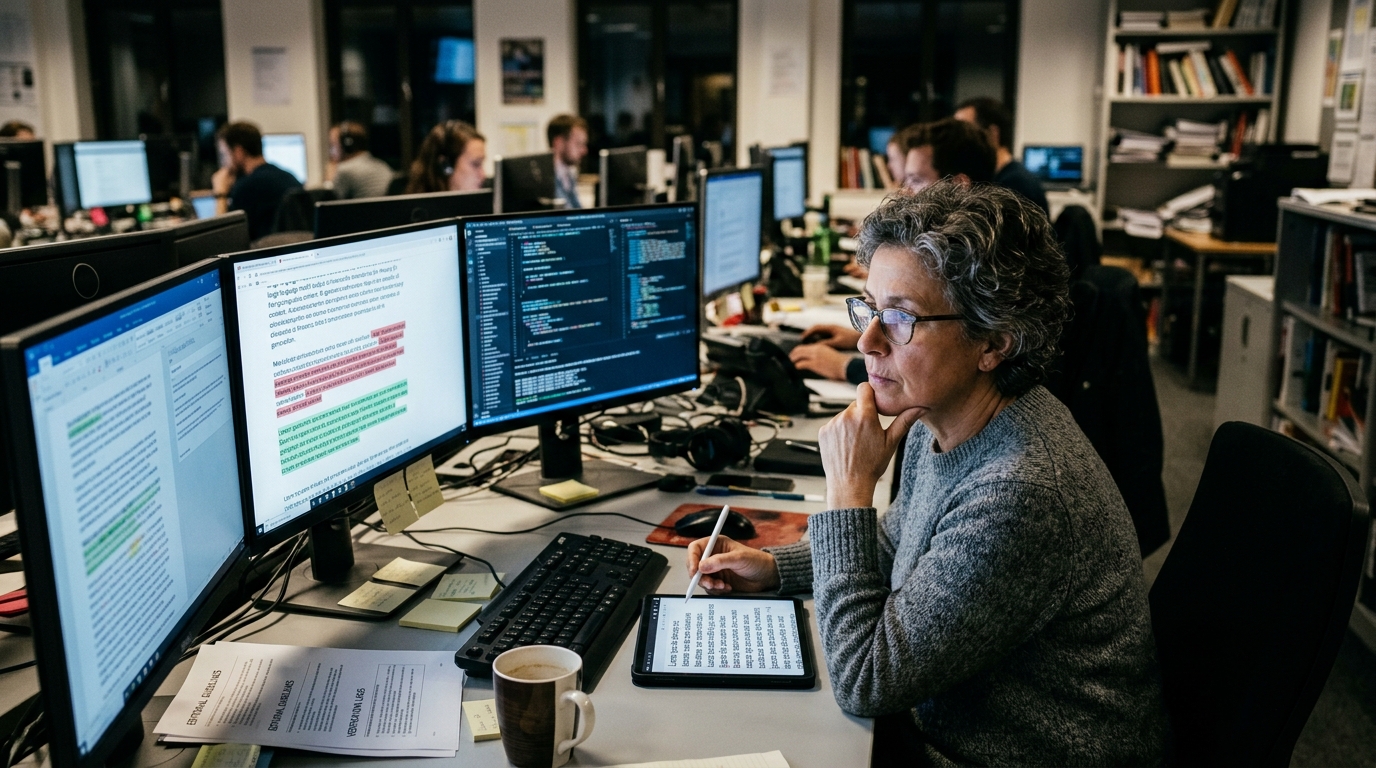
In the age of synthetic abundance, human judgment has become the ultimate scarcity. This is the 'human-in-the-loop' necessity. Ethically, we cannot outsource our critical thinking to algorithms. The responsibility for the 'truthfulness' and 'utility' of an output remains firmly with the human who hits 'publish.' This involves more than just checking for facts; it involves assessing tone, cultural sensitivity, and ethical alignment.
- Contextual Integrity: AI lacks the lived experience to understand the weight of certain words or the nuance of local cultures.
- Bias Mitigation: Without human intervention, AI often amplifies systemic biases found in its training data.
- Environmental Cost: Generating slop is not just a social nuisance; it is an ecological waste, consuming vast amounts of electricity for zero societal gain.
The 'Dead Internet Theory'—the idea that the web is increasingly populated by bots communicating with other bots—is no longer a fringe conspiracy but a looming reality. To combat this, we must re-evaluate our relationship with these tools. We must move from being passive consumers of AI output to being active, critical curators.
Reclaiming the Digital Commons
The fight against AI slop requires a multi-pronged approach. First, technological platforms must improve their detection and de-prioritization of low-effort synthetic content. Second, and more importantly, we need a cultural shift. We must value quality over quantity and transparency over speed. Labeling AI-generated content is a start, but it is not enough. We must demand that AI be used to enhance human capability, not replace human effort with automated banality.
"Artificial Intelligence is a mirror of our intentions. If we use it to bypass the hard work of thinking, it will fill our world with slop. If we use it to challenge our limits, it will usher in a new Renaissance."
Ultimately, the battle against AI slop is a battle for the soul of the internet. It is a reminder that while machines can generate text, only humans can generate meaning. As we move deeper into 2026, the mark of a truly sophisticated creator will not be how much they can produce with AI, but how much slop they have the wisdom to reject.