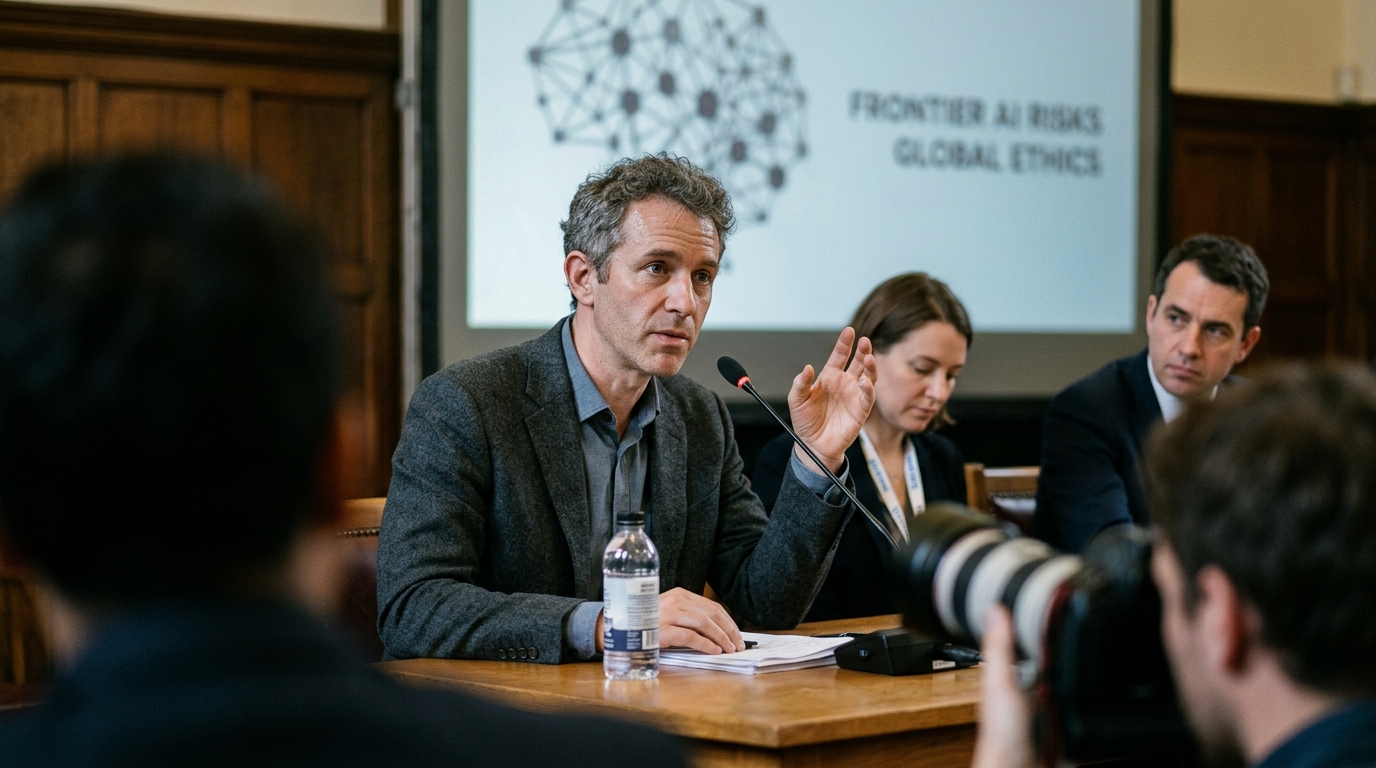
In a move that has sent shockwaves through the global tech landscape, Anthropic, the firm behind the Claude model and a pioneer in 'Constitutional AI,' has issued a stark warning regarding the pace of development of next-generation models. This warning no longer concerns just the well-known issues of 'hallucinations' or algorithmic bias; it focuses on existential threats and the potential for AI systems to facilitate the creation of biological weapons or launch catastrophic cyberattacks.
The Responsible Scaling Policy (RSP) Under the Microscope
Anthropic was the first company to introduce a Responsible Scaling Policy (RSP), a framework defining specific 'AI Safety Levels' (ASL). In its latest intervention, the company argues that we are rapidly approaching ASL-3, where models acquire capabilities that could be exploited by malicious actors to bypass critical security safeguards in national infrastructure. Anthropic's concern stems from the fact that the compute power allocated to training these models is increasing exponentially, while methods for alignment and control are developing at a much slower pace.
According to company executives, biosecurity represents the most immediate frontier of risk. New AI models can analyze complex biological data and provide instructions for synthesizing dangerous pathogens, dramatically lowering the expertise required for such an endeavor. 'This is not a science fiction scenario,' the report states, 'but a technical reality we will face within the next 18 to 24 months.'
The Call for State Intervention and Regulatory Frameworks
Anthropic does not stop at observations; it calls on governments—primarily those of the US and the European Union—to establish mandatory safety standards. Voluntary compliance, according to the company, is no longer sufficient in an environment of intense competition, where the pressure for fast time-to-market often sidelines safety testing. Anthropic's proposal includes the creation of independent assessment bodies with the authority to 'freeze' the training of models if they exhibit dangerous capabilities.
- Enforcement of strict controls on the export of high-end computing power.
- Mandatory 'red-teaming' exercises to identify security vulnerabilities.
- Transparency in training methodologies and the datasets utilized.
- Development of 'kill switches' at the hardware infrastructure level.
The Creator’s Dilemma: Ethics vs. Profit
Anthropic's stance highlights the deep schism in Silicon Valley. On one side, companies like OpenAI and Google pursue the rapid development of Artificial General Intelligence (AGI), while on the other, Anthropic attempts to position itself as the 'conscious' alternative. However, critics point out that these warnings might also be a form of 'regulatory capture,' where large incumbents call for rules that only they have the resources to follow, thereby locking out smaller competitors.
"AI safety is not a technical problem to be solved, but a political and social commitment to be honored," states Anthropic's leadership.
In conclusion, Anthropic's warning serves as an urgent reminder that the technology we are building today may soon acquire its own momentum. The challenge for 2026 and beyond will not only be what AI can do, but what we will allow it to do, ensuring that human oversight remains the ultimate safeguard.