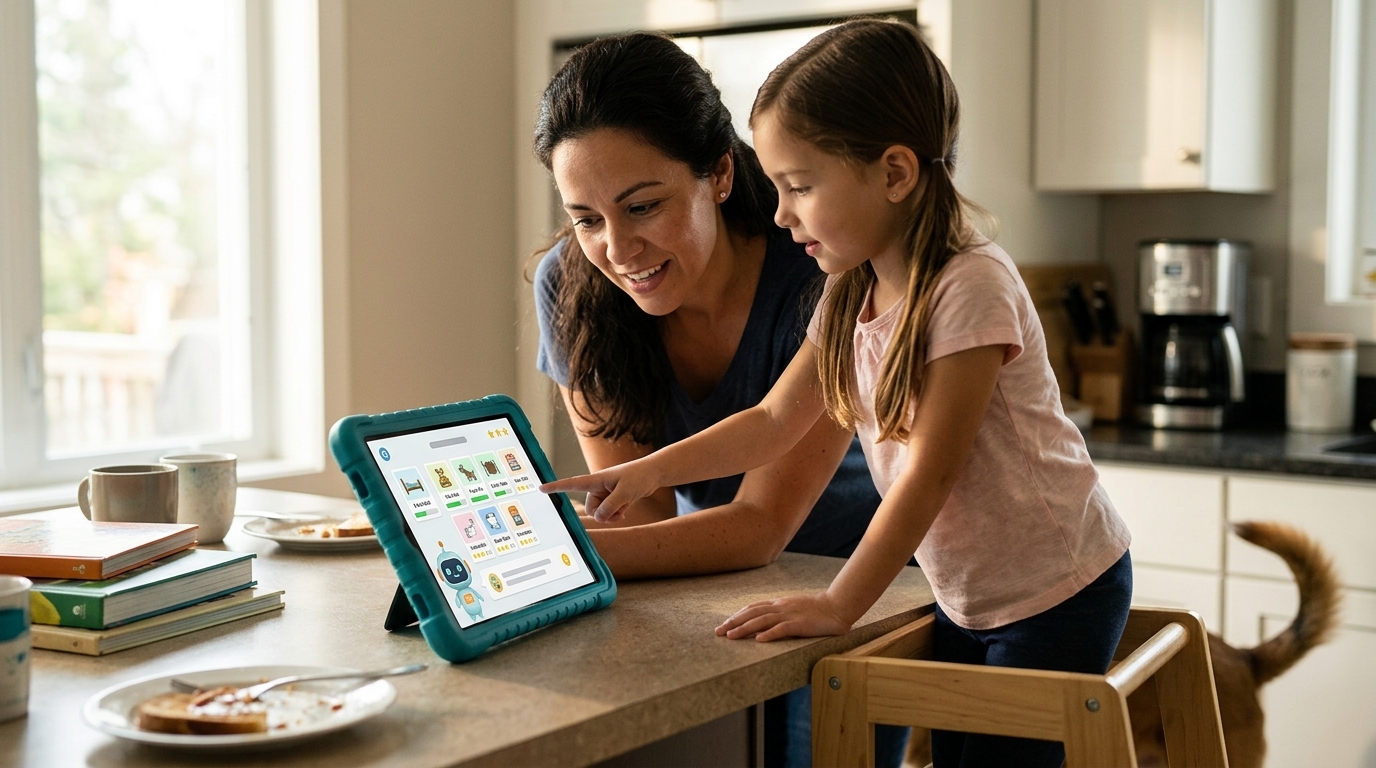
In the modern world, where a child's attention is the most valuable currency, the technology industry is turning to a new, untapped market: the management of childhood routines. The Skylight Buddy, a chunky $139.99 tablet, is not just another screen. It is a digital "assistant" that promises to solve the eternal parental struggle: how to convince children to pick up their toys, brush their teeth, or get ready for school without the constant nagging. However, behind the cute graphics and reward sounds lies a deeper conversation about how technology is reshaping family dynamics and the development of a child's personality.
The Psychology of Positive Reinforcement via Screen
The Skylight Buddy is built on a simple yet powerful psychological principle: positive reinforcement. Instead of repetitive parental reminders, which often escalate into power struggles, the device offers visual and auditory cues that guide the child through their activities. When a child completes a task, they receive immediate digital validation. This "gamification" of chores taps into the brain's reward system, making mundane tasks feel like quests in a video game.
Child development experts point out that for children under six, the concept of time and routine is often abstract. A device that visualizes the schedule—showing, for instance, an icon of a toothbrush and a countdown timer—helps the child understand exactly what is expected. The autonomy a child feels when they "check off" their own tasks is a potent motivator. Yet, the question remains: is the child learning the value of responsibility, or are they simply responding to a digital stimulus to receive a fleeting reward?
The Cost of Organization: Hardware and Subscriptions
Skylight's strategy isn't limited to selling hardware. At nearly $140, the Buddy is a significant investment for a single-use device. The real issue, however, is the "Parenting-as-a-Service" model. To unlock the full potential, such as customizing tasks remotely via an app, an additional subscription is required. This trend of "subscription parenting" reflects a broader shift in the tech economy, where every aspect of our lives is being converted into a recurring fee.
From a technical standpoint, the Buddy is designed to withstand abuse. It is bulky, with a protective casing, and features a simplified interface that prohibits access to the open web or distracting games. This limitation is its greatest strength. Unlike an iPad, which is a source of infinite temptation, the Buddy has a singular mission. This specialization is what makes it effective, but it also raises the question of whether such an expense is justified compared to a traditional magnetic chart on the refrigerator.
From Extrinsic Motivation to Digital Control
The biggest challenge with tools like this is the transition from extrinsic to intrinsic motivation. Pedagogical theory suggests that the goal of parenting is to help a child develop an internal compass of values. If a child picks up their toys only because their tablet showed a happy face, what happens when the tablet isn't there? There is a risk that responsibility becomes a transactional act rather than a social and familial contribution.
Furthermore, using technology to manage behavior may reduce opportunities for meaningful interaction between parent and child. The "negotiations" over household chores, while exhausting, are part of the process of learning boundaries and communication. If we outsource this process to an algorithm, we might be missing the chance to teach children how to manage frustration and cooperation on a human level.
Conclusion: Tool or Substitute?
The Skylight Buddy is undoubtedly a well-designed tool that can offer relief to parents feeling overwhelmed by daily friction. For families with children who struggle with focus or maintaining routines, such devices can be lifesavers. However, they should not be viewed as magic bullets. Technology can support parenting, but it cannot replace it. The challenge for the modern parent is to use these tools as a supplement, ensuring that the heart of upbringing remains human connection, not digital rewards.