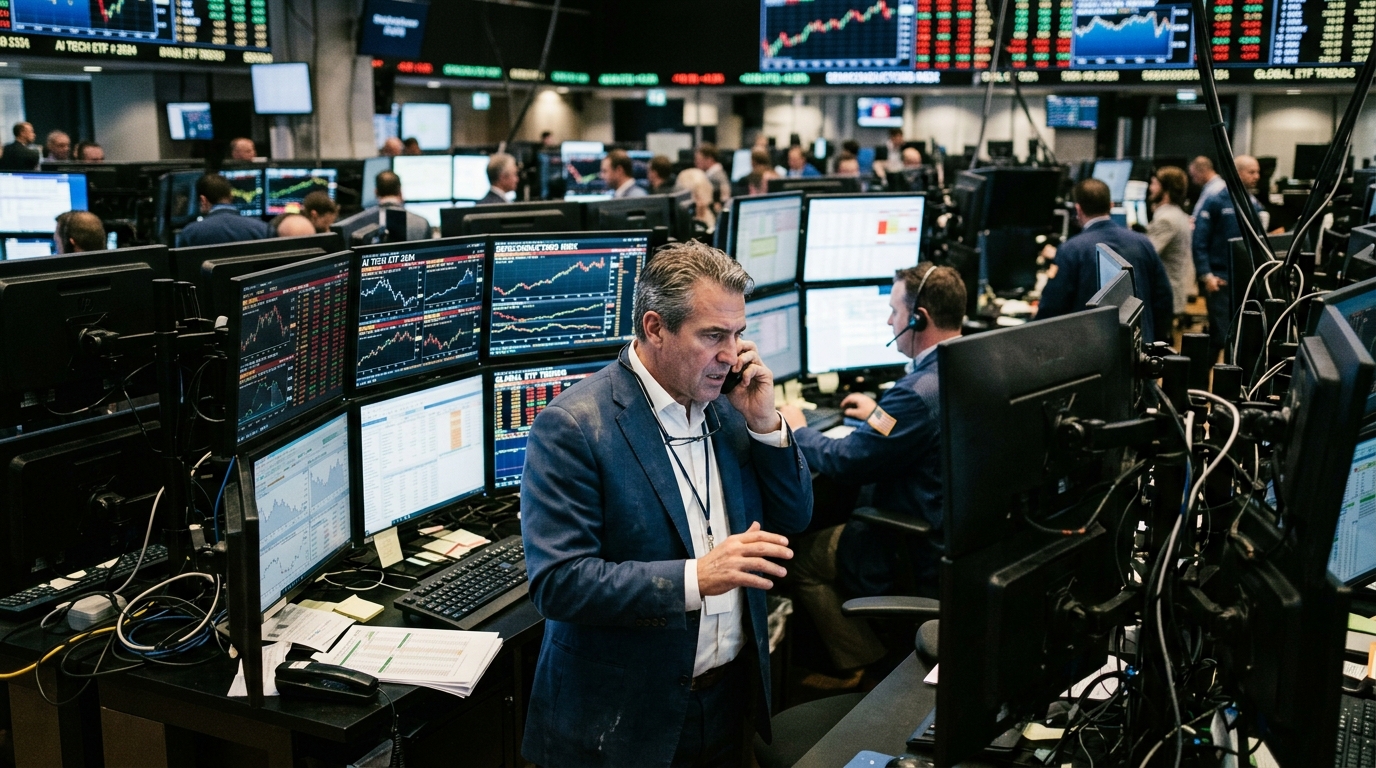
The wealth management industry, a sector traditionally built on personal relationships, trust, and the prestige of grand banking institutions, is facing an unprecedented existential crisis. According to a recent analysis by Bloomberg Tech and the debut of the "Bloomberg Money" series, Artificial Intelligence (AI) is no longer just a support tool for advisors but a direct competitor winning over the public's confidence.
The Collapse of the Monopoly on Expertise
For decades, wealth managers acted as the gatekeepers of financial markets. Access to specialized information and the ability to synthesize complex investment strategies justified high fees, often around 1% of Assets Under Management (AUM). However, the advent of Large Language Models (LLMs) and specialized financial AI has fundamentally shifted the landscape.
Investors, particularly younger generations like Millennials and Gen Z, are discovering that AI can provide real-time analysis, identify tax-loss harvesting opportunities, and suggest diversified portfolios at a fraction of the cost. Bloomberg’s Suzanne Woolley notes that the "trust barrier" has been breached. People are no longer afraid to delegate their financial decisions to an algorithm, viewing it as less biased and more informed than a human advisor who might be influenced by emotions or sales incentives.
Fee Compression and the 1% Model Crisis
One of the most critical points of the current crisis is price pressure. When a subscription to an advanced AI platform costs a few dozen dollars a month, paying tens of thousands of dollars annually to a wealth manager begins to seem irrational to many affluent individuals. AI offers "hyper-personalization at scale," something previously only available to Ultra High Net Worth Individuals.
- Automated Tax Optimization: AI monitors markets 24/7 to minimize tax liabilities instantly.
- Immediate Risk Analysis: Adjusting portfolios in seconds following geopolitical events.
- Cost Reduction: Eliminating intermediaries and expensive bureaucratic processes.
This efficiency is forcing traditional firms like Morgan Stanley and JPMorgan to invest billions in AI integration, attempting to stay ahead of the curve before their clients migrate to purely digital platforms.
The Role of the "Financial Therapist"
What, then, is the future of the human wealth manager? The analysis suggests that the role is shifting from "stock picker" to "financial coach" or "therapist." AI can optimize the numbers, but it struggles to manage human drama: family inheritance disputes, fear during a market crash, or setting life goals that aren't strictly quantitative.
"Technology will take over the technical side of management, forcing humans back to what they do best: empathy and strategic guidance during moments of crisis," the report suggests.
However, this transition won't be easy for everyone. Many advisors who relied on obsolete methods and a lack of transparency will find themselves pushed out of the market. Survival in the industry now requires a hybrid approach, where AI performs the analysis and the human provides the context and moral guidance.
Conclusion: A New Era for Wealth
The existential crisis for wealth managers is a precursor to a broader shift in how society perceives value and expertise. As we move into the latter half of 2026, the line between human and artificial intelligence in finance is becoming increasingly blurred. For the end investor, this means better services and lower costs. For the industry, it means a violent but necessary adaptation to a reality where the algorithm is often more reliable than instinct.