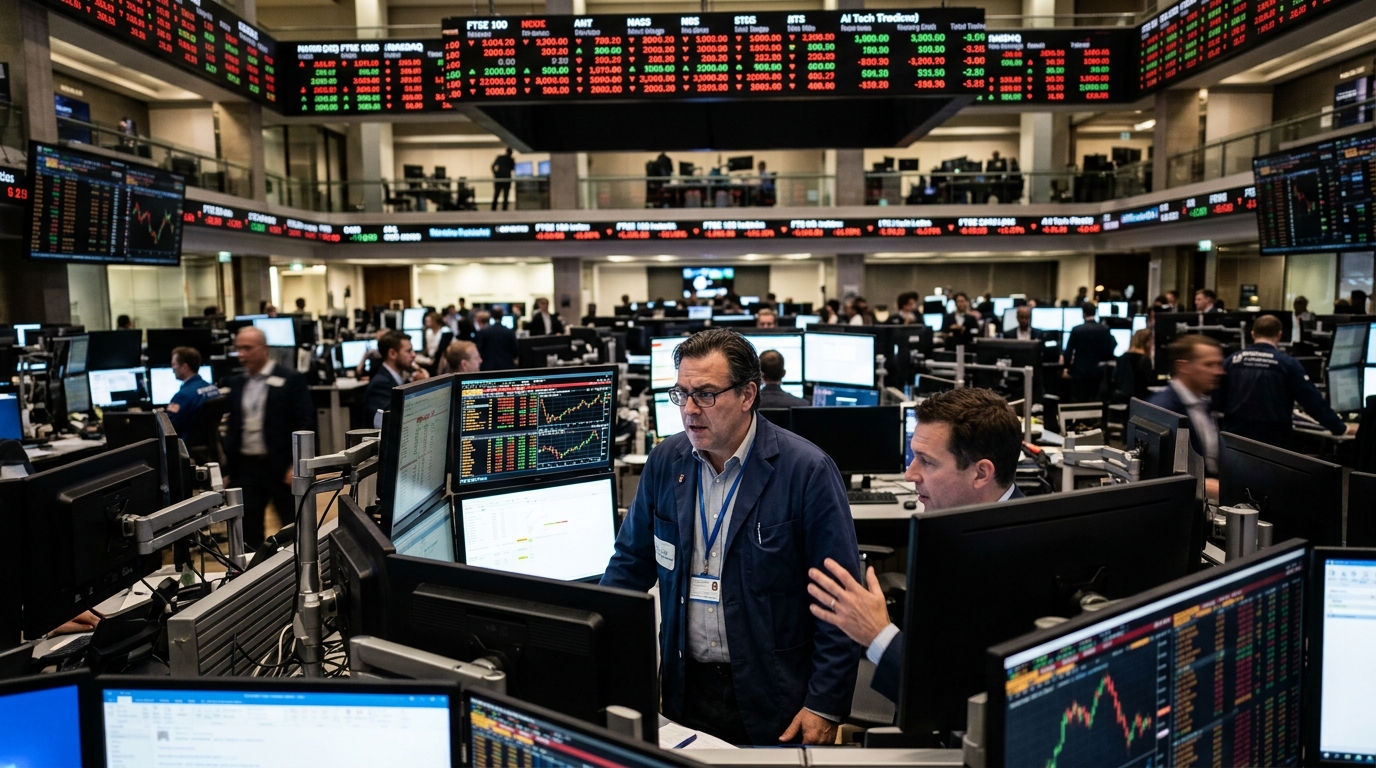
In the current investment landscape of June 2026, Artificial Intelligence has transitioned from a futuristic promise to the foundational bedrock of the global economy. The recent surge of Palantir Technologies (PLTR) to $140 per share has left many investors with a sense of vertigo, highlighting the classic market dilemma: should one chase individual high-fliers or strategically position themselves within the infrastructure? While Palantir has vindicated its bulls through its AIP platform and massive government contracts, its current valuation raises significant questions about future upside and concentration risk.
The Palantir Paradox and the Risk of Individual Stock Picking
Palantir has become the poster child for "applied" AI. However, a price tag of $140 per share implies a price-to-earnings multiple that demands near-flawless execution for the foreseeable future. For the retail investor, entering at these levels carries the distinct risk of buying at the cyclical peak. In contrast, the semiconductor market represents the physical substrate upon which all AI applications are built. From LLMs like ChatGPT-5 to autonomous defense systems and generative biology, none of it functions without the processing power of high-end silicon.
Investing in a specialized AI Chip ETF, such as the VanEck Semiconductor ETF (SMH) or the iShares Semiconductor ETF (SOXX), provides something Palantir cannot: structural diversification. Instead of betting on a single software winner, investors can capture the entire "picks and shovels" ecosystem. This includes giants like Nvidia, TSMC, ASML, and Broadcom—companies that control the vital choke points of global technology production.
Why Semiconductors are the New Oil
The geopolitical reality of 2026 confirms that semiconductor dominance is synonymous with national sovereignty. AI Chip ETFs benefit from massive state subsidies via the U.S. and European Chips Acts, which effectively create a floor for the industry. Furthermore, the demand for specialized ASICs (Application-Specific Integrated Circuits) and high-end GPUs continues to outstrip supply, ensuring sustained high margins for the manufacturers involved.
- Risk Mitigation: An ETF reduces exposure to the volatility of a single management team or a lost government contract.
- Full Value Chain Exposure: Capture gains from design (Nvidia, AMD) to manufacturing (TSMC) and lithography (ASML).
- Automatic Rebalancing: ETFs periodically adjust their holdings, cutting underperformers and doubling down on emerging leaders.
Compared to Palantir, which must constantly convince new enterprise clients of the value of its analytical tools, semiconductor firms often have order books filled years in advance. Compute power has become an inelastic commodity. Whether Palantir remains the dominant AI platform or is eventually unseated by a newcomer, both entities will rely on the same chips to execute their workloads.
Strategic Positioning in 2026: Infrastructure Over Speculation
The history of technological revolutions teaches us that the first sustainable winners are always the infrastructure providers. In the early internet era, it was Cisco and Intel. In the AI era, it is the semiconductor cohort. While Palantir at $140 might seem enticing due to the surrounding hype, fundamental analysis suggests that semiconductor ETFs offer a far superior risk-adjusted return profile.
"Investing in AI without hardware exposure is like trying to build a skyscraper on shifting sands. Chips are the concrete and steel of the modern digital economy."
In conclusion, opting for an ETF over a potentially overextended individual stock is not merely a conservative play; it is a strategic recognition of where value is actually generated. As the market matures, the volatility in software stocks is likely to increase, while the global hunger for silicon remains the most reliable constant of the 21st century.