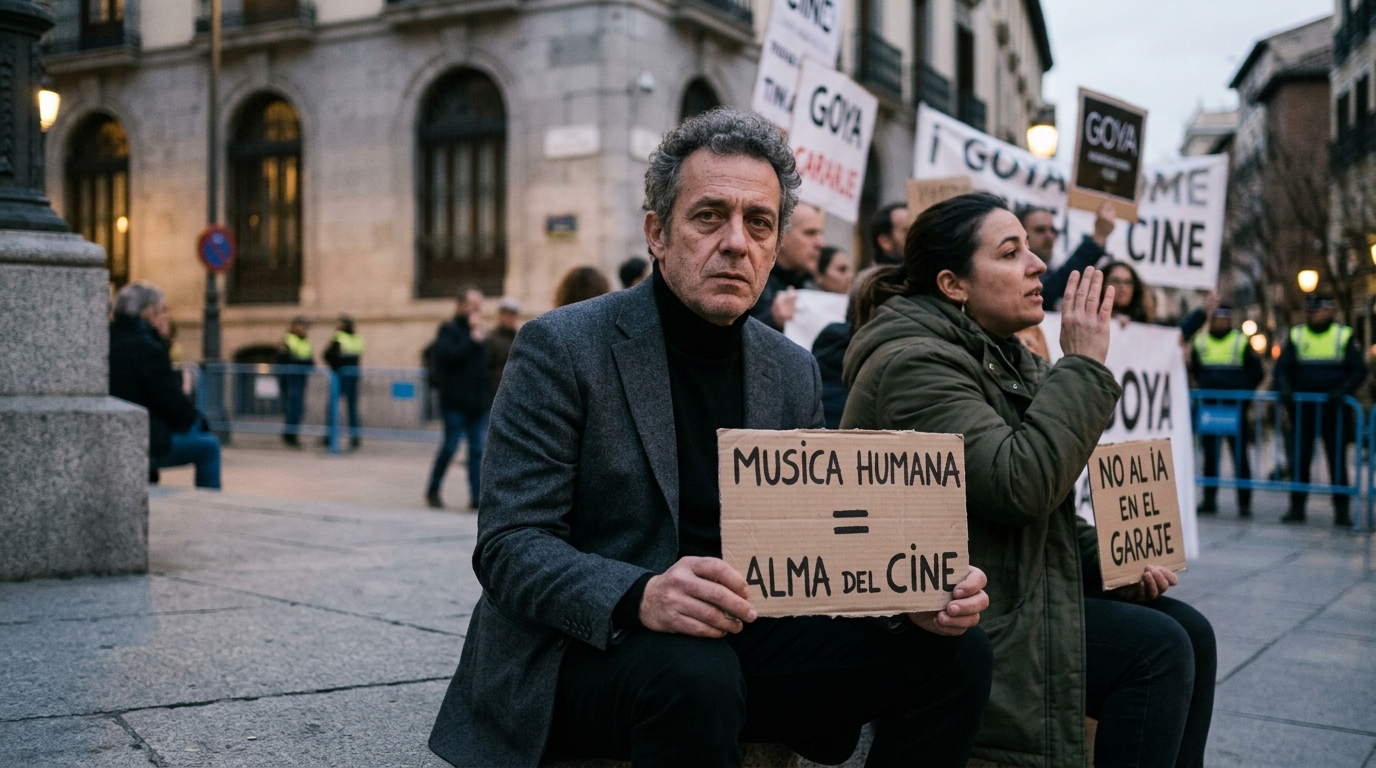
In an era where algorithms are beginning to compose symphonies that evoke genuine chills, the Spanish Academy of Cinematographic Arts and Sciences has decided to draw a definitive line in the sand. The Goya Awards, Spain's equivalent to the Oscars, have officially announced that they are closing the door to Artificial Intelligence (AI) within the music composition categories. This decision is not merely a bureaucratic adjustment to the rulebook; it is a profound cultural statement regarding the value of human experience in art.
The updated regulations explicitly state that for a work to be eligible for Best Original Score or Best Original Song, its creation must be the exclusive product of human intellect. The use of Generative AI as a primary creator is strictly prohibited, bringing back to the forefront the age-old question: can a machine, no matter how sophisticated, understand the despair, love, or hope required by a cinematic scene?
Safeguarding Human Intellectual Property
The Spanish Academy's move comes at a critical juncture for the global entertainment industry. Following the historic strikes by writers and actors in Hollywood in 2023 and 2024, the debate over intellectual property protection has taken on existential proportions. Spanish academics fear that the unchecked use of AI could lead to a 'pulverization' of musical production, where soundtracks are manufactured based on statistical success models rather than artistic vision.
Furthermore, there is the burning issue of copyright. AI models are trained on millions of hours of music created by humans, often without the permission or compensation of the original creators. By allowing AI-generated works to compete for the Goya Awards, the Academy would be indirectly legitimizing a process that many consider 'digital theft.' This decision acts as a shield for Spanish composers, ensuring that state and institutional recognition remains a privilege for those who dedicate their lives to the study of harmony and orchestration.
Tool or Creator? The Fine Line
However, this ban opens a new cycle of debates about where the tool ends and the creator begins. Composers have been using digital means for decades. Sample libraries, synthesizers, and audio editing software are integral parts of modern production. The Academy clarifies that technology can be used as a supportive medium, but the 'creative spark' and final decision-making must belong to the human.
- The music must be original and not based on pre-existing algorithmic templates.
- The composer must be able to demonstrate their creative process.
- The use of AI for 'assistive' tasks (such as noise cleaning) remains acceptable, but not for composing melodies.
This distinction is notoriously difficult to police. As AI tools become embedded in traditional Digital Audio Workstations (DAWs), the line between human choice and algorithmic suggestion becomes increasingly blurred. The Goya juries will soon face the daunting task of auditing the 'purity' of submitted works.
A Global Trend of Resistance
Spain is not alone in this fight. The Grammy Awards in the United States have already adopted similar rules, stating that 'only human creators' can be nominated for an award. The European Union, through the AI Act, is also attempting to enforce transparency on machine-generated works. The Goya move aligns with a broader European spirit that places the human being at the center of cultural production.
"Music in cinema is not just a carpet of sounds; it is the invisible actor that carries emotion where words fail. A machine can imitate sadness, but only a human can feel it and transform it into notes," sources within the Academy suggest.
Ultimately, the Goya decision is an act of faith in human uniqueness. In a world flooded with automated content, the insistence on a human signature becomes the ultimate form of luxury and authenticity. The future of film music in Spain, it seems, will continue to be written with blood, tears, and sweat — rather than code.