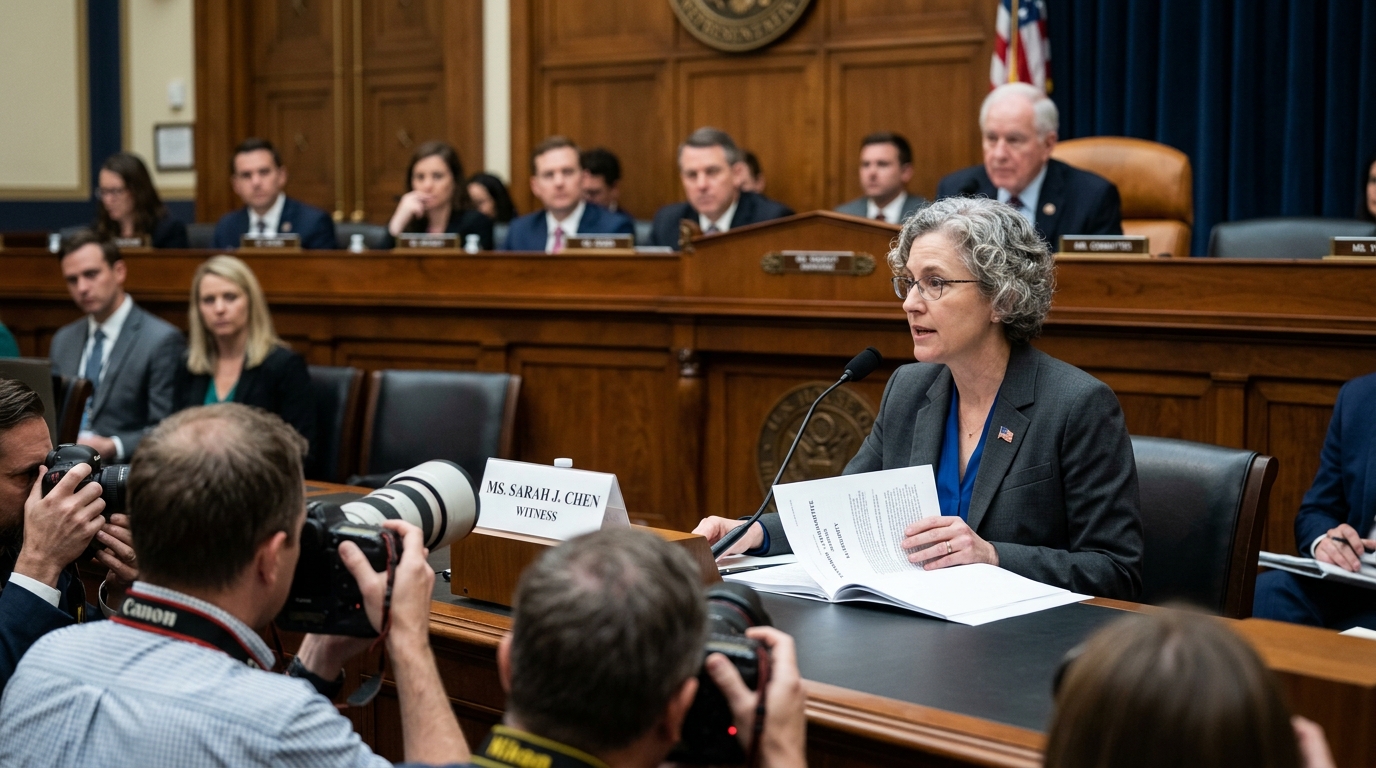
Washington D.C. finds itself once again at the heart of the global technological discourse as the House Subcommittee on Cybersecurity and Infrastructure Protection convened a critical hearing on the security of Artificial Intelligence. As we navigate through 2026, AI is no longer a nascent promise but the central pillar of state functions, financial systems, and energy grids. However, this deep integration brings unprecedented risks that traditional cybersecurity methods are struggling to contain.
The hearing, which gathered leading experts from the private sector, academia, and government agencies like CISA (Cybersecurity and Infrastructure Security Agency), focused on the vulnerability of AI models to sophisticated attacks. The stakes are crystalline: if the AI managing the power grid or air traffic control systems is compromised, the consequences will not be merely digital, but physical and potentially catastrophic.
The Vulnerability of Critical Infrastructure and Data Poisoning
A primary point of contention during the hearing was the concept of "data poisoning" and "prompt injection" attacks at an infrastructure scale. Witnesses testified that adversaries of the United States—both nation-state actors and sophisticated criminal syndicates—are no longer just trying to crack passwords; they are attempting to manipulate the underlying logic of AI systems.
"We are no longer facing just viruses that steal data, but algorithms trained to betray us from within,"stated one expert, emphasizing the gravity of the situation.
The Subcommittee explored how AI can be weaponized to identify vulnerabilities in legacy systems that support water networks and telecommunications. The ability of generative AI to produce exploit code in seconds has shifted the balance of power between attackers and defenders. The discussion quickly pivoted to the necessity of "secure-by-design" principles, a concept CISA has been championing, which demands that tech companies take responsibility for the security of their products before they reach the market.
Geopolitical Chess and the Role of CISA
Beyond the technical minutiae, the hearing carried a heavy geopolitical undertone. Lawmakers expressed bipartisan concerns regarding the progress of China and Russia in integrating AI into their military and intelligence operations. U.S. strategy appears to be shifting from simple innovation to "defensive dominance." CISA, under its newly expanded mandate, is being called upon to act as the orchestrator between Silicon Valley's tech giants and federal agencies.
However, the challenge remains speed. The legislative process moves at a snail's pace compared to the exponential growth of Large Language Models (LLMs). During the hearing, the creation of an "AI Security Testing Center" was proposed, where any model intended for use in public infrastructure would undergo rigorous stress tests. This, of course, raises questions about government intervention in the free market and the potential stifling of innovation—a point that Republican committee members were keen to highlight.
The Future of Regulatory Compliance
In conclusion, the hearing made it clear that 2026 is the year of "great accountability" for AI. It is no longer enough for a model to be intelligent; it must be impenetrable. Companies developing AI will soon face stricter security incident reporting frameworks, similar to those in the banking sector. Transparency in training data and the explainability of AI decisions are emerging as national security priorities.
Society must understand that security in the age of AI is not a static achievement but a continuous process. As noted during the proceedings, "AI is the weapon, the shield, and the battlefield all at once." This hearing is merely the beginning of a long journey toward fortifying our digital civilization against threats we are only just starting to comprehend.