The history of labor has been defined by major technological shifts, from the steam engine to electricity and the internet. However, the advent of Artificial Intelligence (AI) is not merely another tool in the human arsenal; it represents a "cognitive revolution" that is fundamentally altering the bedrock of our professional existence. Today, in June 2026, the question is no longer whether AI will affect work, but how it will structurally decompose and rebuild it, creating new hierarchies of skills and overturning traditional recruitment paradigms.
The Evolution of Skills: From "What You Know" to "How You Learn"
The traditional concept of expertise is undergoing a violent revision. In the past, a programmer or a data analyst relied on possessing specific technical knowledge with a shelf life of decades. In the age of AI, the "half-life" of skills has shrunk dramatically. The ability to write code or draft legal documents is being largely automated by Large Language Models (LLMs).
What is emerging as the most valuable skill is "Meta-learning" and "Critical Thinking." Workers are now being called upon to become curators of artificial intelligence. It is no longer enough to know the answer; one must know how to ask the right question (prompt engineering) and, crucially, how to evaluate the accuracy and ethical dimensions of the machine-generated output. Soft skills—such as empathy, negotiation, and strategic conflict resolution—are gaining new economic value, as they remain the last bastion of human uniqueness.
The Recruitment Revolution: Algorithms Judging Humans
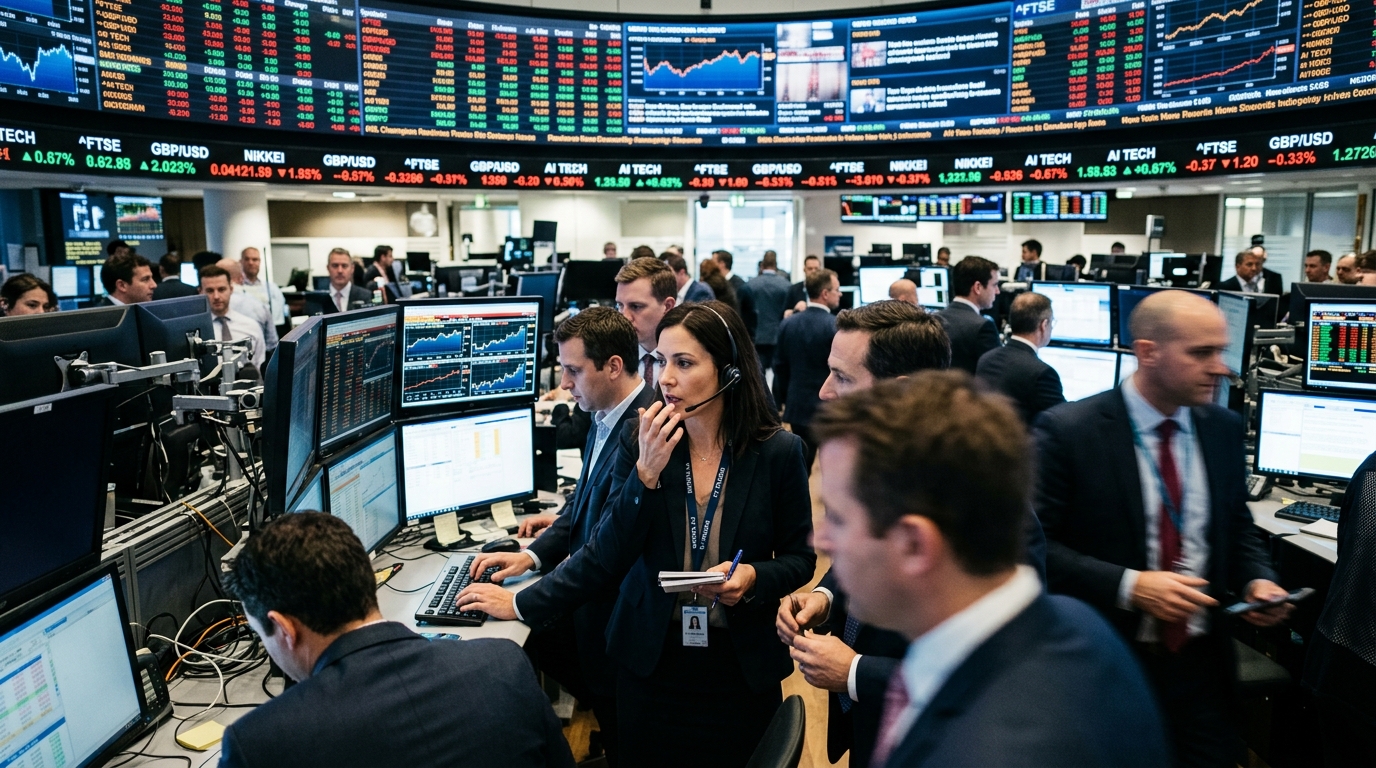
The job-seeking process has transformed into a game of algorithms. Companies now employ sophisticated AI systems to scan thousands of resumes, looking not just for keywords, but for behavioral patterns and growth potential. This creates a new challenge for candidates: the need to be "visible" to AI systems without losing their human authenticity.
However, the use of AI in hiring carries significant risks. "Algorithmic bias" is a reality that deeply concerns the European Union and regulatory bodies. If a model is trained on data from previous years where certain social groups were underrepresented in leadership roles, the AI may reproduce and amplify these biases. Algorithmic transparency and "human-in-the-loop" oversight are becoming essential prerequisites for a fair labor market.
Daily Office Life: Productivity or Digital Burnout?
In daily work, AI acts as a "copilot." From automated email drafting and meeting summaries to creating complex financial models in seconds, the time savings are unprecedented. Theoretically, this should lead to a reduction in working hours—perhaps even the implementation of a four-day work week, a topic of intense discussion in both global and Mediterranean markets.
In practice, however, we are witnessing the "productivity paradox." As AI accelerates processes, employer expectations rise proportionally. The volume of information a worker is expected to manage has multiplied, often leading to digital burnout. The challenge for enterprises is to use AI to improve the quality of life for employees, rather than simply squeezing more output into the same amount of time.
The Global Context and the Path Forward
For modern economies, this transition is a double-edged sword. On one hand, there is the risk of widening the digital divide for those who fail to keep pace. On the other, AI offers a unique opportunity for "leapfrogging" in sectors where bureaucracy and past inefficiencies have hindered growth. Investing in reskilling is no longer an option; it is a national necessity for maintaining economic competitiveness in a globalized world.
"AI will not replace humans. But humans who use AI will replace those who do not."
In conclusion, we are in a transitional period where work is ceasing to be defined by the execution of tasks and is beginning to be defined by creativity, judgment, and the ability to collaborate with machines. Success in this new environment requires flexibility, continuous learning, and, above all, the preservation of the qualities that make us human.