In an era where the speed of information dictates the outcome of conflicts, France is taking a decisive step toward the future of national and collective security. During recent NATO military exercises, the French armed forces deployed a cutting-edge battlefield Artificial Intelligence (AI) system designed to analyze vast amounts of data in real-time and support decision-making under intense pressure. This move is not merely a technical upgrade; it is a geopolitical statement regarding Europe's pursuit of "strategic autonomy" in a world dominated by the technological prowess of the US and China.
The Digital Transformation of the Battlefield
The system tested, developed in collaboration with leading French defense conglomerates, aims to solve one of the greatest challenges of modern warfare: information saturation. Commanders in the field receive data streams from drones, satellites, ground sensors, and intercepted communications. Without the aid of AI, processing this information would take hours, if not days. The French system promises to reduce this time to seconds, identifying enemy movements and suggesting optimal response strategies.
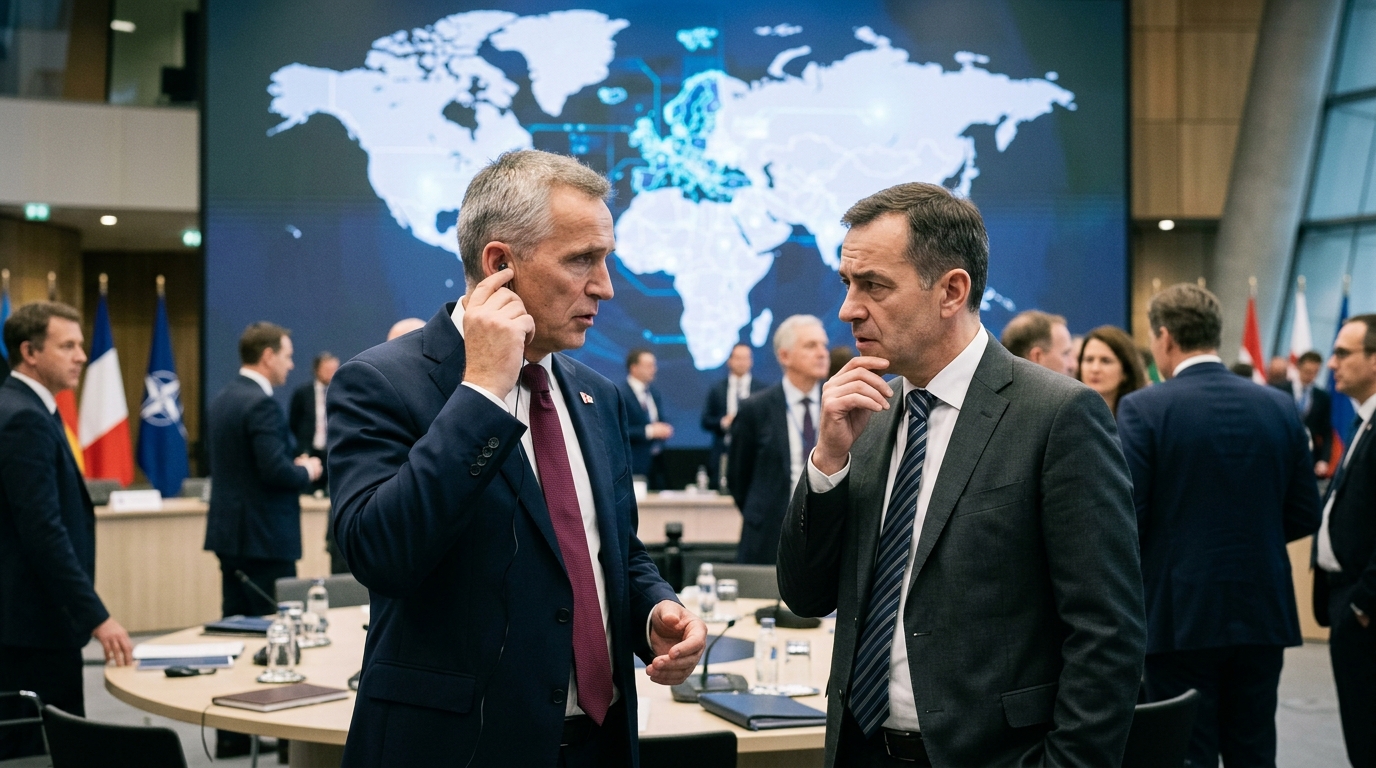
According to sources from the French Ministry of Armed Forces, the exercise focused heavily on interoperability. It is vital that French AI systems can "speak" the same language as those of NATO allies. The ability to synthesize data from diverse national sources into a common operational picture is considered the "holy grail" of modern military technology. Through this test, France seeks to demonstrate that Europe can develop its own sovereign tools, reducing dependence on American algorithms.
Strategic Autonomy and Geopolitical Balance
This initiative fits into Paris's broader vision for a strong, technologically advanced Europe. In an environment of increasing instability, particularly following developments in Eastern Europe, France is investing billions in defense technology. Artificial Intelligence is now seen as being as critical as nuclear weapons or aircraft carriers for a nation's deterrent power.
- OODA Loop Acceleration: AI enables faster Observation, Orientation, Decision, and Action.
- Reduction of Human Error: Algorithmic pattern analysis can detect threats that escape the human eye.
- Predictive Maintenance: Beyond combat, AI manages the supply chain, ensuring assets are always mission-ready.
However, France's leadership in this sector sparks debate within the Alliance. While NATO welcomes innovation, there is always the fear of system fragmentation. If every country develops its own "closed" AI, the alliance's cohesion in the event of a general conflict could be jeopardized. France responds to this by promoting open standards, but under European control.
Ethical Dilemmas and the Future of War
Despite the technological benefits, the use of AI on the battlefield raises serious ethical questions. Paris's official line remains firm: the human remains "in-the-loop." This means no lethal decision is made autonomously by a machine. However, critics argue that as the speed of warfare increases, the human role will gradually be reduced to a mere rubber stamp of what the algorithm suggests.
"We are not building a Terminator, but a super-powered assistant for our soldiers," a senior French official stated during the presentation of the exercise results.
The challenge for France and its allies will be to set the rules of engagement before technology outpaces diplomacy. This test is only the beginning of a long journey toward "warfare transformation," where a country's power will be measured in teraflops and data quality as much as in troop numbers. Paris has shown it is ready to lead this new arms race, ensuring that Europe does not remain a mere spectator to global shifts.