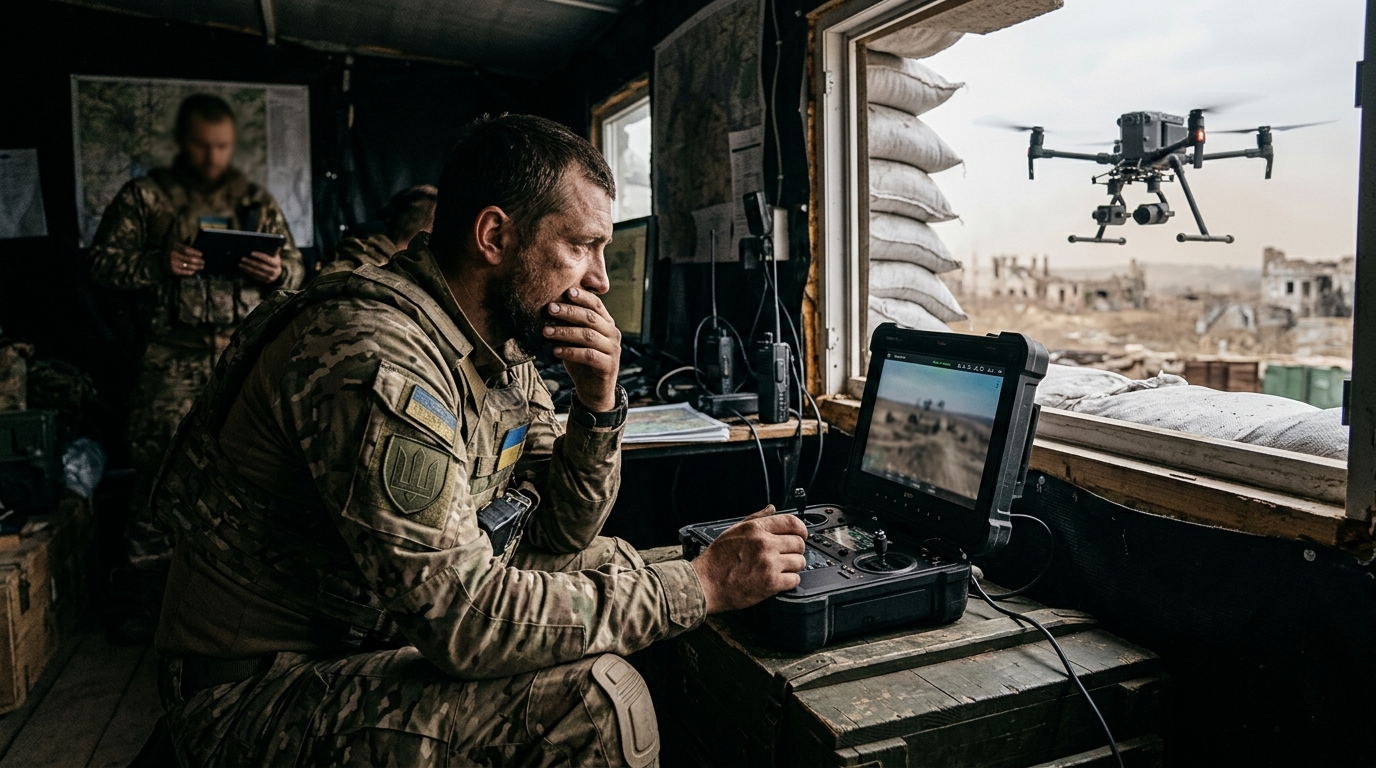
The nature of warfare is evolving at a speed that outpaces the ability of international institutions to monitor it. From the skies of Ukraine to the urban zones of Gaza, Artificial Intelligence (AI) is no longer a science fiction scenario but an operational pillar. Drones, which once required a pilot with a joystick thousands of miles away, are transforming into Lethal Autonomous Weapon Systems (LAWS) capable of identifying, targeting, and neutralizing adversaries without direct human intervention.
The question now urgently posed is not whether this technology is feasible, but whether it is ethically acceptable. The transition from the 'human-in-the-loop' model to 'human-out-of-the-loop' marks a historic turning point in world history, where the decision over life and death is delegated to code and data.
Algorithmic Distinction and the Accountability Gap
One of the primary arguments from proponents of AI in warfare is precision. Theoretically, an algorithm is not affected by fear, fatigue, or the desire for revenge—factors that often lead to war crimes by human soldiers. However, the reality is far more complex. 'Distinction' between combatants and civilians is the cornerstone of International Humanitarian Law. Can a drone, based on sensors and machine learning, distinguish a rebel holding a rifle from a civilian holding a tool, or a child playing with a toy?
The 'black box' problem in AI makes matters worse. If an autonomous system commits a massacre, who is to blame? The programmer who wrote the code? The commander who activated it? Or the machine itself? The 'accountability gap' is one of the greatest risks of the new era, as legal responsibility becomes so diffused that it becomes practically non-existent.
The Geopolitics of Autonomy and the Arms Race
The international community is divided. At the UN, a large group of nations is calling for a total ban on 'killer robots.' However, major powers—the USA, China, Russia, and Israel—resist binding treaties, fearing that such a ban would leave them behind in a new technological arms race. The strategic 'asymmetry' offered by drones allows smaller states or even non-state actors to inflict massive blows on traditional armies, as we have seen in the recent use of FPV drones in Ukraine.
- AI decision-making speed reduces reaction time to milliseconds, making human control practically impossible in saturation environments (swarm attacks).
- Using AI to analyze vast amounts of data from satellites and signals intelligence allows for target list generation on a scale no human intelligence agency could manage.
- There is a risk of 'algorithmic escalation,' where two opposing AI systems interact in unpredictable ways, leading to a war that no one consciously started.
Conclusion: The Need for a Digital Geneva Convention
Technology is not neutral; it reflects the values of those who create it. If we allow war to become an automated process of loss optimization, we risk losing our very humanity. The international community must reach a framework that mandates 'meaningful human control' over every decision involving the use of lethal force. The drone war is not just a technical challenge; it is the ultimate test of whether our ethics can survive in the age of algorithms.