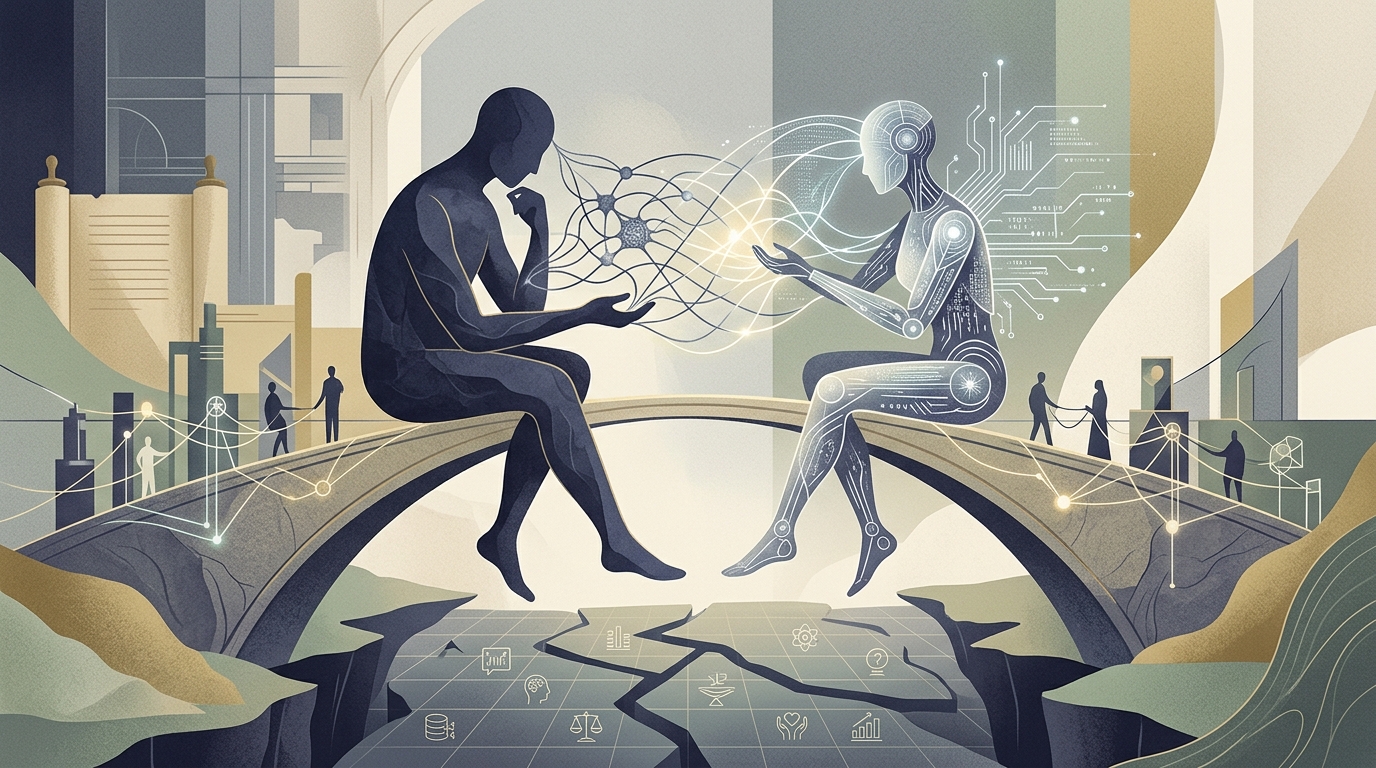
In an era where digital loneliness is becoming a new pandemic, the discussion regarding the role of Artificial Intelligence (AI) in our interpersonal relationships takes on an almost existential tone. Recently, Elder Gerrit W. Gong, a member of the Quorum of the Twelve Apostles of The Church of Jesus Christ of Latter-day Saints, presented an intriguing and ethically charged proposition: AI should not be viewed as a substitute for human presence, but as a "magnifying glass" that can deepen the connection between individuals.
This intervention comes at a critical juncture. As algorithms become increasingly capable of simulating human conversation, empathetic discourse, and companionship, the risk of "atrophying" relationships is palpable. Gong argues that technology, when guided by an ethical compass, can bridge distances, facilitate genealogical research, and help preserve family history, ultimately strengthening the bonds that make us human.
The Trap of Digital Simulation
The central argument of Gong's teaching focuses on the fundamental difference between "information" and "presence." Artificial Intelligence can process billions of data points, synthesize human-like text, and provide advice based on statistical models. However, it lacks the "spirit" and lived experience that form the core of a human relationship.
- AI lacks authentic vulnerability, which is essential for true intimacy.
- Algorithms operate on predictions, while human relationships thrive on unpredictability and sacrifice.
- Over-reliance on digital assistants can lead to the atrophy of our social skills.
The danger, according to tech ethics analysts, is not that machines will become "human," but that humans will begin to treat one another as machines—as sources of information or means of satisfying needs, without the depth of spiritual connection.
Technology as a Tool for Ministry
Rather than a technophobic stance, Gong's approach suggests a creative integration. He cites examples where AI can function beneficially, such as real-time language translation that allows people from different cultures to communicate, or the use of tools that help individuals with disabilities participate equally in social life.
"Technology can help us find one another, but it cannot be our destination," note sources close to this philosophy.
Within the context of religious and family life, AI is already being used for handwriting recognition in ancient records, allowing millions of people to discover their roots. This use of technology does not replace love for ancestors; it fuels it with new data, making history come alive.
The Ethical Responsibility of the User
Ultimately, the responsibility shifts back to the human. AI is a mirror of our intentions. If we use it to avoid the hard work of building relationships, we will find ourselves in a world full of "smart" but hollow interactions. However, if we use it to save time from mundane tasks to dedicate quality time to our loved ones, then technology fulfills its highest purpose.
Gong's teaching reminds us that authenticity cannot be programmed. The warmth of a hand, the silence of understanding, and the shared experience of pain and joy remain exclusively human prerogatives. In a world racing toward full automation, the choice of human contact becomes an act of resistance and spiritual awakening.