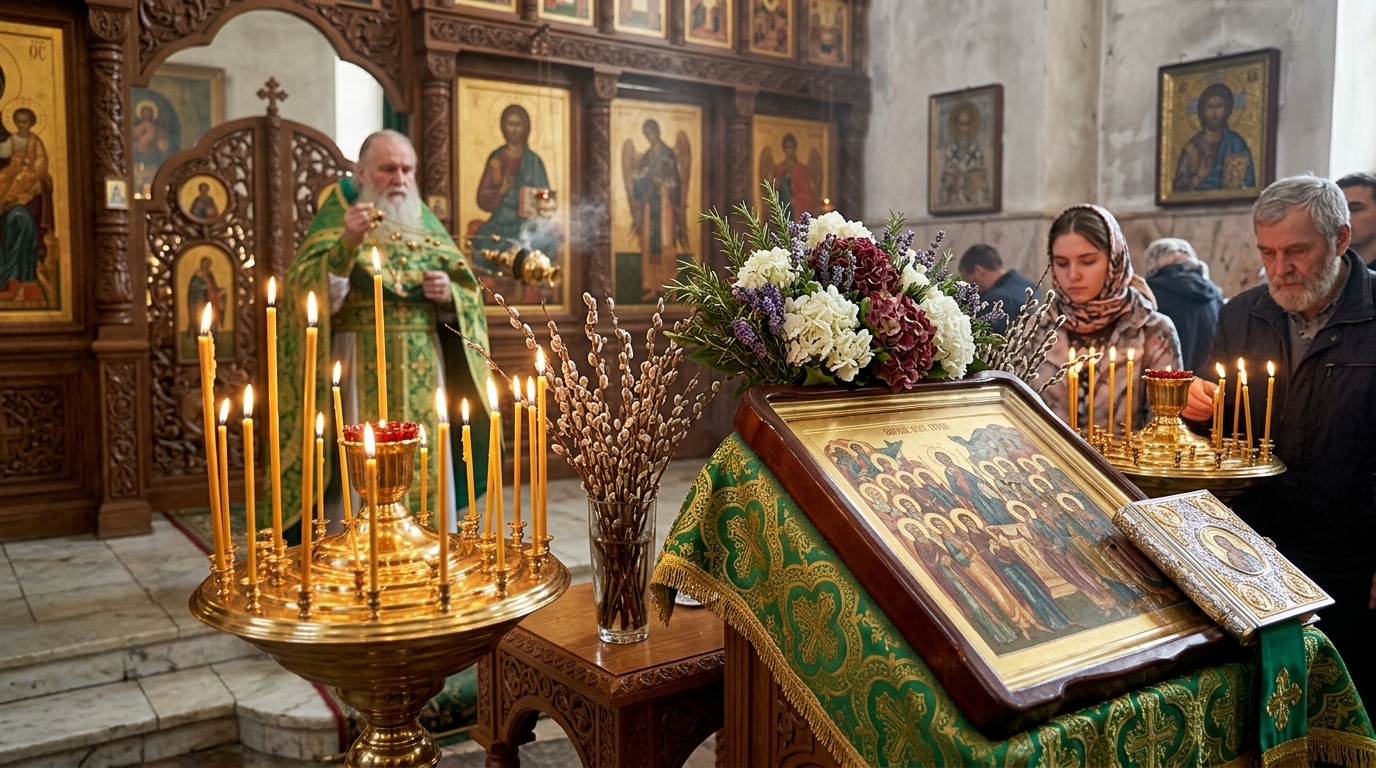
Today, Sunday, June 7, 2026, marks one of the most significant milestones in the Orthodox calendar: the Synaxis of All Saints. This moveable feast, always observed on the first Sunday after Pentecost, is not merely a religious ceremony but a deeply symbolic act that completes the cycle of the Holy Spirit's presence in the world. In the Greece of 2026, where tradition often clashes or converses with digital acceleration, the Feast of All Saints remains a powerful cohesive bond for society.
The Theological Foundation: From Pentecost to Holiness
To understand the significance of today, one must look at its connection to Pentecost. The Church schedules the celebration of All Saints immediately following the descent of the Holy Spirit to showcase the "fruits" of this divine energy. Saints, according to Christian teaching, are the result of human sanctification by the Spirit. This timing emphasizes that holiness is not a distant ideal but a living possibility for every member of the community.
Historically, the feast was established gradually. While initially it primarily honored martyrs, from the 4th century onwards, the need for a common celebration of all saints—known and unknown—led to the institutionalization of this Sunday. It is the feast of the "anonymous," those who lived virtuously without ever being recorded in the official pages of history, thus lending a democratic and universal character to the concept of spiritual elevation.
Who Celebrates Today: The Social Dimension of Names
Today is characterized by a vast number of names celebrating, making it one of the most "populous" name days of the year. Beyond the obvious names like Pantos, Panti, and Pagona, this day is the official feast for those who do not have a specific celebration date based on their name. Names such as Agisilaos, Agenor, Aeolus, and Cassandra, which derive their origin from antiquity, find their refuge today in the Orthodox calendar.
- Bartholomew and Barnabas: Although they have their own dates, they are often associated with the cycle of All Saints.
- Panagiotis and Panagiota: In some regions of Greece, this is considered their primary feast day, despite the connection to the Dormition in August.
- Modern and Rare Names: All Saints Sunday acts as a "collector" for any name that does not fit into the major feasts of Christ or the Virgin Mary.
In Greek society, the name day remains an institution more personal and warm than a birthday. It is the day when the individual connects with the wider family and community. In 2026, greetings via social networks and digital communication platforms may have changed how affection is expressed, but the essence of recognizing the "other" through their name remains unchanged.
The Political and Social Significance of Religious Tradition
In an era of intense globalization, maintaining such feasts raises questions about the place of religion in the public sphere. Greece, as a member state of the European Union, balances between respecting religious freedom and preserving its unique cultural heritage, which is inextricably linked to Orthodoxy. All Saints Sunday is a reminder that identity is not something static, but a mosaic of historical memories and collective values.
"Holiness in the Orthodox tradition is not moral perfection, but participation in the light of the community," modern theologians state, highlighting that today's feast concerns collectivity rather than isolated asceticism.
From a political perspective, the management of religious holidays and celebrations is part of the broader "politics of identity." As the world moves toward a more secular direction, the mass participation of Greeks in these feasts shows that the need for roots remains strong. Today's celebration, by honoring "everyone," expresses an inclusiveness that, while religious in origin, can also be interpreted as a message of social solidarity and recognition of the value of every human existence, regardless of social status.
Conclusion: A Feast for the Future
As we navigate the first half of 2026, All Saints Sunday invites us to reflect on the importance of memory. In a world overwhelmed by ephemeral information, honoring those who left a spiritual footprint—even if their name was lost to time—offers a counterweight to the culture of oblivion. Whether it is a religious act of faith or a social manifestation of tradition, today reminds us that we are part of a long chain of people seeking meaning beyond the everyday.