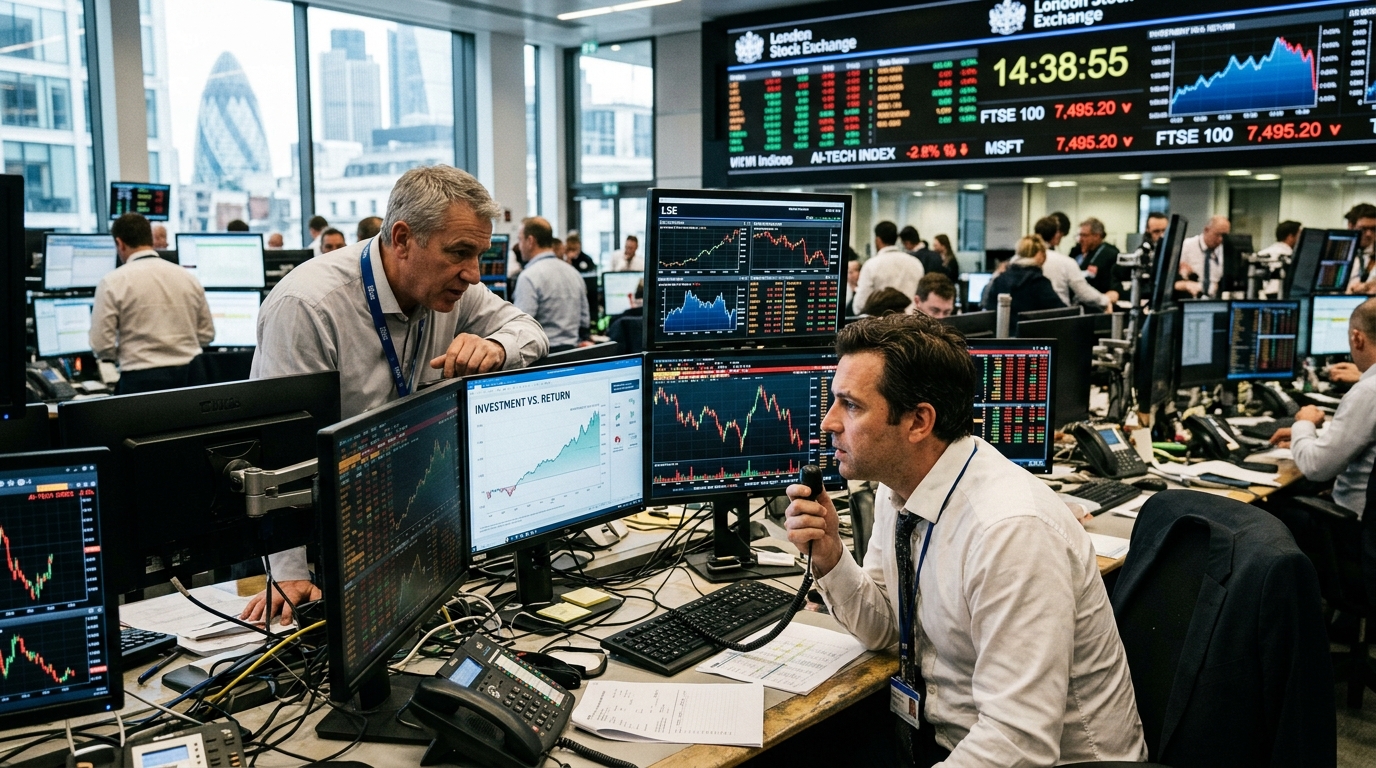
In a move that resonated through the corridors of Wall Street, billionaire fund manager Bill Ackman, head of Pershing Square Capital Management, has completed the sale of his stake in Universal Music Group (UMG). The divestment, totaling a staggering $1.65 billion, serves as the culmination of a tumultuous investment journey that began with grand ambitions and faced significant regulatory hurdles.
The Chronicle of an Ambitious Investment
Ackman’s relationship with Universal Music Group was never a conventional stock market play. It began in 2021, when Ackman attempted to use the largest SPAC (Special Purpose Acquisition Company) in history, Pershing Square Tontine Holdings (PSTH), to acquire a 10% stake in the company from French conglomerate Vivendi. The plan was innovative yet exceptionally complex, envisioning the distribution of shares to SPAC holders without UMG undergoing a traditional US listing process.
However, the US Securities and Exchange Commission (SEC) raised serious concerns regarding the structure of the deal, ultimately leading to its cancellation. Ackman, displaying his trademark persistence, decided to honor his commitment by purchasing the shares through his main hedge fund, Pershing Square Holdings. This move transformed a failed SPAC deal into a large-scale direct investment in the global music industry.
The Value of Music in the Streaming Era
Why did Ackman choose Universal in the first place? The answer lies in the economic nature of intellectual property. Universal Music Group, boasting a catalog that spans from the Beatles and the Rolling Stones to Taylor Swift and Drake, is considered by many to be an "intellectual gold mine." In the era of streaming—dominated by Spotify, Apple Music, and YouTube—music has shifted from a discrete product sale to a recurring revenue stream that resembles a utility-like cash flow.
Ackman had repeatedly described UMG as a "one-of-a-kind asset" with formidable competitive moats. The global rise of the middle class and smartphone penetration ensured, in his view, a steady increase in royalty payments for decades to come. Despite this conviction, the decision to sell appears to be driven by a strategic need to rebalance his portfolio and seek new opportunities with higher potential returns in the current high-interest-rate environment.
Implications and the Future of Pershing Square
The $1.65 billion sale is not an admission of failure but rather a tactical retreat with substantial profits. According to analysts, Pershing Square is realizing a significant capital gain, which will likely be deployed to fund new "activist" maneuvers. Ackman is renowned for concentrating on a few large positions in companies like Chipotle, Hilton, and Lowe’s, where he can exert influence over management and strategy.
Exiting UMG leaves a void in Ackman’s portfolio regarding entertainment exposure, but it provides the necessary liquidity to pursue his next major target. Meanwhile, the market is closely watching whether this move signals a broader correction in the valuations of intellectual property management companies, which had soared in previous years.
"The investment in Universal was a lesson in adaptability. When regulators close a door, you must find a window—but you must also know when the view from that window has reached its peak," say sources close to the investor's circle.
In conclusion, Bill Ackman exits the music scene having proven his ability to navigate complex crises, leaving Universal Music Group to continue its chart dominance without his presence on the shareholder registry. The question remains: which industry will be the next target for "Wall Street’s most persistent investor"?