June 5, 2026, is not merely an anniversary for the environment; it is a loud wake-up call for the economic stability of Europe, and particularly the Mediterranean. Yannis Stournaras, Governor of the Bank of Greece, has placed the climate crisis at the very top of the monetary and fiscal policy agenda. According to Mr. Stournaras, the Mediterranean is no longer just a tourist oasis but a climate change "hotspot," where temperatures are rising 20% faster than the global average.
The Governor's analysis goes beyond ecological destruction, extending to the deep cracks that climate instability causes in the economic structure. The need to accelerate the green transition is not described as a "luxury" for prosperous times but as an imperative prerequisite for preserving natural capital, which forms the basis of all productive activity.
The Mediterranean Hotspot: A Fragile Economic Ecosystem
Mr. Stournaras emphasizes that our geographical neighborhood faces a dual threat: water scarcity and rising sea levels. These phenomena do not just affect the landscape; they strike at the heart of tourism, agriculture, and energy production. For Greece, a country heavily reliant on "blue" and "green" capital, the impacts are already visible in household and state budgets.
- Reduced agricultural production due to drought leads to persistent food inflation.
- Natural disasters (wildfires, floods) require massive funds for restoration, burdening public debt.
- The degradation of the tourism product in areas hit by heatwaves threatens national revenue.
The Governor referred extensively to the studies of the Climate Change Impact Study Committee (CCISC) of the Bank of Greece, which has for years warned of the cost of inaction. The "inaction" scenario predicts a dramatic contraction of Greece's GDP by the end of the century, which could exceed 2% annually in terms of real income.
Mitigation vs. Adaptation: The Financial Dilemma
One of Yannis Stournaras's strongest arguments is the comparison between the cost of adaptation and the cost of destruction. The green transition requires massive investments in infrastructure, renewable energy sources, and low-carbon technologies. However, these expenditures must be viewed as high-yield investments, as they prevent the much larger costs that would arise from an uncontrolled climate crisis.
"Environmental protection is not an enemy of growth; it is the only way to ensure it in the long run," he notes characteristically.
The Bank of Greece is at the forefront of integrating climate risks into financial supervision. Banks are now required to assess their exposure to "green" and "brown" risks, while the ECB's monetary policy is gradually "greening," favoring companies with a low carbon footprint. This shift is necessary to avoid "Green Swan" events—unforeseeable crises that could cause a systemic collapse of the markets.
Central Banking in the Age of the Anthropocene
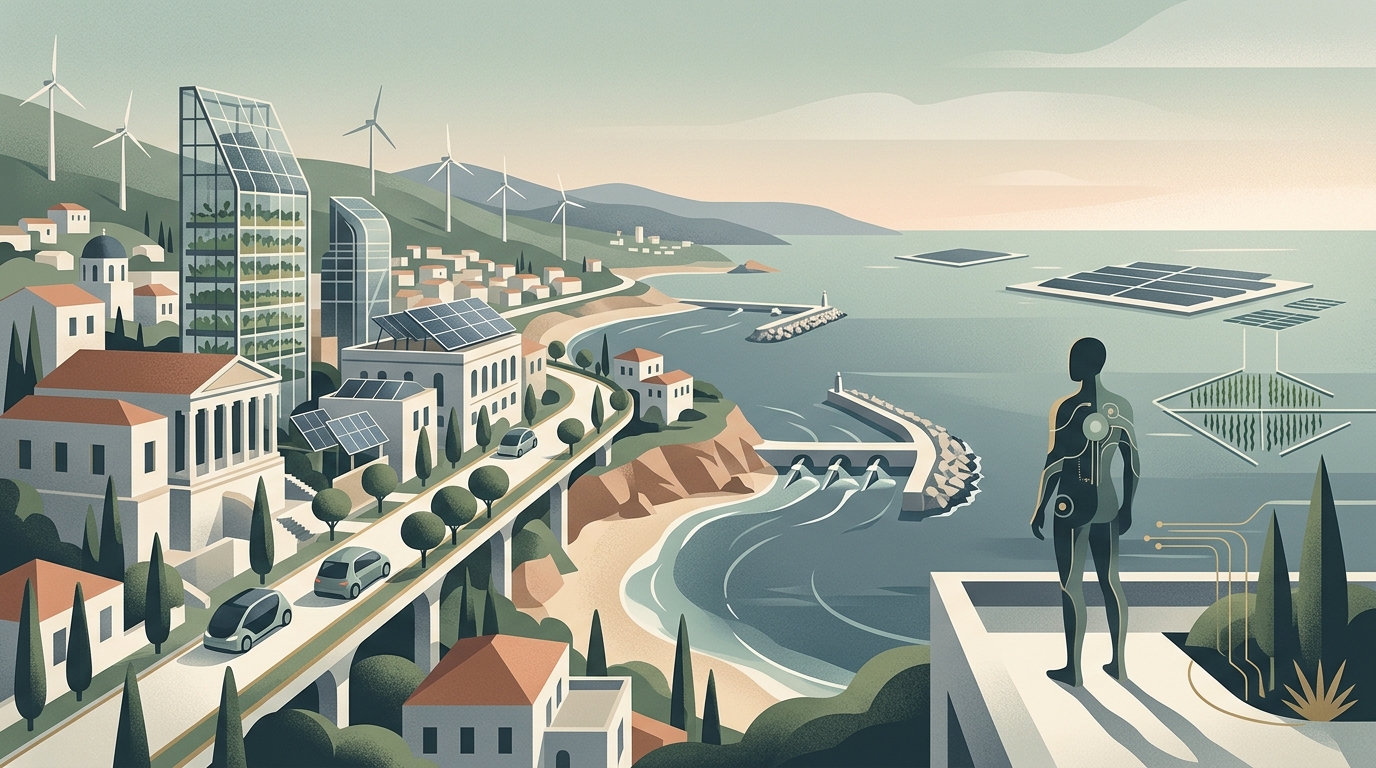
Mr. Stournaras does not limit his focus to central banks. He calls on the government and the private sector for coordinated action. The use of resources from the Recovery and Resilience Facility (RRF) is crucial for shielding the country. Digitalization and green energy must go hand in hand, creating new jobs and a new productive model that does not deplete natural resources.
In conclusion, the Governor reminds us that the climate crisis is a global challenge requiring local solutions. The Mediterranean, as the cradle of Western civilization, has the responsibility to lead the way toward a sustainable coexistence with nature. Protecting the natural environment is, ultimately, an act of justice toward future generations, who must not inherit a debt—both environmental and economic—that will be impossible to repay.