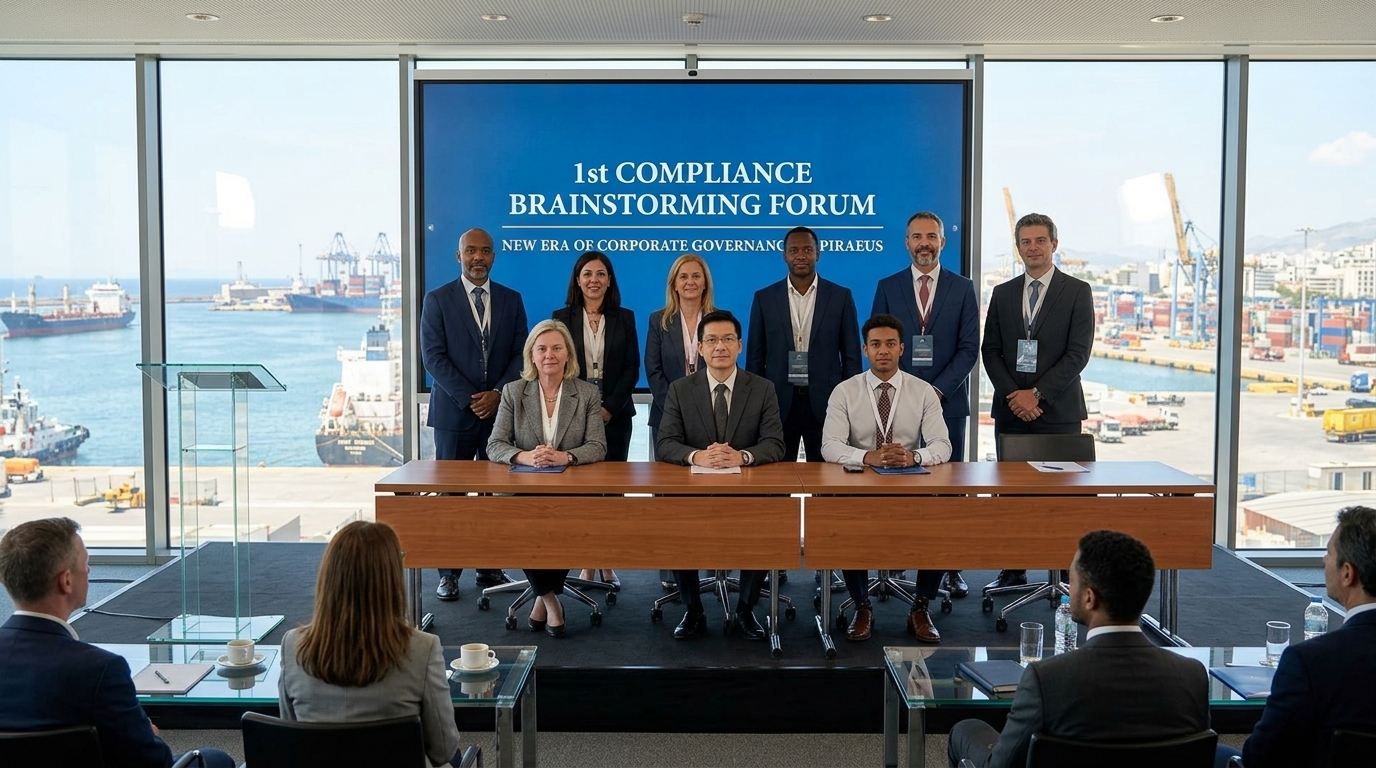
In an era where global supply chains are under the microscope of regulators and investors alike, the Piraeus Port Authority (PPA S.A.) has made a move of significant strategic importance. The organization of the 1st Compliance Brainstorming Forum, titled "Alliance for Compliance – United We Evolve," marks a shift towards a more extroverted and collaborative model of corporate governance. This initiative, implemented by the PPA Compliance Unit, is not merely a standard corporate event but an effort to create an ecosystem where ethics and legality serve as the common denominator for growth.
Compliance Strategy as a Competitive Advantage
For Piraeus, the largest port in the Mediterranean and a crucial node in the "One Belt One Road" network, regulatory compliance transcends simple adherence to laws. It acts as the "passport" for attracting international capital and consolidating trust with the European Union. The Forum focused on the need for exchanging best practices among executives, recognizing that today's challenges—ranging from anti-corruption measures to personal data protection—require collective action.
The management of PPA S.A., under the guidance of COSCO Shipping, appears to understand that the port's sustainability is inextricably linked to transparency. In an environment where EU directives, such as the CSRD (Corporate Sustainability Reporting Directive) and the CSDDD (Corporate Sustainability Due Diligence Directive), are becoming increasingly demanding, a proactive approach is the only way forward. The Forum served as a platform for dialogue, highlighting that compliance is not a "cost" or a "bureaucratic hurdle" but a mechanism for safeguarding corporate reputation and operational continuity.
Technology and AI in the Service of Transparency
One of the most compelling aspects of the discussion was the integration of new technologies and Artificial Intelligence into auditing processes. PPA S.A. is systematically investing in digital transformation, and regulatory compliance could not be left behind. RegTech (Regulatory Technology) systems now allow for real-time transaction monitoring, the identification of unusual patterns that may indicate fraud, and the automation of reporting to supervisory authorities.
The use of AI in risk management enables compliance officers to analyze vast amounts of data from port activities, identifying gaps before they escalate into legal issues. As emphasized during the Forum, the "Alliance for Compliance" also implies a technological alliance, where data is shared securely to ensure the integrity of the supply chain. This digital footprint of transparency is what will allow Piraeus to compete on equal terms with Northern ports like Rotterdam and Antwerp.
ESG and Social Responsibility
The Forum was not limited to the narrow confines of legal compliance. It was directly linked to the ESG (Environmental, Social, and Governance) framework. Ethical governance is the "G" pillar that supports the other two. Without robust internal processes, commitments to the environment (E) and society (S) remain empty promises. PPA S.A. seeks to demonstrate that the port's development goes hand-in-hand with respect for human rights, occupational safety, and environmental protection.
The participation of representatives from various sectors and institutional bodies underscored that compliance is a "team effort." Creating a culture of integrity starts at the top of the pyramid (tone at the top) but must permeate every level of the organization. The message "United We Evolve" reflects exactly this belief: that the evolution of Piraeus into a global logistics hub is achieved through its ethical standing on the international stage.
Conclusions and Future Prospects
The 1st Compliance Brainstorming Forum marks the beginning of a series of actions aimed at establishing Piraeus as a model port for governance. In a world of geopolitical turbulence, adherence to international standards and transparency act as stabilizing factors. PPA S.A. is leading the way in showing how a large enterprise can turn regulatory requirements into a strategic opportunity, ensuring a sustainable future for the port, its employees, and the Greek economy.