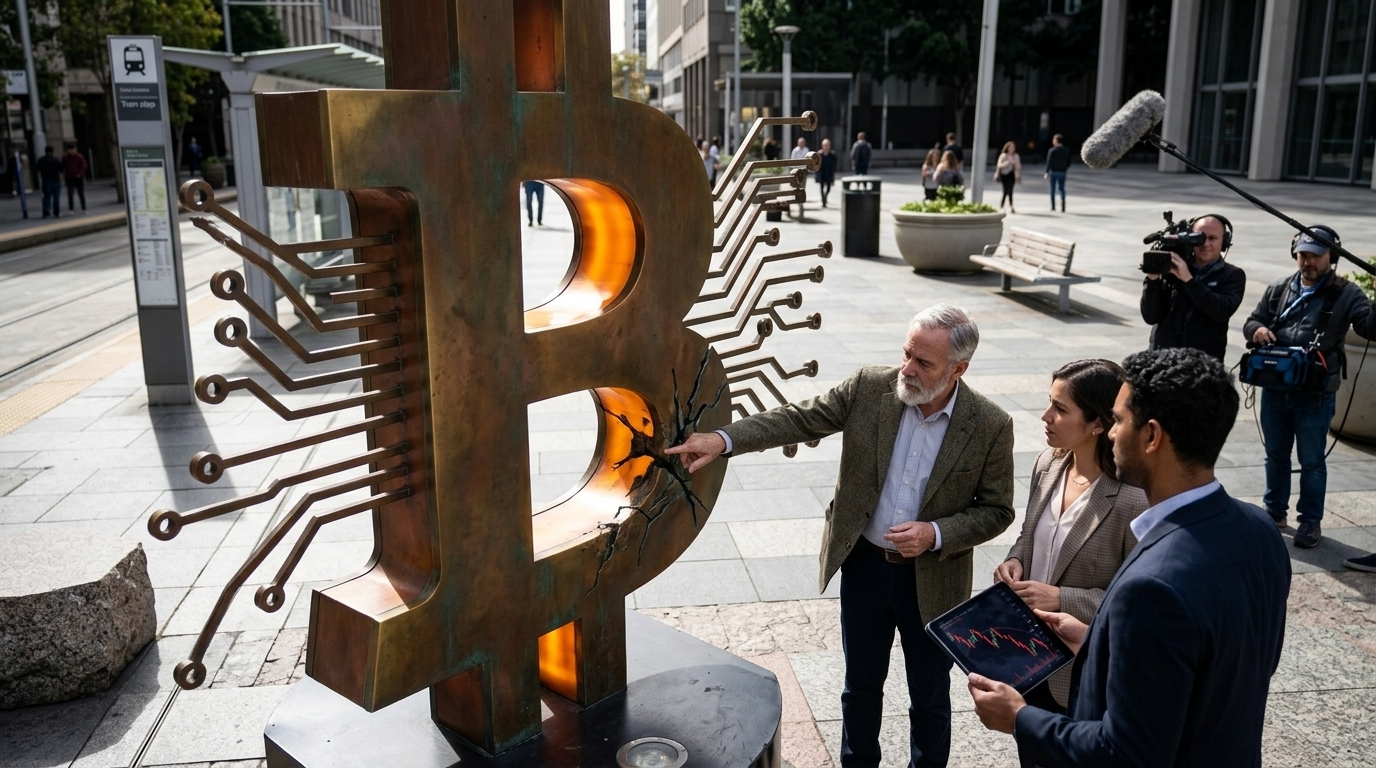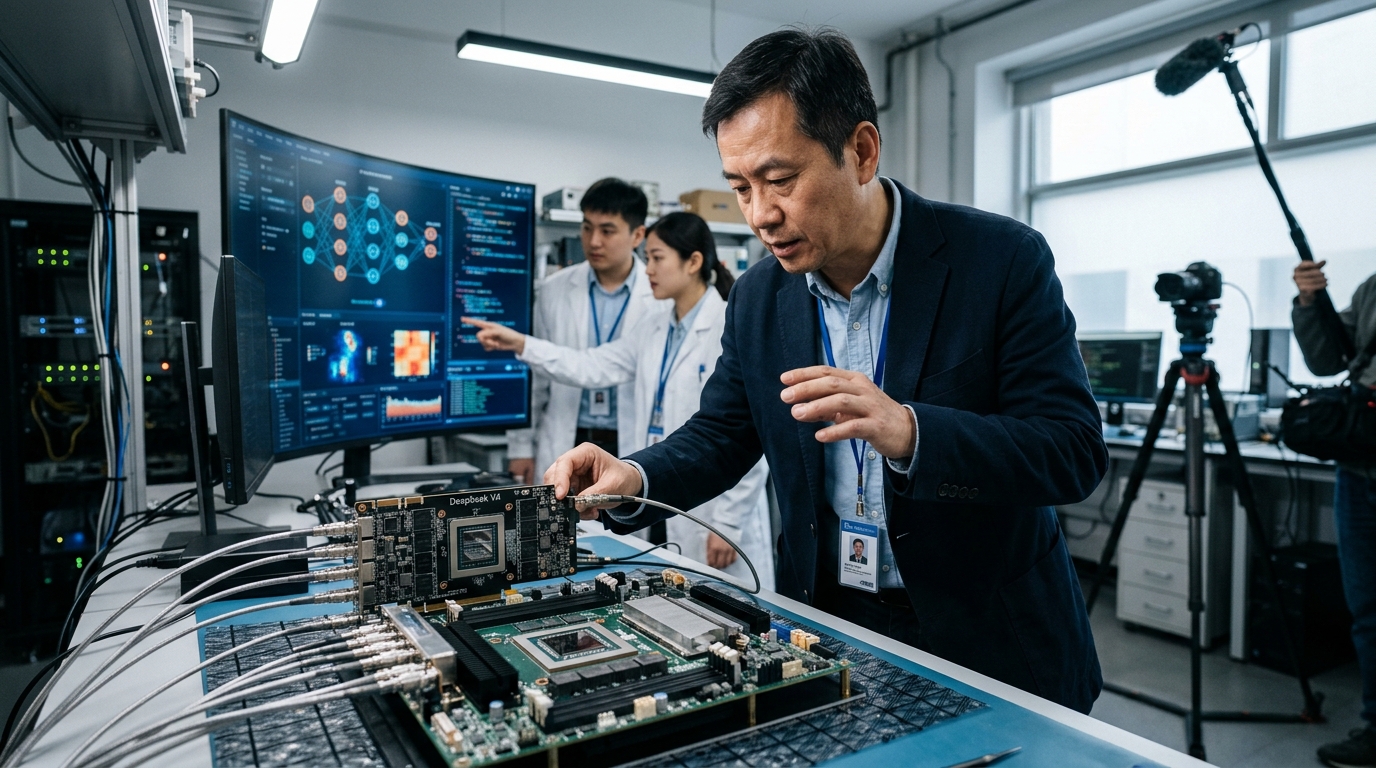
In the ever-accelerating world of artificial intelligence, the emergence of DeepSeek V4 is not merely another software update; it is a geopolitical and technological statement of power. The Hangzhou-based company, which began as the research arm of a high-tech hedge fund, has managed in a remarkably short time to disrupt the status quo, proving that innovation does not necessarily require the infinite resources of Silicon Valley, but rather strategic brilliance and architectural elegance.
The Architecture of Efficiency: Beyond Brute Force
The preview of DeepSeek V4 reveals an evolution of the already successful Mixture-of-Experts (MoE) architecture. Unlike monolithic models that consume vast amounts of energy for every query, V4 activates only the necessary "neural pathways," making it dramatically faster and more cost-effective to operate. DeepSeek appears to have perfected the Multi-head Latent Attention (MLA) mechanism, which drastically reduces memory requirements during inference, allowing the model to handle massive context windows with minimal latency.
What sets V4 apart is its capability in "Chain-of-Thought" reasoning. Early benchmarks suggest the model excels in mathematical reasoning and advanced programming—areas traditionally considered strongholds of models from OpenAI and Anthropic. DeepSeek's strategy of training its models with an emphasis on data quality over quantity seems to be paying off, offering a solution that is both powerful and accessible.
The V4 model isn't just about raw parameters; it's about the intelligence of the training process itself. By utilizing advanced distillation techniques and reinforcement learning from human feedback (RLHF) optimized for logical consistency, DeepSeek is closing the gap with the frontier models of 2026.
The Geopolitics of Intelligence and Open Weights
The release of V4 comes at a pivotal moment for Sino-American relations. Despite export restrictions on advanced semiconductors (such as Nvidia’s H100 and Blackwell chips), DeepSeek has demonstrated that algorithmic optimization can compensate for a lack of hardware. This sends a clear message to Washington: hardware-centric moats are insufficient to halt AI progress.
- Democratization of Technology: DeepSeek continues its tradition of releasing models with open weights, allowing researchers worldwide to study and improve its technology.
- Training Costs: While American firms spend billions on training runs, DeepSeek has achieved comparable results at a fraction of the cost, shifting the industry's economic calculus.
- Cultural Adaptation: V4 exhibits exceptional understanding of non-English languages, providing an alternative to the Western-centric biases often found in other models.
"DeepSeek isn't just competing with the Americans; it's redefining the rules of the game, proving that efficiency is the new power," notes a prominent market analyst.
Challenges and the Future of the V-Series
Despite the excitement, DeepSeek V4 faces significant hurdles. Reliance on the Chinese supply chain and the need to comply with Beijing's strict regulatory framework raise questions about censorship and model objectivity. Furthermore, maintaining quality in an environment where global training data is reaching exhaustion requires continuous innovation in the use of synthetic data.
However, the trajectory is clear. DeepSeek V4 is not the end of the road but the harbinger of a new era where AI will be more personalized, cheaper, and less dependent on specific geographic power centers. The market is now awaiting the full release of the model, which is expected to set new benchmarks for the entire industry, forcing competitors to rethink their strategies. As we move further into 2026, the question is no longer who has the most GPUs, but who has the smartest way to use them.