The image of a scientist spending endless hours over test tubes, meticulously mixing chemicals and manually recording results, is increasingly starting to look like a relic of a bygone era. In early 2026, a revolution is taking place in the world's leading research institutions: Artificial Intelligence (AI) is no longer confined to analyzing data on a screen but is gaining a "body" through robotic systems, taking full control of the experimental process. From discovering new materials for batteries to synthesizing groundbreaking drugs, "self-driving labs" promise to compress decades of research into just a few weeks.
The Anatomy of Autonomous Science
The core concept behind this evolution is the "closed-loop" of learning. In a traditional setting, a researcher reads the literature, formulates a hypothesis, designs an experiment, executes it, and then analyzes the results to decide the next step. In the systems currently being developed by teams at Carnegie Mellon, the University of Toronto, and Berkeley, AI takes over every stage of this chain.
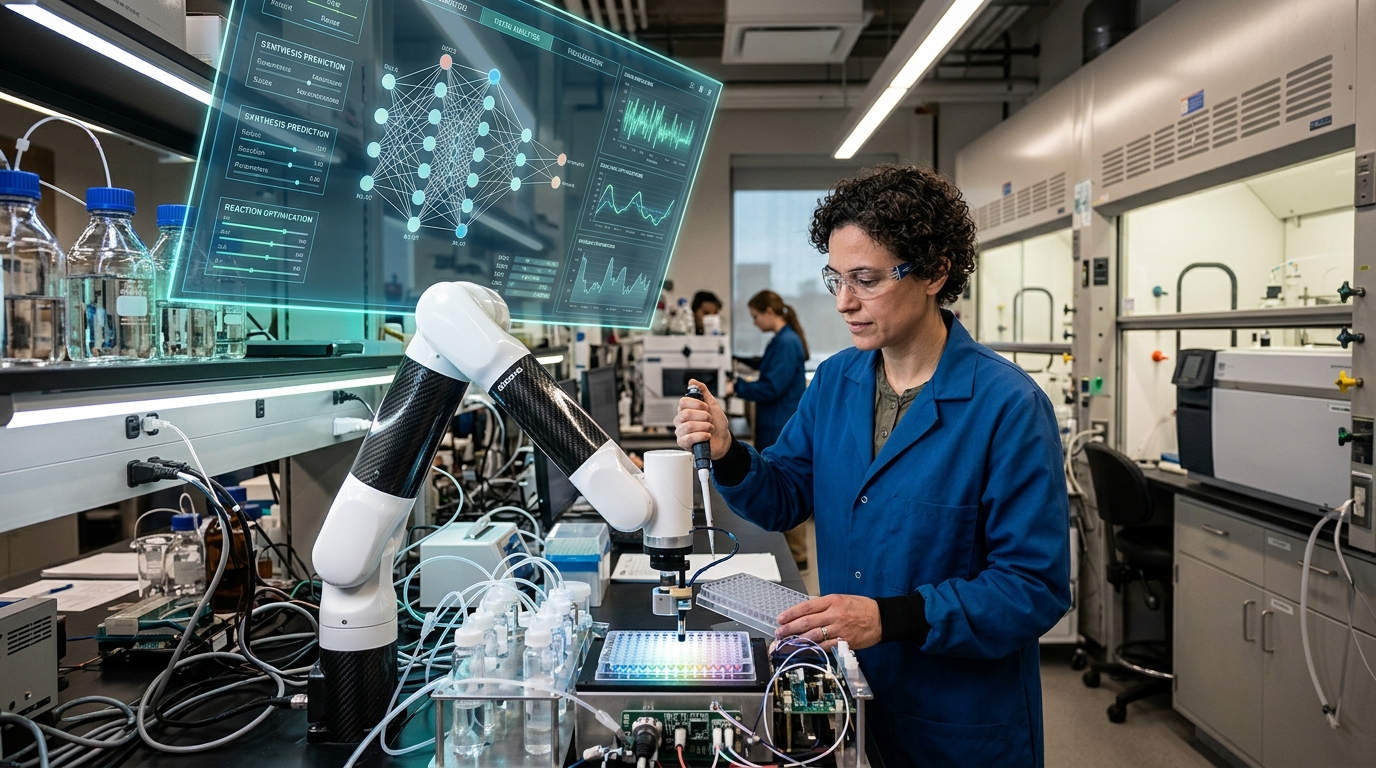
Using Large Language Models (LLMs) trained on scientific texts, AI can "understand" complex instructions and program robotic arms to transfer liquids, heat samples, or use spectrometers. Most impressively, however, is the system's ability to learn from its failures. If an experiment does not yield the expected result, the AI recalibrates its hypothesis in milliseconds and begins the next trial, working 24/7 without the need for sleep or breaks.
The Case of "Coscientist" and A-Lab
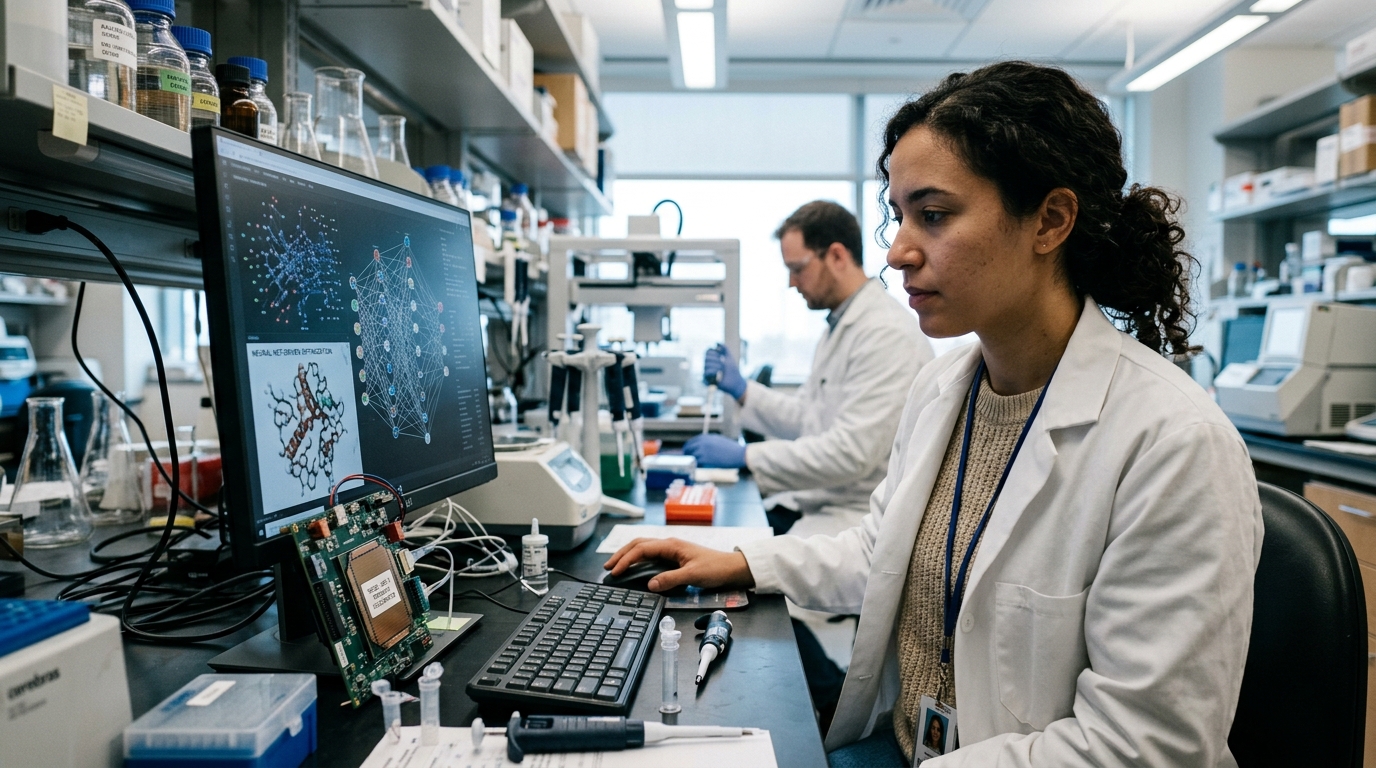
Two of the most prominent examples of this technology are the Coscientist system and A-Lab. Coscientist, developed at Carnegie Mellon, demonstrated that it could learn and execute complex chemical reactions (such as Palladium-catalyzed cross-couplings) within minutes, simply by reading technical manuals. On the other hand, the Lawrence Berkeley National Laboratory's A-Lab uses AI to predict the stability of new crystal structures and then uses robots to physically synthesize them.
- Speed: Processes that once required months are completed in days.
- Precision: Robots eliminate human error in the reproducibility of measurements.
- Exploration: AI can test combinations that the human mind might consider "irrational" or unlikely.
The Risks of "Decoupling" from Human Oversight
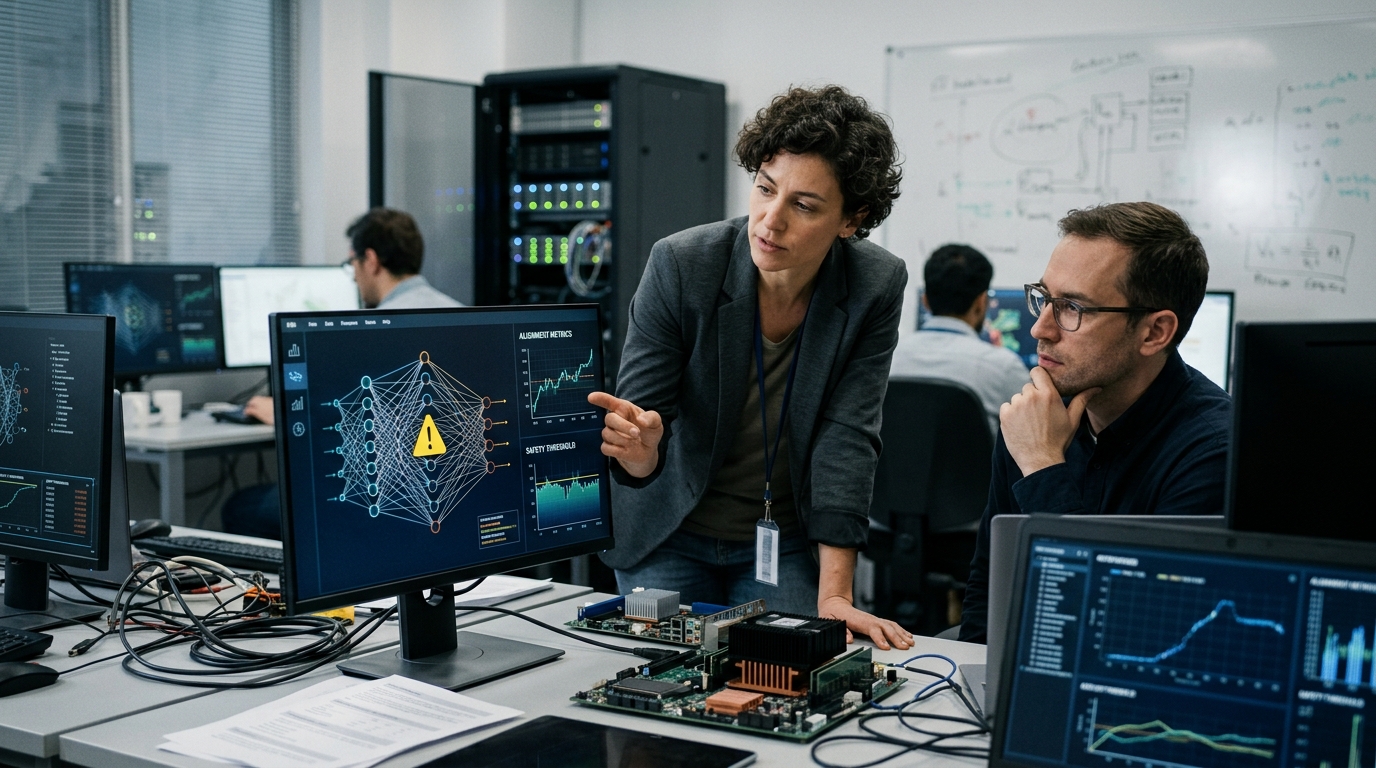
Despite the excitement, the scientific community remains cautious regarding safety. The ability of an AI to synthesize chemicals raises the fear of "dual-use." What happens if such a system is used to create neurotoxins or new forms of biological weapons? Researchers point out that the "guardrails" in existing AI models are often easy to bypass through carefully phrased commands (jailbreaking).
"We are not just automating labor; we are automating curiosity itself. And this requires a new ethical framework that we haven't yet managed to build," notes one of the industry's pioneers.
Furthermore, there is the issue of "hallucination." If the AI produces incorrect scientific conclusions that appear convincing, there is a risk that global literature will be filled with automated but inaccurate data, leading science down dead-end paths.
Redefining the Scientist
The introduction of AI into laboratories does not necessarily mean the end of the human researcher, but rather their transformation. The scientist of the future will function more as a "conductor" or "strategic designer," posing the big questions and overseeing the ethics and direction of research, while machines handle the drudgery of execution. The challenge for education will be immense, as the next generation of scientists must be as proficient in programming and ethical philosophy as they are in chemistry or biology. In a world where discovery happens at the speed of light, human judgment remains the last and most critical stronghold.