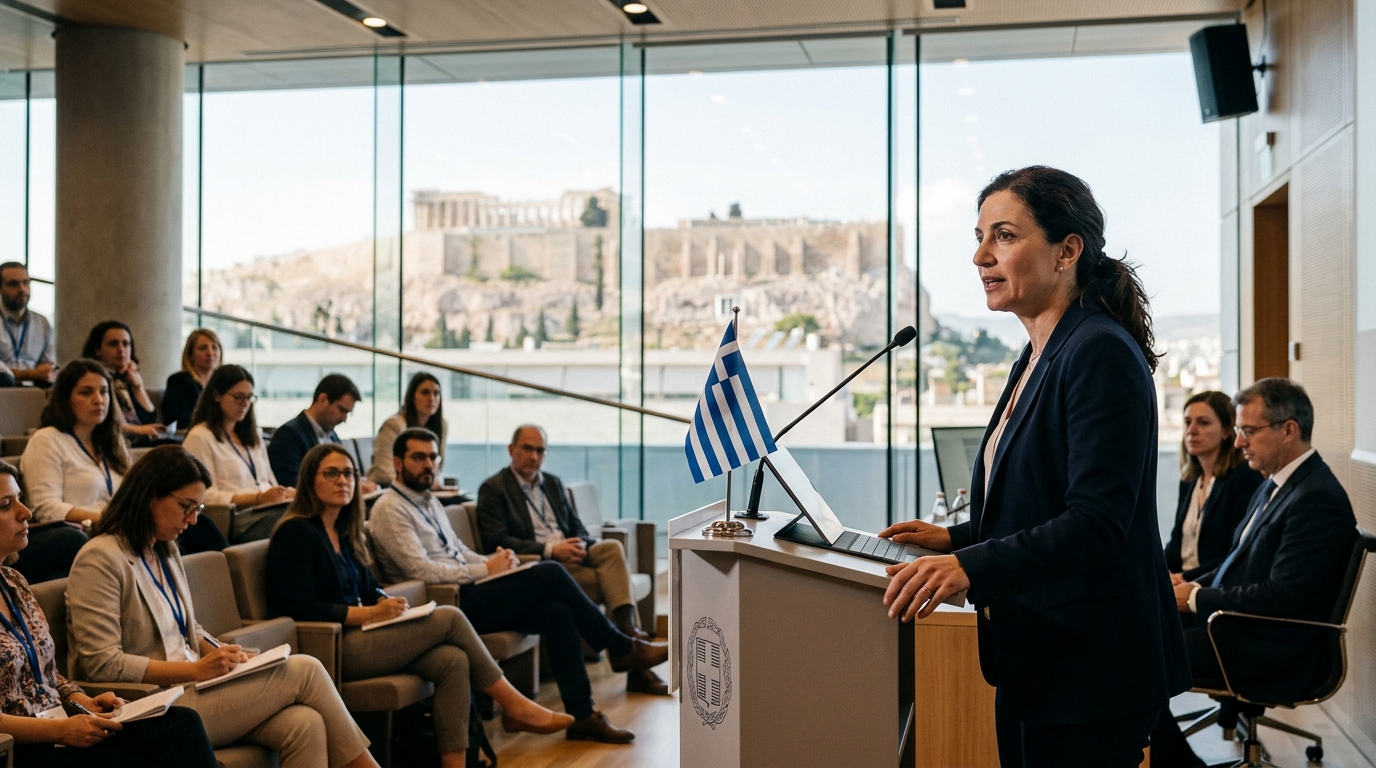
Thessaloniki, a city that has historically served as a bridge between cultures, has recently taken on a crucial new role: that of a mediator between technological innovation and parliamentary tradition. The meeting of the EPTA (European Parliamentary Technology Assessment) network, hosted in the capital of Macedonia, placed Artificial Intelligence (AI) at its center—not merely as a technical tool, but as an existential challenge to the functioning of modern democracies.
Representatives from the scientific councils of European parliaments, academics, and policy analysts gathered to discuss how algorithms can enhance legislative work without undermining human judgment and popular sovereignty. The choice of Thessaloniki was not accidental, as Greece has steadily sought in recent years to emerge as a regional innovation hub, leveraging both its human capital and its geostrategic position.
AI as an Aide to the Legislative Process
One of the core themes of the meeting was the use of AI in analyzing the vast amounts of data required for drafting legislation. Today, a member of parliament is called upon to decide on complex issues regarding energy, the economy, or health, often relying on hundreds of pages of technical reports. Generative AI can offer summaries, identify contradictions in existing legislation, and predict the potential impacts of a new regulation through simulation models.
However, EPTA participants emphasized that "algorithmic assistance" carries significant risks. The potential for bias in the training data of models could lead to legislative proposals that favor specific social groups or economic interests, often in ways that are not immediately visible to lawmakers. The need for "Explainable AI" emerged as an imperative priority for maintaining public trust in institutions.
The Challenge of Disinformation and Institutional Protection
During the sessions, particular emphasis was placed on the threat of deepfakes and automated disinformation. As Europe moves through an era of continuous electoral contests, the ability of AI to produce convincing but false content poses a direct threat to democratic stability. EPTA experts discussed the creation of common European protocols for detecting such content and enhancing the digital literacy of parliamentarians.
"Technology is not neutral; it carries the values of those who design it. In parliament, we must ensure that these values are transparency, accountability, and equality," it was noted during the discussions.
Furthermore, the issue of cybersecurity for parliamentary networks was examined. By integrating AI tools, parliamentary infrastructures become more efficient but also more vulnerable to sophisticated cyberattacks that also utilize artificial intelligence. Cooperation between EU member states through networks like EPTA is deemed essential for building a common "digital shield."
Thessaloniki as a Reference Point for Tech Diplomacy
Organizing this meeting in Thessaloniki highlights the city's momentum in the field of technological diplomacy. With the presence of research centers like CERTH and the increasing activity of international tech giants in the region, Thessaloniki provides the ideal environment for the convergence of politics and technology. The Greek delegation presented initiatives for the digitalization of the Greek state, which have received positive feedback at the European level, despite remaining challenges.
In conclusion, the EPTA meeting in Thessaloniki sent a clear message: Artificial Intelligence will not replace politicians, but politicians who use AI will replace those who ignore it. The challenge for Europe is to lead not only in technological development but, more importantly, in the ethical and regulatory framework that will govern its use, ensuring that technology remains at the service of humanity and democracy.