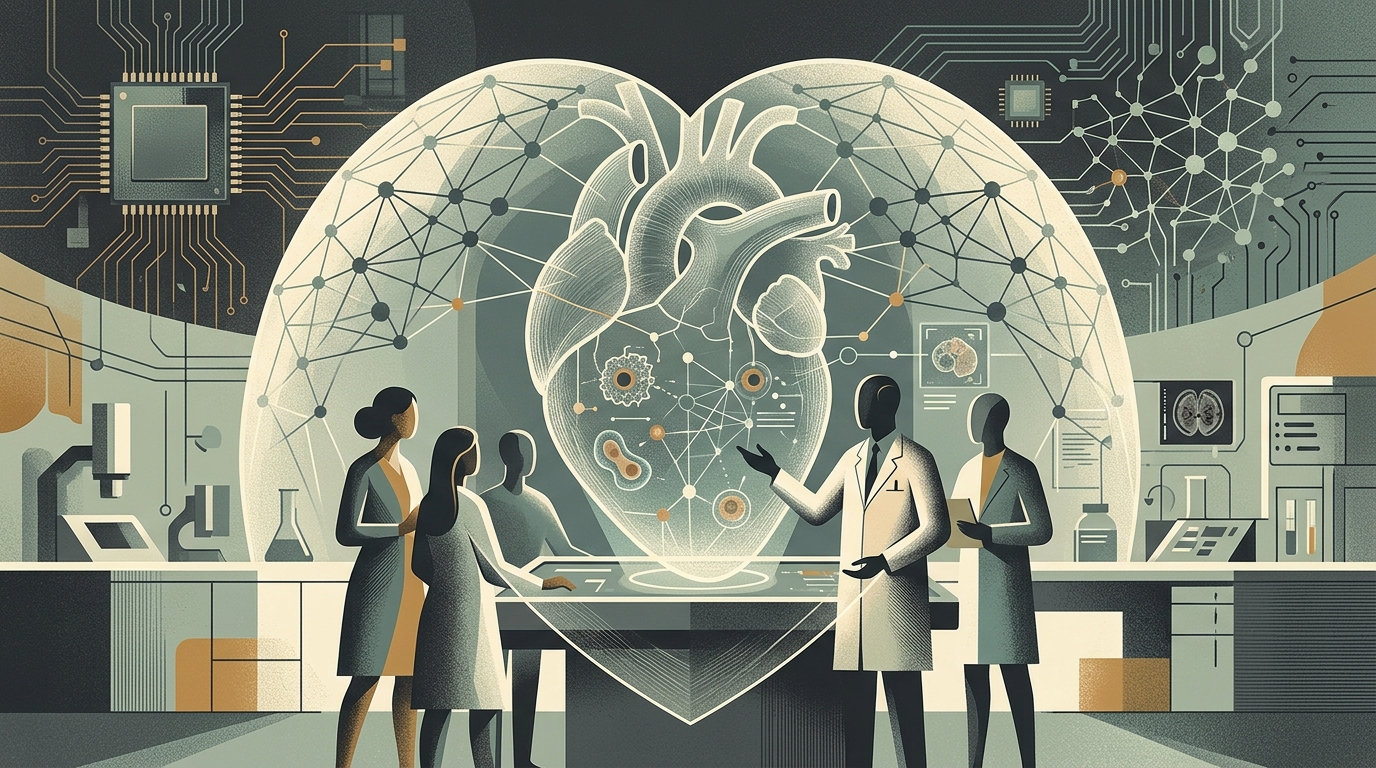
In contemporary medicine, we are faced with a paradox that could be described as the "double threat" of survival: the very treatments that save lives from cancer—chemotherapy, radiation, and immunotherapies—often leave behind a heavy legacy of cardiovascular damage. This intersection of two major medical fields gave birth to Cardio-Oncology, a discipline that is today being radically reshaped by Artificial Intelligence (AI). Aaron Sverdlov, Associate Professor and a leading figure in the field, highlights how machine learning algorithms are no longer mere auxiliary tools, but the critical factor in ensuring the long-term quality of life for patients.
The Challenge of Cardiotoxicity and the Diagnostic Gap
For decades, the medical community focused almost exclusively on tumor eradication. However, as survival rates soared, it became clear that many cancer survivors are more at risk of heart failure than a recurrence of their primary disease. Cardiotoxicity—the damage caused to the myocardium by anticancer agents—is often "silent." By the time traditional symptoms become visible on an echocardiogram, the damage is usually already advanced and, in some cases, irreversible.
Aaron Sverdlov points out that the traditional monitoring model relies on reactive methods. We wait for the left ventricular ejection fraction to drop before intervening. Artificial Intelligence is changing this paradigm by offering the possibility of prediction before treatment even begins. By analyzing vast amounts of data from electronic health records, genetic profiles, and biomarkers, AI can identify which patients are at the highest risk, allowing doctors to adjust the treatment regimen or administer prophylactic cardioprotective therapy.
The Revolution in Medical Imaging
One of the areas where the contribution of Sverdlov and his team is most catalytic is the automation and precision of imaging. Measuring myocardial "strain" is a sensitive method for detecting early damage, but it requires specialized knowledge and is prone to human error or subjective interpretation. Deep learning algorithms can now analyze thousands of ultrasound images in seconds, identifying minute changes in heart wall motion that the human eye cannot discern.
- Automated segmentation of cardiac chambers for more accurate measurements.
- Reduction of inter-observer variability, ensuring consistent results regardless of the technician.
- Integration of data from Cardiac Magnetic Resonance (CMR) to create 3D risk models.
This technological superiority translates into time. In oncology, time is the most precious currency. Rapid diagnosis allows for the safe continuation of anticancer treatment, avoiding unnecessary interruptions that could jeopardize the patient's cure.
Personalized Medicine and the Ethics of Technology
Sverdlov’s approach is not limited to machinery. He strongly argues that AI in Cardio-Oncology is the key to truly personalized medicine. Every patient is unique; an individual's response to trastuzumab or anthracyclines varies based on their metabolic profile and history. AI can synthesize these disparate parameters, creating a "digital twin" of the patient where doctors can simulate the effects of different drugs.
"Artificial Intelligence does not replace the clinician; it empowers them to see the invisible and prevent the inevitable," Sverdlov often remarks in his presentations.
However, integrating these systems brings challenges. The quality of training data is critical. If algorithms are trained on non-diverse population samples, they risk reproducing racial or social biases. Furthermore, the "black box" problem—the difficulty in understanding how an AI system reached a decision—remains a barrier to full clinical acceptance. Transparency and Explainable AI (XAI) are the next frontiers to be conquered.
The Future: From Hospital to Home
Looking ahead, Sverdlov’s vision includes continuous monitoring via wearable devices. Cardiotoxicity doesn't just happen during infusion in the hospital; it can manifest weeks or months later. Using AI to analyze data from smartwatches—such as heart rate variability or oxygen levels—can alert the treating physician to an impending crisis before the patient feels any symptoms. This transition from hospital-centric care to "ubiquitous" monitoring promises to eliminate sudden complications, making cancer a disease that, while serious, will not rob the heart of its strength.