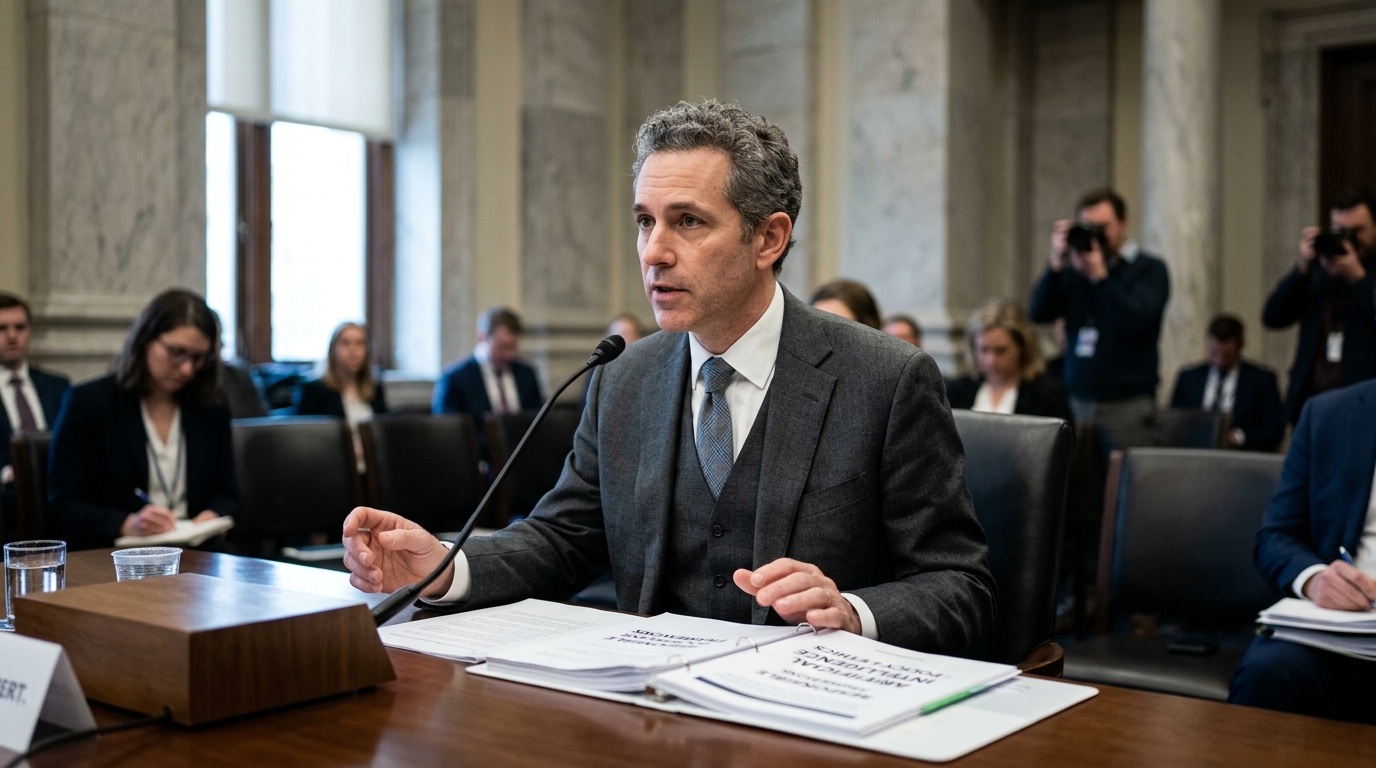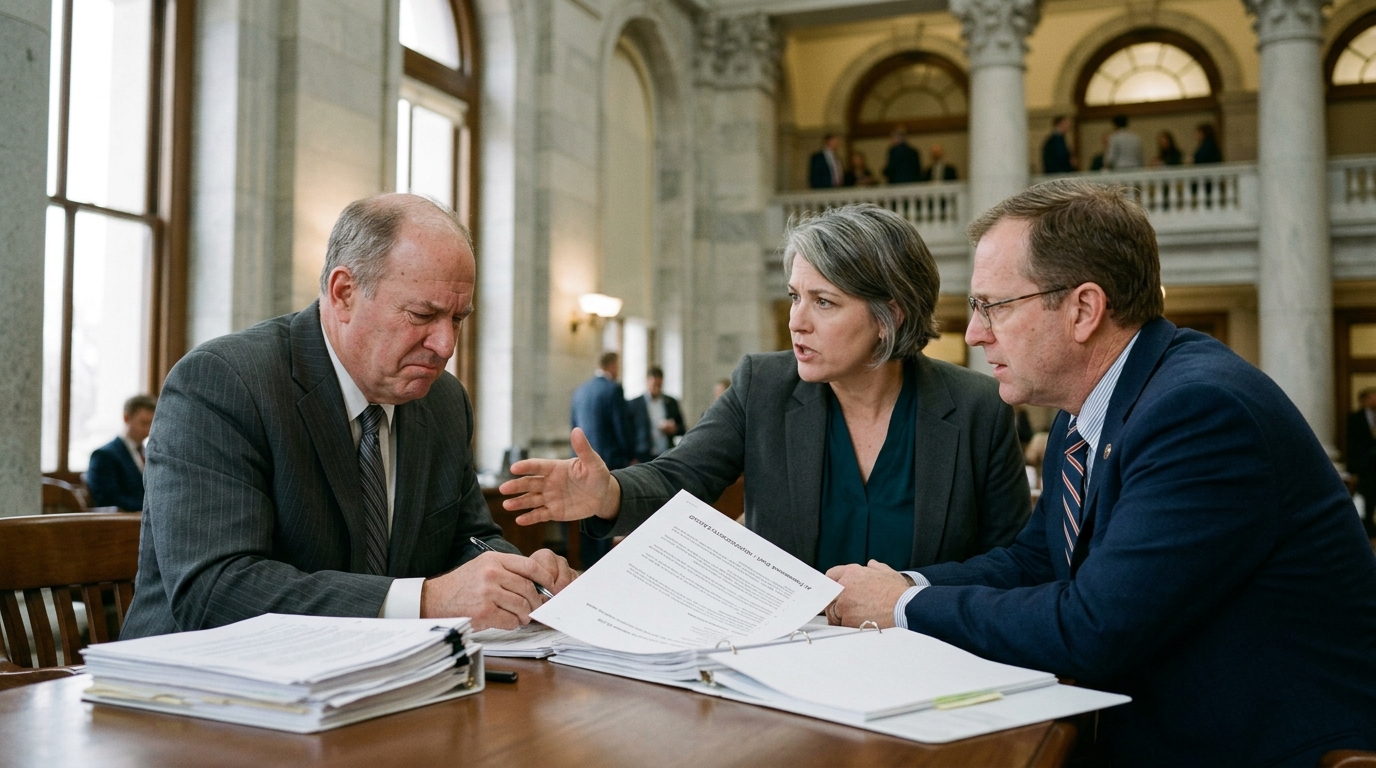
The United States Congress's attempt to harness the rapid evolution of Artificial Intelligence (AI) has hit a familiar wall: partisan polarization and substantive disagreements over the nature of regulation. According to recent reports, the House Democratic AI Commission has expressed strong opposition to the draft framework authored by Republican Jay Obernolte and Democrat Lori Trahan. This development highlights the deep divide between those seeking a "light-touch" regulatory approach to foster innovation and those demanding stringent safeguards for civil rights and consumer safety.
The Obernolte-Trahan Framework: Innovation vs. Oversight
The Obernolte-Trahan draft was intended to be a middle ground. Based on a "risk-based approach"—similar to that of the European AI Act—the framework sought to categorize AI applications according to the potential harm they could cause. Jay Obernolte, who brings a background in computer science to the table, has argued forcefully that any legislation must not stifle American entrepreneurship, especially amidst the escalating technological competition with China.
However, criticism from the Democratic Commission focuses on the fact that the draft is perceived as overly lenient toward Big Tech. Critics argue that the proposed rules lack "teeth," meaning robust enforcement mechanisms and clear penalties for violations concerning algorithmic bias and disinformation. Lori Trahan, despite being a Democrat, has found herself targeted by colleagues who believe her compromise position weakens the protection of citizens' rights.
Points of Contention: Civil Rights and Labor
The core disagreement lies in the integration of civil rights protections. The Democratic Commission insists that AI is already being used to automate decisions regarding hiring, mortgages, and policing, often with biased results against minorities. The Obernolte-Trahan draft, according to critics, does not sufficiently address these systemic inequalities.
- Algorithmic Transparency: Democrats are demanding full access to source codes and training data for independent researchers to audit.
- Corporate Liability: There is a demand for legal liability for AI model developers if their product causes proven harm or discrimination.
- Labor Impact: The lack of provisions protecting workers from displacement due to automation is a "red line" for the progressive wing of the party.
Furthermore, the national security dimension complicates matters. While Republicans view regulation as a hurdle to maintaining dominance over Beijing, many Democrats counter that an unsafe and unregulated AI is itself a threat to US democratic stability and social cohesion.
Geopolitical Stakes and the Legislative Future
As we move into the latter half of 2026, the pressure to pass federal legislation is mounting. The US risks falling behind the EU and other jurisdictions that have already established rules of the road. The current standoff, however, suggests that a bipartisan consensus is further away than ever. The Democratic Commission appears to be preparing its own, more stringent alternative framework, which is expected to focus heavily on "Algorithmic Accountability."
"We cannot allow the desire for speed to sacrifice the fundamental values of justice and equality," stated a commission staffer who requested anonymity.
The market is watching closely. Major players like Microsoft, Google, and OpenAI generally prefer a unified federal framework—even a strict one—to avoid a "patchwork" of differing state laws (akin to California's data privacy regulations). The failure of the Obernolte-Trahan draft could lead to further fragmentation, significantly increasing compliance costs for businesses and slowing down deployment.
Conclusion: A Treacherous Path Ahead
The resistance to the Obernolte-Trahan draft is not merely a bureaucratic dispute; it is a battle for the soul of technological governance in the 21st century. If Washington fails to find common ground, AI will continue to evolve in a legal vacuum, with the consequences felt not just in Silicon Valley labs, but in every aspect of citizens' daily lives. The need for serious, analytical, and fair legislation is more pressing than ever, but the political price currently seems too high to bridge the gap.