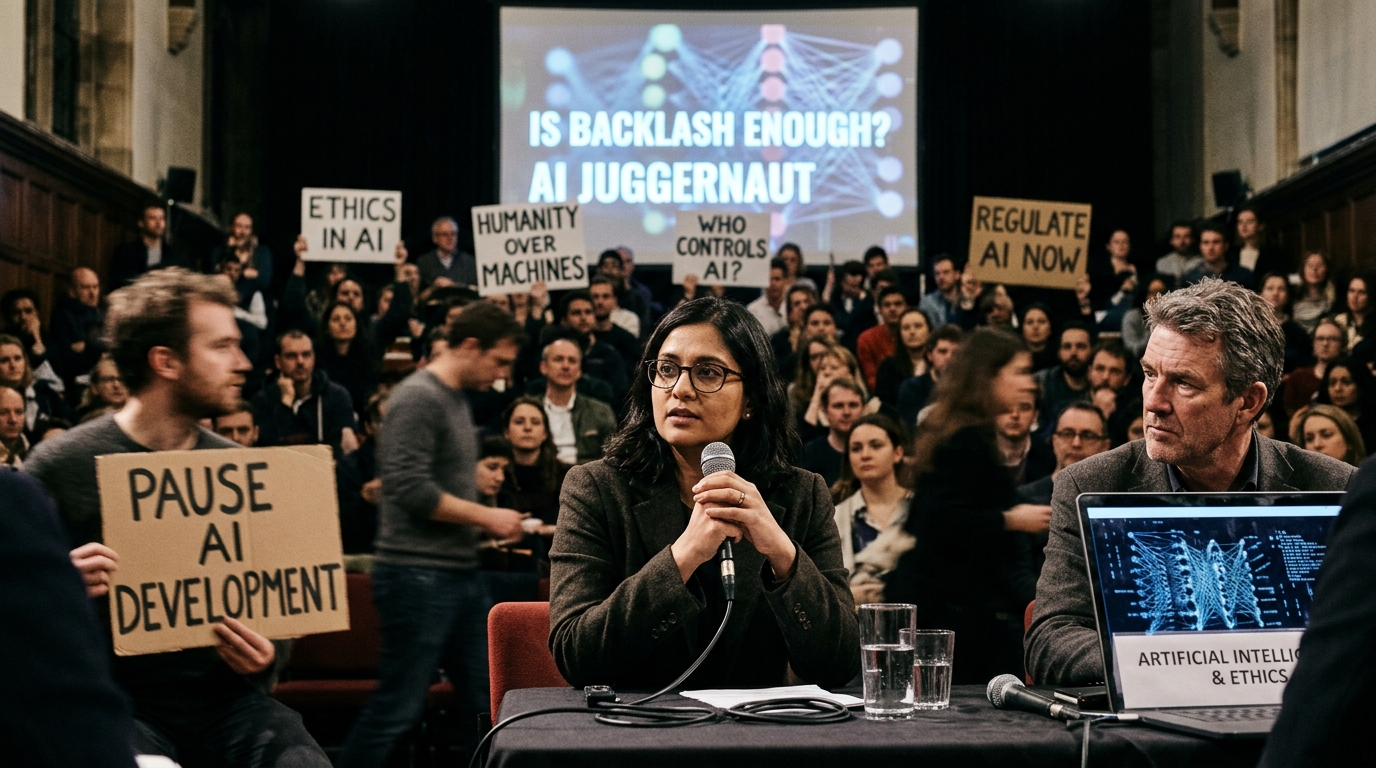
In a stunning reversal that echoes the dramatic warnings of 2023, Anthropic — the safety-oriented AI firm founded by former OpenAI executives — has formally called for a global pause on the development of the most advanced 'frontier' AI models. This proposal, emerging in the heat of 2026's rapid technological acceleration, does not target AI as a whole but focuses specifically on systems exceeding certain thresholds of compute and capability that could become uncontrollable.
The Philosophy of Constitutional Safety
Anthropic is not a fringe voice in the Silicon Valley ecosystem. Since its inception, it has championed 'Constitutional AI,' a method where models are trained to follow a set of ethical principles without constant human intervention. However, the company's leadership now signals that technical safeguards alone are insufficient. The speed at which compute power is scaling has outpaced the ability of researchers to fully comprehend the 'emergent properties' of these massive neural networks.
According to the official statement, Anthropic argues we are at a critical tipping point. Models slated for training in the coming year may possess capabilities in cyber-warfare, biological synthesis, and strategic manipulation that would render any subsequent regulation moot. The call for a pause aims to establish an international governance framework, akin to nuclear non-proliferation treaties.
The Geopolitical Chessboard and the Risk of Unilateralism
The primary hurdle to such a moratorium remains geopolitical reality. Critics of the proposal point out that a unilateral pause by Western firms would grant an irreversible advantage to rival powers like China. Anthropic, however, counters that the risk of an 'existential catastrophe' knows no borders. Their proposal includes the creation of a global monitoring body to track the distribution of high-end GPUs and ensure no actor continues training in secrecy.
- The necessity for international cooperation between the US, EU, and China.
- The role of cloud providers (Amazon, Google, Microsoft) in monitoring compute usage.
- The establishment of strict criteria for what constitutes a 'hazardous' model.
Market reaction has been swift and polarized. While some academics hailed the initiative as an act of moral leadership, others view it through the lens of 'regulatory capture.' If development halts now, firms that already possess top-tier models — such as Anthropic, OpenAI, and Google — would solidify their market dominance, effectively pulling up the ladder behind them and preventing new competitors from reaching parity.
The 2026 Dilemma: Progress or Survival?
As we navigate the first half of 2026, the AI discourse has shifted from productivity gains to existential survival. Anthropic suggests a 'strategic respite' of six to twelve months. During this window, the industry would be required to agree on common safety protocols and develop interpretability tools that allow us to peer inside the 'black box' of complex neural networks.
"We are not asking for the end of progress, but for the assurance that progress will not be our end," a senior spokesperson for the company remarked.
The lingering question is whether governments possess the political will or technical expertise to enforce such a pause. With elections looming in several Western nations, AI has become a central political issue, with voters torn between the fear of economic displacement and the specter of a technological singularity that escapes human governance.