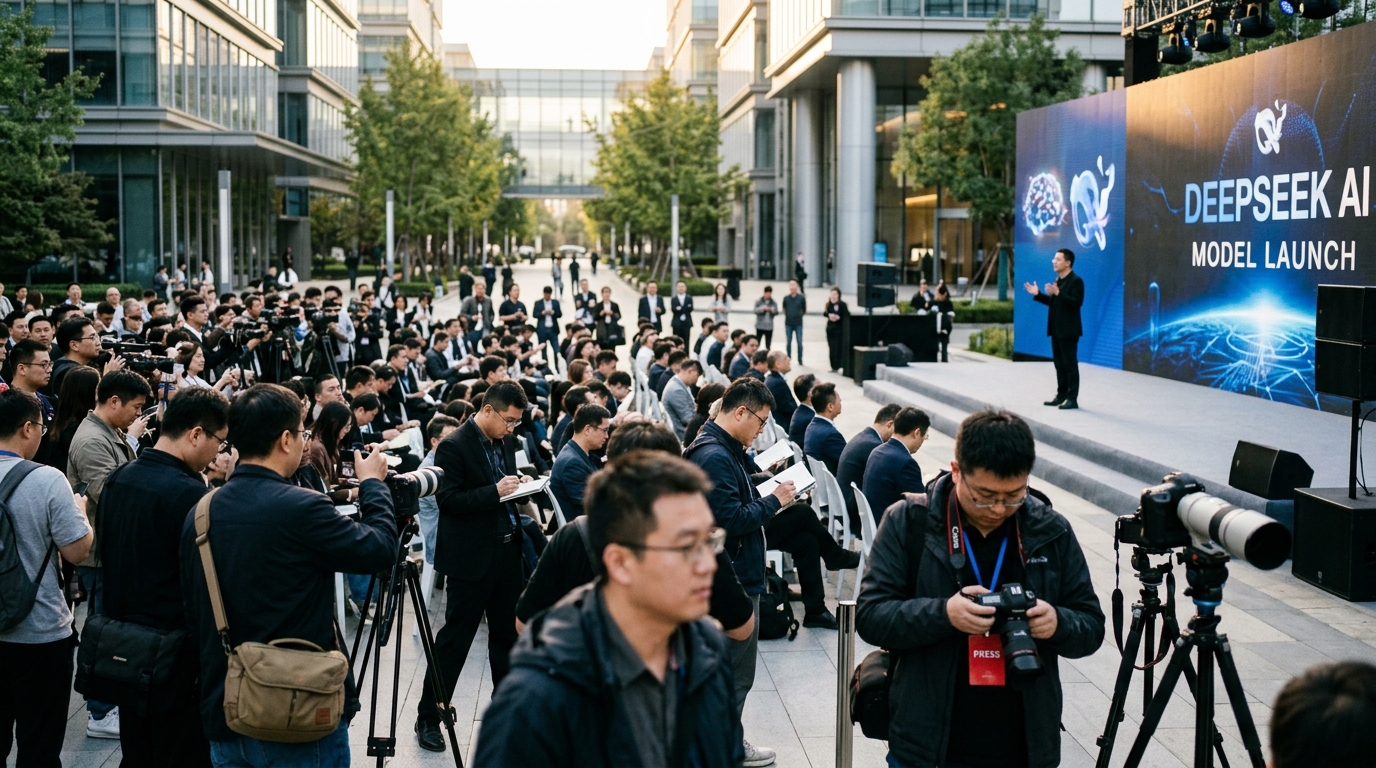
The news that DeepSeek, the Chinese AI lab that gained global notoriety for its staggering efficiency, is nearing a $7 billion funding haul is more than a venture capital story; it is a geopolitical landmark. According to reports from Semafor and industry insiders, the Hangzhou-based firm is preparing to close one of the largest funding rounds in Chinese tech history, occurring precisely as U.S. chip sanctions reach a fever pitch.
Efficiency as a Strategic Weapon
DeepSeek is not your average Silicon Valley-style startup. Born out of High-Flyer Quant, a firm that mastered the art of algorithmic trading, DeepSeek approached artificial intelligence with a trader’s mindset: how to extract maximum output with minimum overhead. When the lab released DeepSeek-V3 and later DeepSeek-R1, the tech world was stunned. The company claimed to have trained models that rival GPT-4 and Claude 3.5 at a fraction of the cost—estimated by some to be ten times cheaper than its American counterparts.
This "lean training" paradigm has directly challenged the prevailing Silicon Valley dogma that AI dominance requires infinite piles of Nvidia H100s and multi-billion dollar electricity bills. DeepSeek’s success suggests that superior algorithmic architecture can compensate for a lack of access to the latest hardware. With this new $7 billion infusion, the company aims to scale its infrastructure and poach elite global talent, cementing its role as the primary challenger to the American AI hegemony.
Geopolitical and Economic Implications
This funding round arrives at a volatile moment in US-China relations. Washington has funneled billions through the CHIPS Act to stifle Beijing’s technological ascent. However, DeepSeek has demonstrated that software ingenuity can bypass hardware bottlenecks. The global markets felt the "DeepSeek Shock" earlier this year when Nvidia’s stock faced volatility as investors realized that if AI can be trained more efficiently, the insatiable demand for high-end GPUs might eventually plateau.
- The funding is expected to catapult DeepSeek’s valuation to levels that rival top-tier US AI startups like Anthropic.
- DeepSeek’s "open weights" strategy allows developers worldwide to build on their models, rapidly expanding Chinese soft power in the tech ecosystem.
- Beijing views DeepSeek as its national champion—the definitive answer to OpenAI and a cornerstone of its goal to lead the fourth industrial revolution.
"DeepSeek didn't just change the game; they rewrote the rulebook. They proved that intelligence isn't just a matter of raw compute, but of strategic algorithmic elegance," says one prominent industry analyst.
The Future of Global Competition
As DeepSeek closes in on this massive capital raise, the central question remains: can China sustain this pace of innovation under the weight of export controls? The evidence suggests yes. DeepSeek has successfully fostered a massive community around its models, winning the hearts of the open-source world—a demographic that OpenAI has largely alienated by moving toward closed, proprietary systems. This community-driven momentum could be more valuable than the $7 billion itself, as collaborative development accelerates progress in ways closed-loop systems cannot match.
In conclusion, DeepSeek’s $7 billion gambit is a clarion call to the West. Technological supremacy is no longer a guaranteed Western birthright. The path to Artificial General Intelligence (AGI) may no longer run exclusively through Palo Alto; it is increasingly being paved in the labs of Hangzhou. The era of the "Compute Moat" is being challenged by the "Efficiency Edge," and the stakes have never been higher.