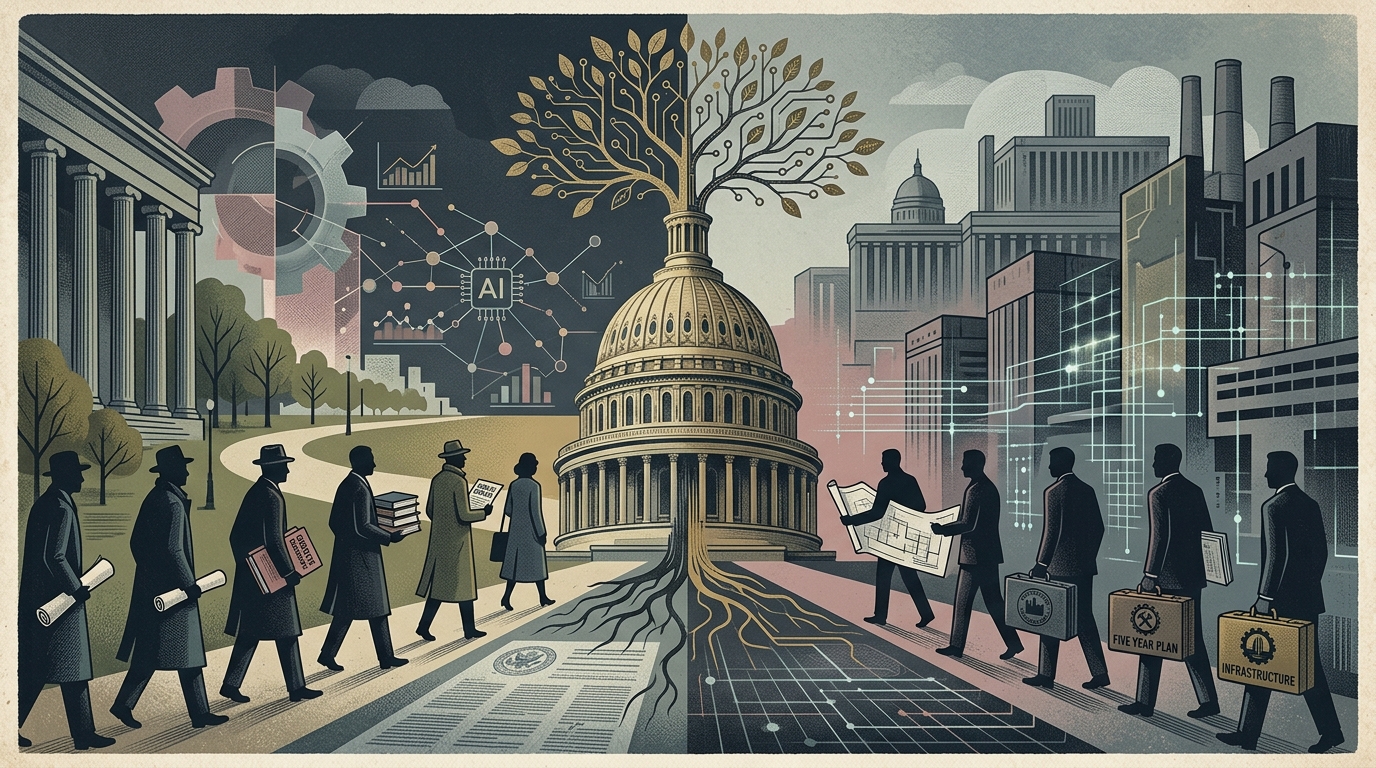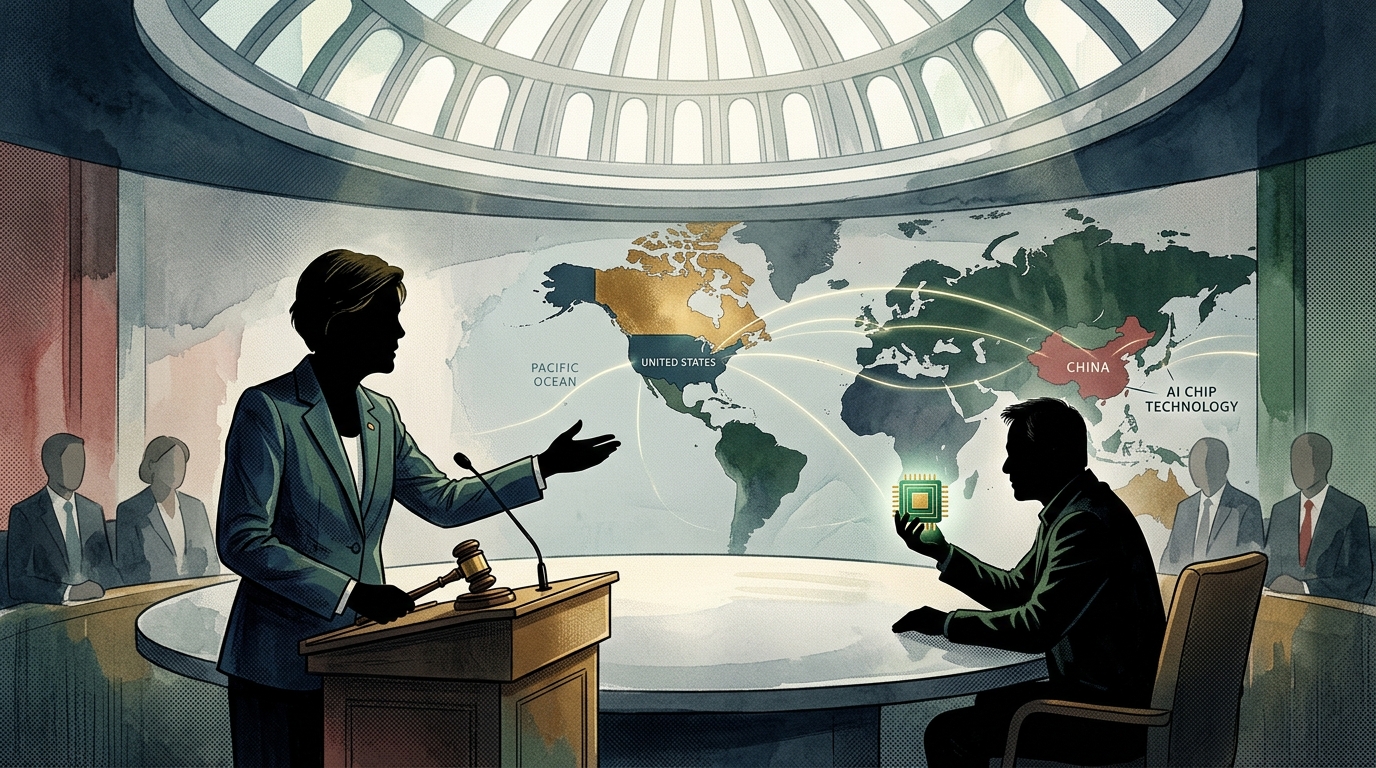
In a move that signals an escalation of tensions between Silicon Valley and Washington, Senator Elizabeth Warren has officially invited Nvidia CEO Jensen Huang to testify before the Senate. The focus of the summons is the ongoing sale of advanced artificial intelligence chips to China, despite the stringent export restrictions imposed by the U.S. Department of Commerce. This move is not merely political posturing but a deep examination of the relationship between the state and tech giants in an era where computational power is considered the new 'oil' of geopolitical influence.
The Compliance Game and Specialized Silicon
Nvidia, which dominates the global semiconductor market for AI, has long been walking a tightrope. On one hand, it must comply with regulations from the Bureau of Industry and Security (BIS), which prohibit the export of its top-tier models, such as the H100 and H800, to the Chinese market. On the other hand, China represents approximately 17% to 20% of the company's data center revenue—a figure that no publicly traded company can easily ignore.
To bridge this gap, Nvidia introduced a series of 'modified' products, such as the H20, L20, and L2, which are technically downgraded to fall just below the threshold of the bans. However, Warren and other lawmakers argue that these chips remain exceptionally powerful when used in clusters, allowing Beijing to continue developing military and surveillance AI applications. The critique focuses on whether Nvidia is following the 'letter' of the law while violating its 'spirit,' essentially creating backdoors for Chinese technological advancement.
National Security vs. Corporate Profit
Senator Elizabeth Warren's rhetoric is clear and sharp. She accuses Nvidia of prioritizing shareholder profits over the national security of the United States. "We cannot allow American companies to arm our geopolitical competitors with the very tools that could be used against us," she stated in a recent intervention. The Senator is demanding full transparency regarding the technical specifications of the chips sent to China and the guarantees the company receives that these will not end up with entities on the U.S. 'entity list'.
- Concerns over AI use in missile guidance systems and cyber warfare.
- The possibility of China using Nvidia's technology to train its own domestic Large Language Models (LLMs).
- The risk of creating a parallel market that undermines the Biden administration's "small yard, high fence" strategy.
For his part, Jensen Huang has repeatedly emphasized that Nvidia is committed to following every government directive. However, he has also warned that excessive restrictions could lead to a "permanent loss of opportunity" for the American industry, pushing China to rapidly develop its own semiconductor ecosystem, ultimately making it independent of Western technology.
Geopolitical Implications and the Future
The summons of Huang to the Senate is not just about Nvidia. It is a message to the entire Silicon Valley ecosystem. Washington appears determined to use export controls as a primary tool of foreign policy. This, however, creates a paradox: the more the U.S. restricts China's access to technology, the more Beijing invests in domestic players like Huawei and SMIC. Already, there are reports that Chinese giants like Alibaba and Tencent are turning to domestic solutions, fearing further U.S. sanctions.
"Technology is no longer a neutral commercial good. It is the tip of the spear in a new Cold War, where lines of code and transistors replace conventional arms races."
In conclusion, Jensen Huang's testimony, if it takes place, will be a landmark moment. It will force the public and investors to face reality: the era of borderless, globalized technology is over. In its place, a world of technological blocs is emerging, where innovation must align with the state's geopolitical priorities, and where the CEOs of the world's largest companies are held accountable not just to their shareholders, but to the generals of national security.