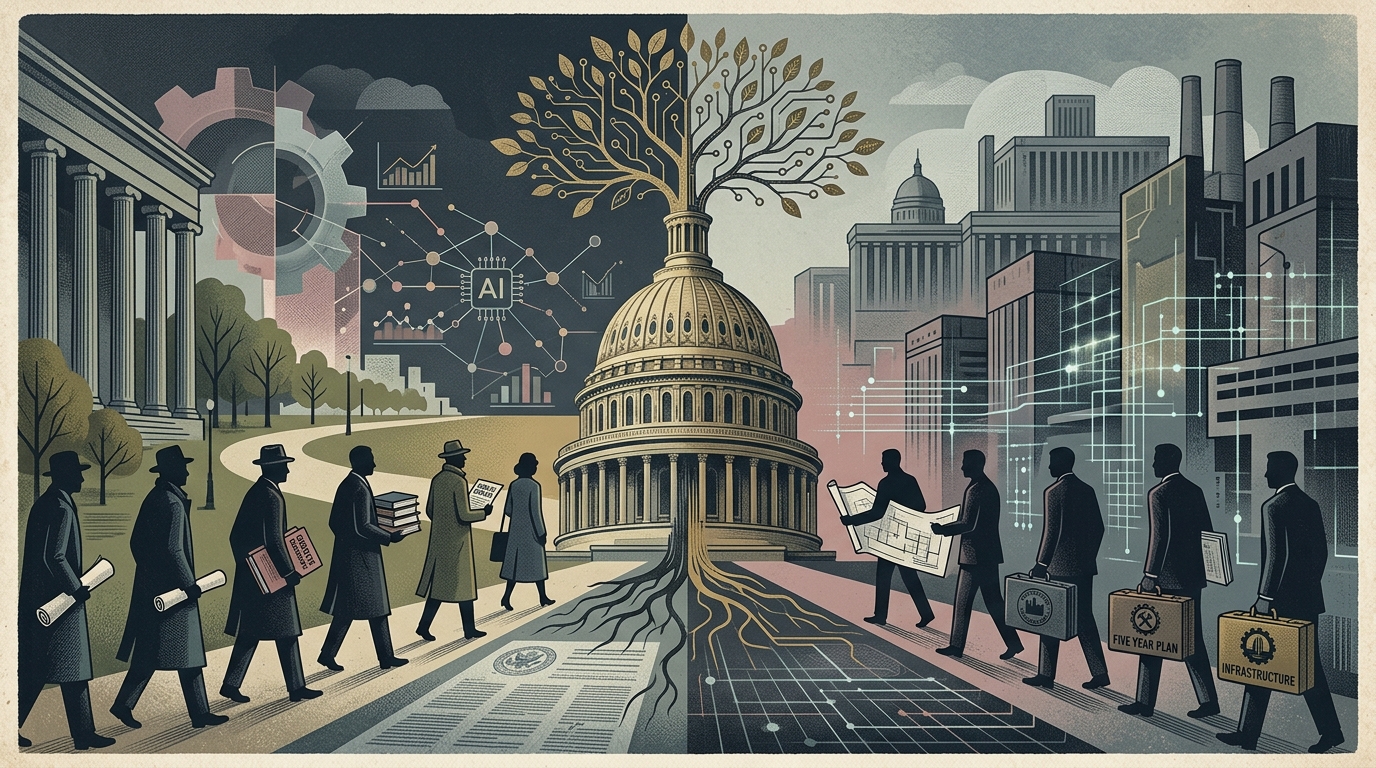
In a move that straddles the line between economic nationalism and state-led capitalism, Donald Trump has dropped a bombshell into the public discourse regarding the future of technology. His proposal for the U.S. government (or its citizens directly) to acquire a stake in Artificial Intelligence giants is not merely a campaign soundbite; it represents a radical reassessment of the state-technology relationship at the dawn of the Fourth Industrial Revolution.
The logic behind the statement that it would be a "wonderful idea" is rooted in the belief that the rise of AI is not just a corporate success story, but a national achievement built on American infrastructure, public research funding, and, crucially, the data of the citizens themselves. As of June 2026, this debate has taken on an existential character, as computational power has become the new 'oil' of the global economy.
The Emergence of a U.S. Sovereign Wealth Fund
Trump's proposal is inextricably linked to the idea of creating a U.S. Sovereign Wealth Fund, similar to those managed by Norway or Saudi Arabia. The difference? Instead of natural resources, this fund would be fueled by the surplus value of algorithms. Trump argues that companies like NVIDIA, OpenAI, and Microsoft benefit from the stable U.S. environment and the massive energy consumption facilitated by the state, thus the public is entitled to an "equity stake."
This approach blurs the lines between traditional Republican free-market ideals and a form of "populist right-wing socialism." Critics note that such a move could lead to state control over innovation, while supporters see an opportunity to pay down the U.S. national debt using the trillions AI is expected to generate in the coming years.
Geopolitical Hegemony and the Race Against China
At the heart of the argument lies the existential competition with Beijing. Trump posits that if the U.S. does not treat AI as a national asset, it risks losing its leadership to China, which already operates under a model of close state-corporate synergy. The idea is to build a "Fortress AI," where technological dominance is synonymous with American power.
- Establishment of national 'Compute Reserves' for strategic use.
- Direct funding of energy infrastructure (SMRs/Nuclear) exclusively for AI data centers.
- Implementation of an 'Innovation Levy' that converts into equity for the public treasury.
This strategy seeks to ensure that the wealth generated by automation is not concentrated solely in the hands of a few Silicon Valley technocrats but is distributed across American society, potentially mitigating the social unrest caused by mass AI-driven job displacement.
Silicon Valley’s Reaction and Inherent Risks
Naturally, tech leaders view the proposal with skepticism, if not outright dread. The prospect of having the state sit on their boards of directors upends the "disruptive innovation" model. There is a profound fear that government bureaucracy will stifle the speed of development, handing an advantage to global competitors who remain nimble and unencumbered by state oversight.
"AI is the future of humanity, but if the government controls it, we risk turning innovation into a tool of political expediency," says a high-ranking executive from Palo Alto.
However, the reality of 2026 shows that AI companies need the state more than ever: for the licensing of new nuclear reactors, for access to critical minerals, and for defense against state-sponsored cyberattacks. Trump appears to recognize this dependency and is proposing a "deal" that could redraw the map of global capitalism.
Conclusion: Toward a New Social Contract?
The proposal for a public stake in AI giants may be the first serious attempt to redefine the social contract in the age of superintelligence. Whether it is a brilliant move for wealth redistribution or a dangerous state overreach, one thing is certain: the debate over the "ownership of intelligence" has officially begun, and it is unlikely to be settled anytime soon.