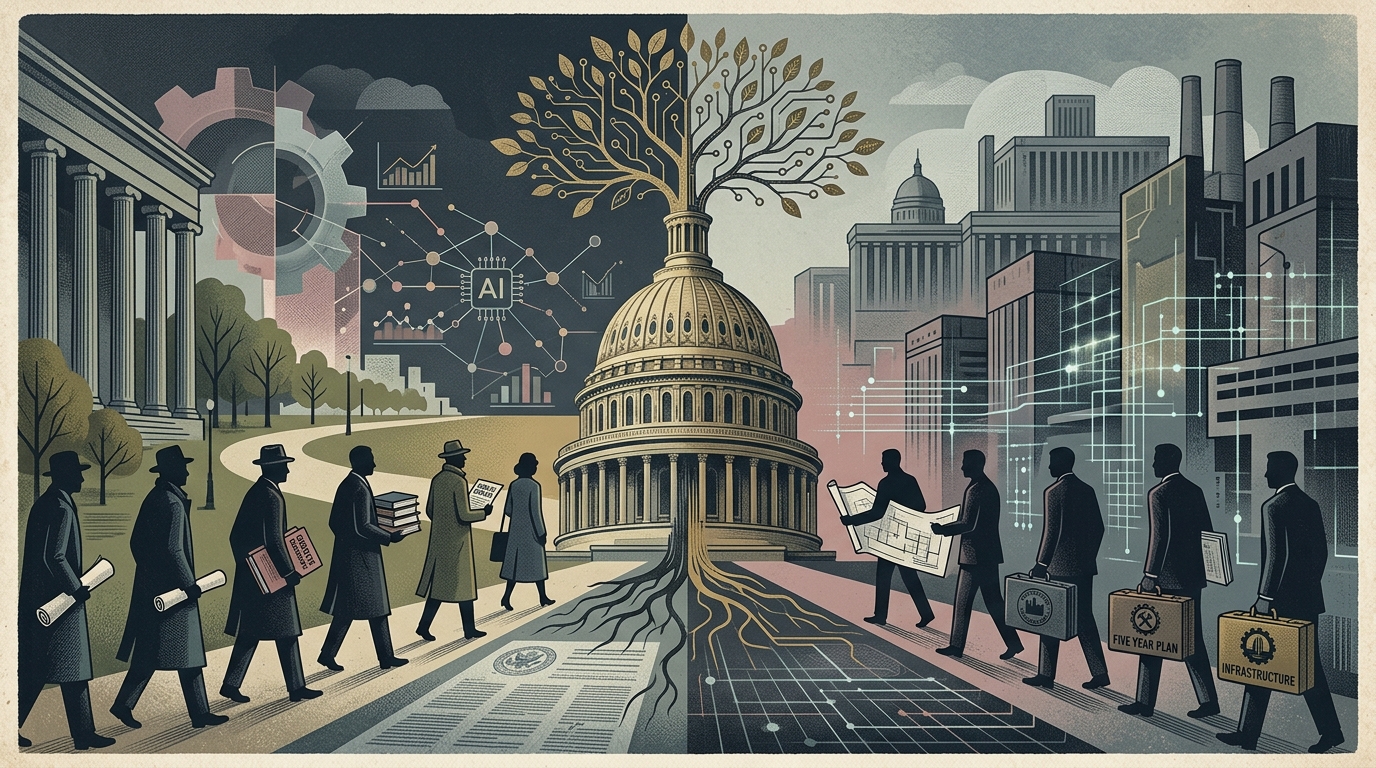
As we navigate the mid-point of 2026, the political landscape is being reshaped by a proposition that would have seemed like science fiction a decade ago: the 'AI Dividend.' The recent discourse surrounding the Trump administration's pivot toward what some call 'State Capitalism'—leveraging AI as a national survival strategy—requires a measured, historical perspective. We find ourselves at a juncture similar to that of ancient Athens when the discovery of the Laurium silver mines forced a choice between immediate distribution and long-term institutional investment.
The Shift Toward State-Directed Innovation
For decades, the prevailing Western orthodoxy championed a laissez-faire approach to technological advancement. However, the 'AI Dividend' signals a profound departure. By framing AI not merely as a commercial sector but as a national utility—akin to energy or defense—the state is asserting a level of control over the digital means of production that challenges our traditional understanding of market dynamics. In my analysis, this is not merely a fiscal policy; it is a fundamental reconfiguration of the social contract.
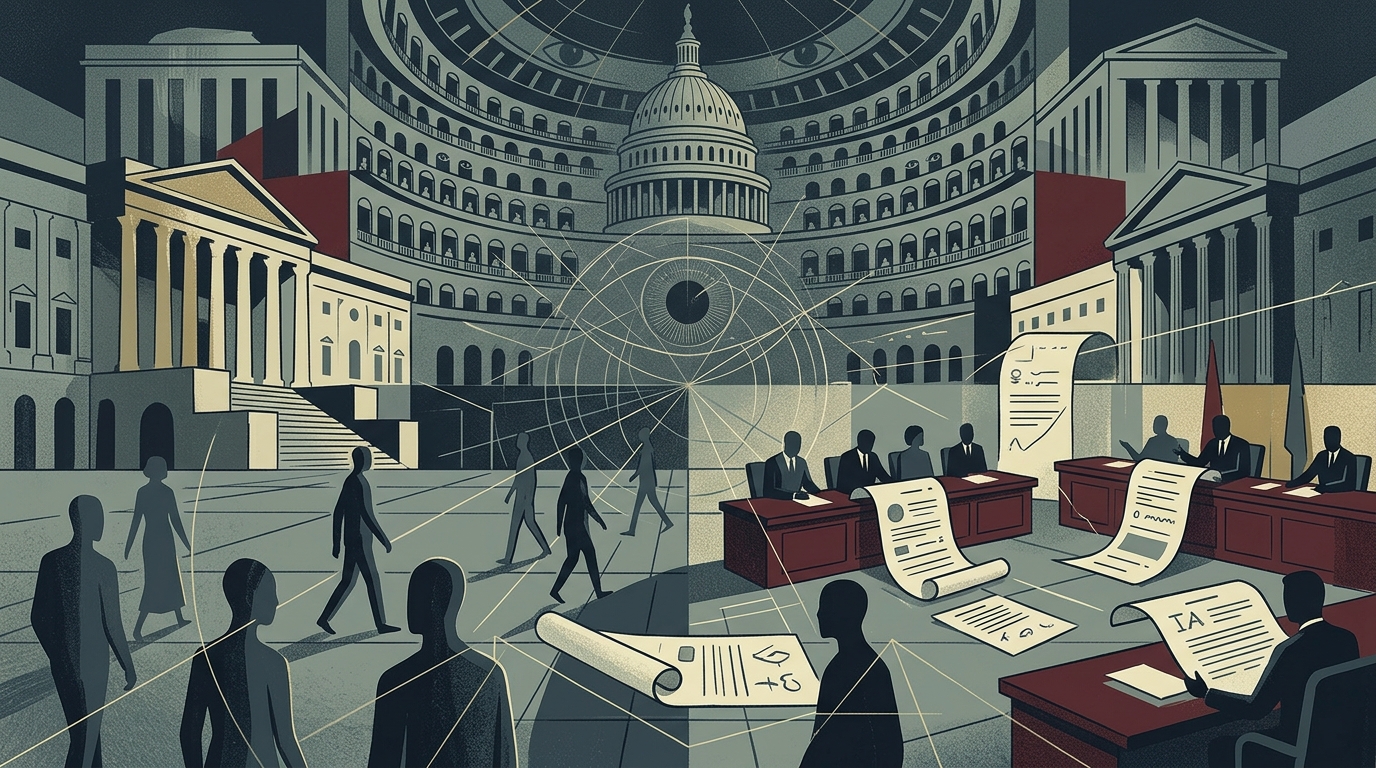
The proposal to redistribute the wealth generated by automated systems directly to the citizenry attempts to address the displacement caused by the 'Quiet AI Revolution.' Yet, we must ask: at what cost to institutional independence? When the state becomes the primary arbiter of technological wealth, the line between governance and corporate management blurs. We risk creating a system where political loyalty is incentivized by digital dividends, a modern variation of the 'bread and circuses' that preceded the decline of ancient republics.
Geopolitical Chess and the European Response
From a geopolitical standpoint, the 'AI Dividend' is a clear signal to Beijing and Brussels. By centralizing AI strategy under a national survival framework, the United States is effectively adopting a 'Digital Realpolitik.' This poses a significant challenge to the European Union’s regulatory-first approach. While the EU has focused on the AI Act and ethical guardrails, the shift toward state-backed AI dominance in the US and China threatens to leave Europe as a consumer of foreign-governed intelligence rather than a sovereign architect of its own future.
"True governance is not the mere distribution of spoils, but the creation of a framework where every citizen’s agency is enhanced, not replaced, by the tools of the era."
I propose that we look toward a 'Middle Way.' Regulation must not be so stifling as to prevent the growth of a domestic AI infrastructure, but the 'dividend' must be structured as an investment in human capital—education, reskilling, and civic participation—rather than a passive handout. In Greece, and across the EU, our policy response must focus on 'Technological Sovereignty.' This means fostering a pan-European AI infrastructure that serves the public good while maintaining the democratic checks and balances that prevent the concentration of power in a single executive office or a handful of corporate boardrooms.
Conclusion: Safeguarding the Democratic Contract
As we approach the latter half of 2026, the challenge for lawmakers is to ensure that the AI Dividend does not become a tool for surveillance or political leverage. We must demand transparency in the algorithms that determine these dividends and accountability for the state-capitalist structures managing them. Like the reforms of the ancient Athenian constitution, our modern frameworks must prioritize the long-term stability of the 'Polis' over short-term economic gains. The survival of our democratic values depends on our ability to govern the machine, rather than allowing the machine—or its masters—to govern us.