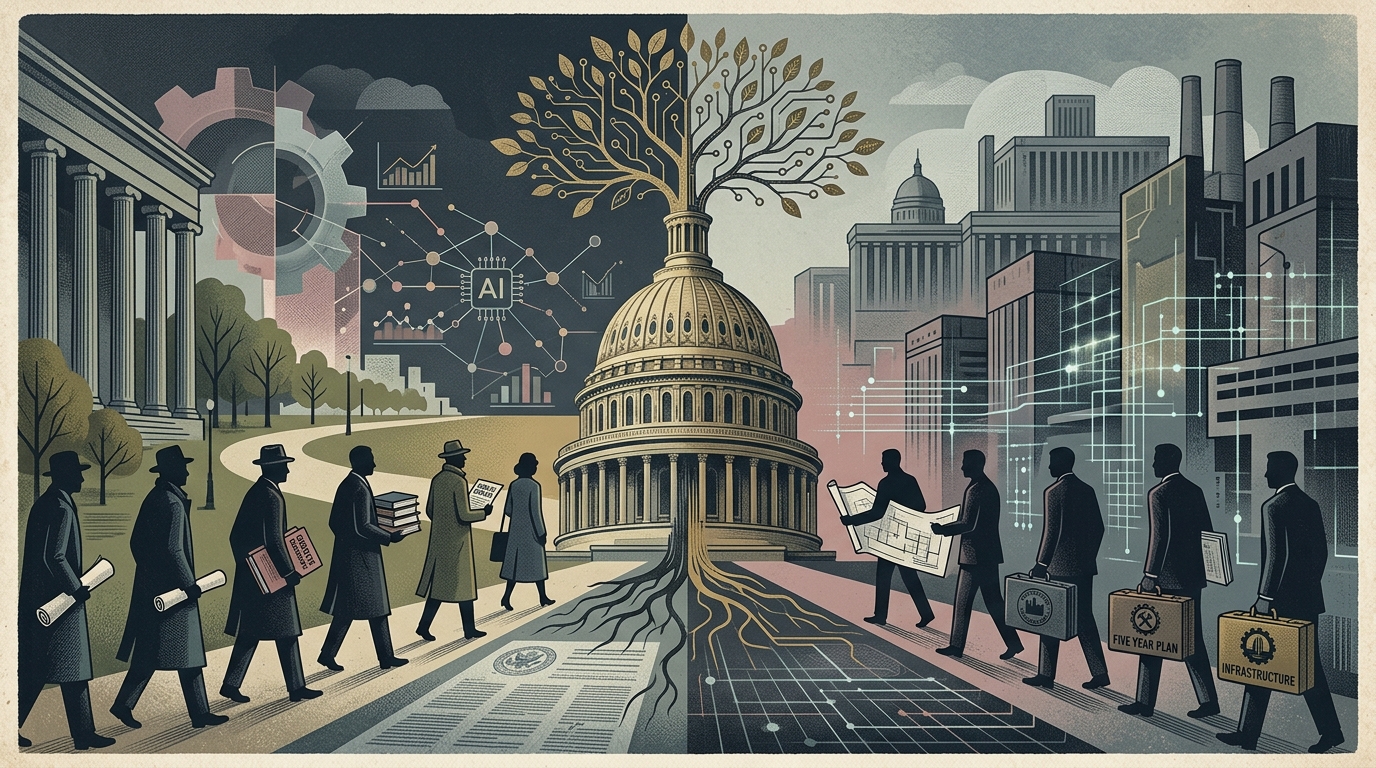

As we cross the midpoint of 2026, the global markets are witnessing a profound structural transformation. The narrative of Artificial Intelligence has evolved from the speculative frenzy of 2023-2024 into what I term the 'Maturity Pivot.' With the total wealth generated by AI-driven efficiencies reaching an estimated $98 trillion globally, the focus of institutional capital has shifted from 'potential' to 'proven infrastructure' and 'yield.'
The Hardware Goldmine: Optical Infrastructure and the Energy Nexus
The most significant market movement this quarter is the decoupling of AI hardware from general tech stocks. Investors have realized that the real goldmine isn't just in the models themselves, but in the physical layer that sustains them. The 'Optical Infrastructure Boom' is now the primary driver of the hardware sector. As data centers face local backlash in the US due to land and resource usage, the premium on efficient, high-speed optical chips and modules has skyrocketed. Interestingly, China’s ability to monetize this hardware layer—even amidst trade tensions—demonstrates the global dependency on this specific supply chain.
Furthermore, we are seeing a fascinating convergence between tech and utilities. Energy is no longer a peripheral cost; it is the fundamental constraint of AI growth. The 'Energy-AI Nexus' has transformed traditional utility companies into the new tech titans of the 2026 stock market. For the savvy investor, the 'picks and shovels' of this era are no longer just GPUs, but the power grids and optical switches that enable them.
The Great AI Reckoning: From Hype to Dividends
The market is currently navigating what some analysts call 'The Great AI Reckoning.' This is not a burst of a bubble, but a redistribution of capital. We are seeing a significant trend where 'Mature AI Investing' is taking center stage. Large-cap tech giants are increasingly using their AI-driven cash flows to issue dividends, signaling to the market that the era of hyper-growth-at-any-cost is transitioning into a phase of sustainable, structural ROI.
"The shift from speculative capital to dividend-paying AI giants marks the end of the beginning. We are no longer betting on the existence of the future; we are valuing its infrastructure."
However, this transition is not without friction. The European Central Bank (ECB) remains on high alert as energy geopolitics and the 'Hormuz Dilemma' create inflationary pressures. For businesses, the internal capital redistribution is stark: corporate budgets are increasingly prioritizing AI integration over traditional labor costs. The phrase 'We gave your raise to AI' is becoming a harsh reality in corporate balance sheets, as firms seek to justify their massive tech investments through immediate productivity gains.
Market Implications and Actionable Insights
For the remainder of 2026, I expect the following trends to dominate the business landscape:
- Orbital AI Alliances: The $12 billion Google-SpaceX alliance suggests that the next frontier for AI infrastructure is literally off-planet, bypassing terrestrial data center constraints.
- Enterprise Spend Shift: Chinese firms like DeepSeek are increasingly dominating US business spending indexes, suggesting that cost-efficiency in AI models is becoming more important than brand loyalty.
- Monetary Pivot: Watch the ECB closely. If energy costs remain sticky due to OPEC+ maneuvers, we may see a prolonged period of high rates that will favor cash-rich AI giants over debt-laden startups.
In conclusion, the market is rewarding stability and physical assets. The AI revolution has moved from the cloud to the ground (and the grid). Investors should look toward the 'Hardware Layer' and utilities as the defensive-growth play of the decade.