The current public discourse on Artificial Intelligence is almost entirely dominated by Generative AI. We talk about ChatGPT, Gemini, and the ability of machines to write poetry or create hyper-realistic images. However, the true, profound revolution that will change our understanding of the past and the future is not happening in chat windows. It is happening quietly, through algorithms that sift through oceans of data, seeking patterns that human cognition is impossible to grasp due to scale or complexity.
As Space Daily pointedly notes, the most powerful AI stories today are not about conversing with a machine, but about its ability to see the invisible. From the libraries of Herculaneum buried under Vesuvius’s lava to the far reaches of the observable universe, AI is acting as a new type of 'digital archaeologist' and 'cosmic explorer.'
The Resurrection of Carbonized Scrolls
For nearly two millennia, hundreds of scrolls from the library of a Roman villa in Herculaneum remained unreadable. The eruption of Vesuvius in 79 AD turned them into fragile lumps of carbon. Any attempt to unroll them would lead to their immediate destruction. This is where AI enters the frame, changing the field of classical philology forever.
Through the 'Vesuvius Challenge' initiative, researchers used high-resolution CT scans to create 3D models of the rolled scrolls. The problem was that the carbon-based ink was optically identical to the carbonized papyrus. Human vision could distinguish nothing. However, by training machine learning algorithms to detect subtle differences in surface texture—where the ink had dried and 'cracked' the papyrus—AI managed to 'read' words and entire sentences.
"This isn't just about recovering texts. It’s like opening a time capsule we thought was lost forever. AI doesn’t invent the text; it reveals it," says Dr. Brent Seales, head of the research team.
Mapping the Infinite: AI in Astronomy
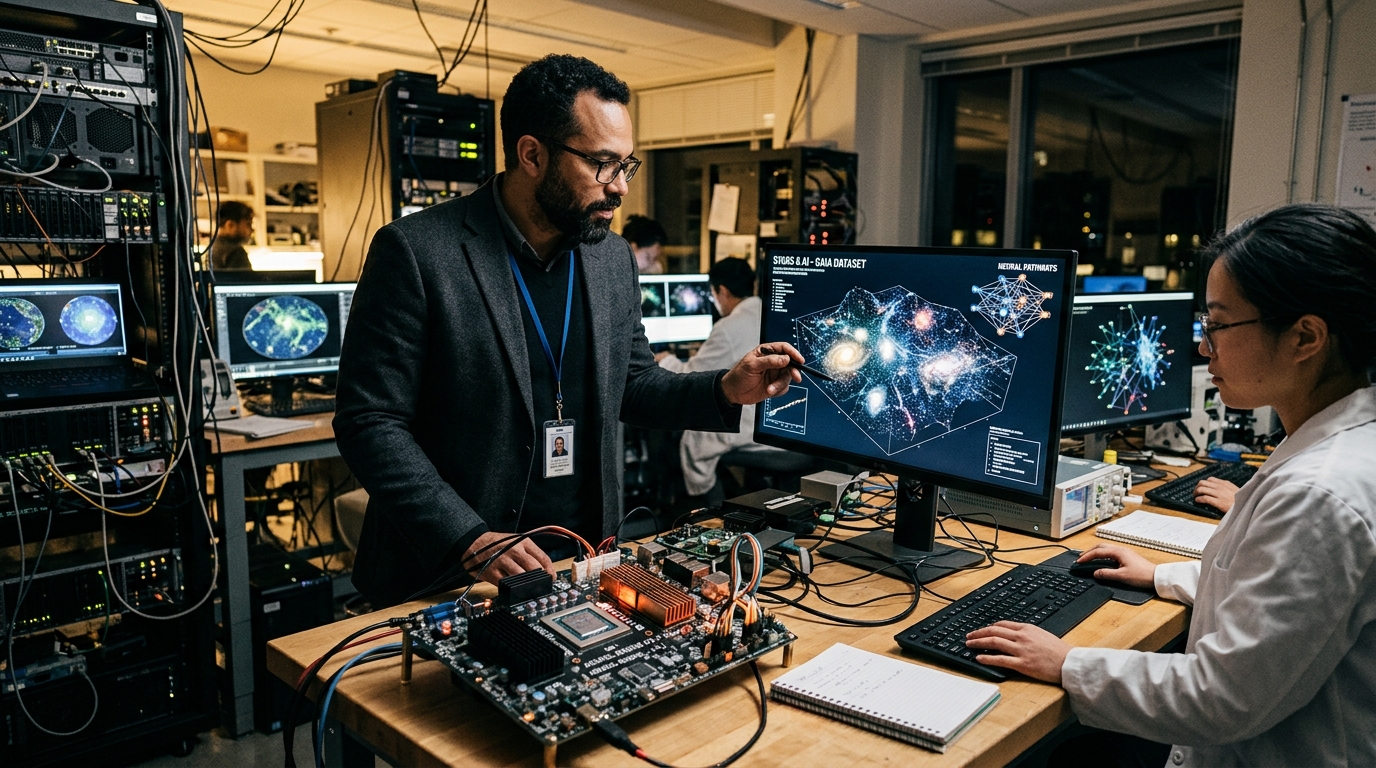
If archaeology is about the microscopic and fragile, astronomy is about the incomprehensibly vast. Modern telescopes, such as the James Webb and the upcoming Vera C. Rubin Observatory, generate petabytes of data every single night. An army of astronomers would take decades to examine images from millions of galaxies.
Computer vision algorithms can now classify galaxies based on their shape, identify gravitational lenses (phenomena where mass bends light), and discover exoplanets from the minute fluctuations in stellar brightness. AI doesn’t tire, doesn’t make mistakes due to bias, and can process in seconds what a human would need months to analyze. This 'quiet' data processing is leading to a golden age of discovery, where AI serves as the ultimate filter between noise and knowledge.
The End of the Human Bottleneck
The significance of these developments lies in the fact that AI is overcoming the 'human bottleneck.' In scientific research, we often have the data but lack the time or processing power to interpret it. AI transforms passive information storage into active knowledge.
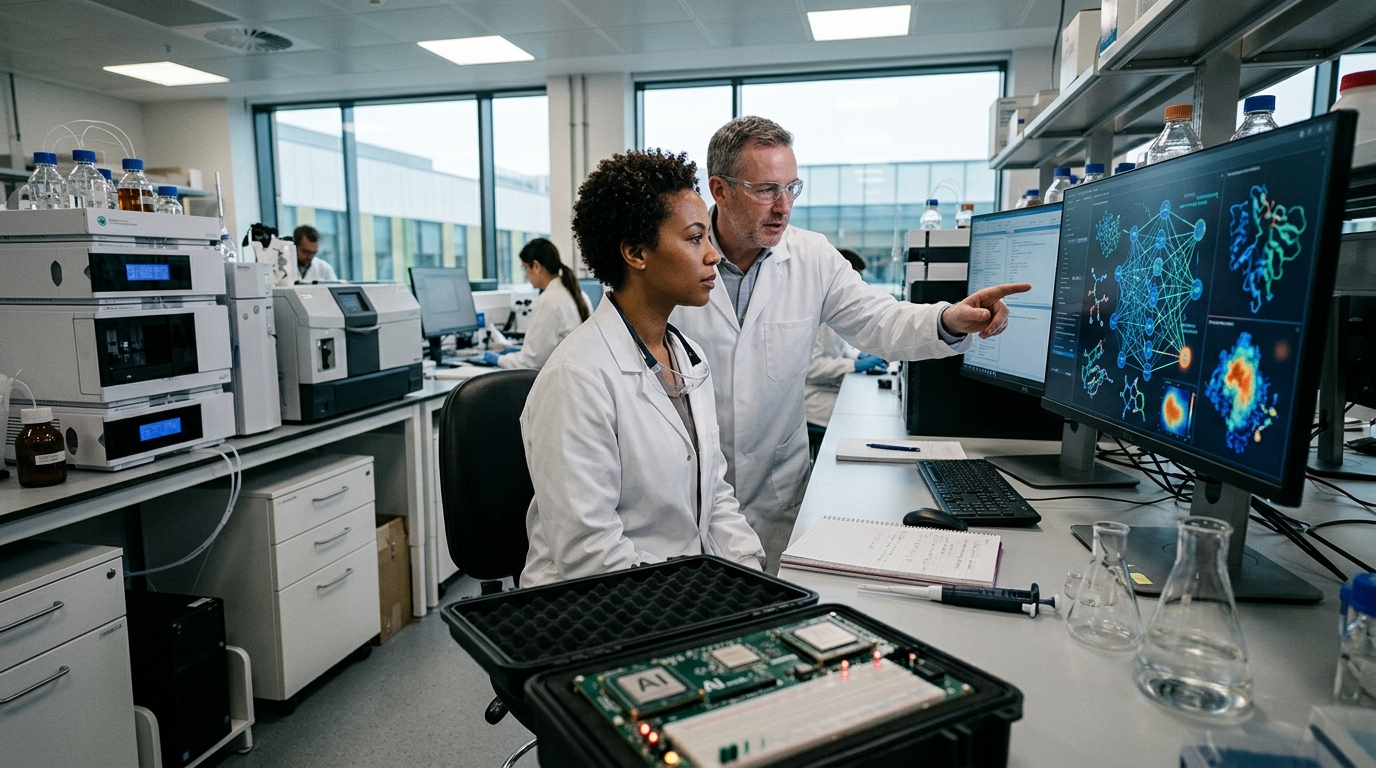
- Biology: Predicting protein structures (AlphaFold), accelerating medical research by decades.
- Climate Science: Analyzing satellite data to predict extreme weather events with accuracy unthinkable five years ago.
- Materials Science: Discovering new alloys and semiconductors through simulations that examine millions of element combinations.
In conclusion, while chatbots offer us a new interface to interact with machines, analytical algorithms offer us a new pair of eyes to see the world. The AI that doesn't speak, but 'sees' and 'understands' the structure of reality, is the one that will ultimately reshape our scientific heritage.