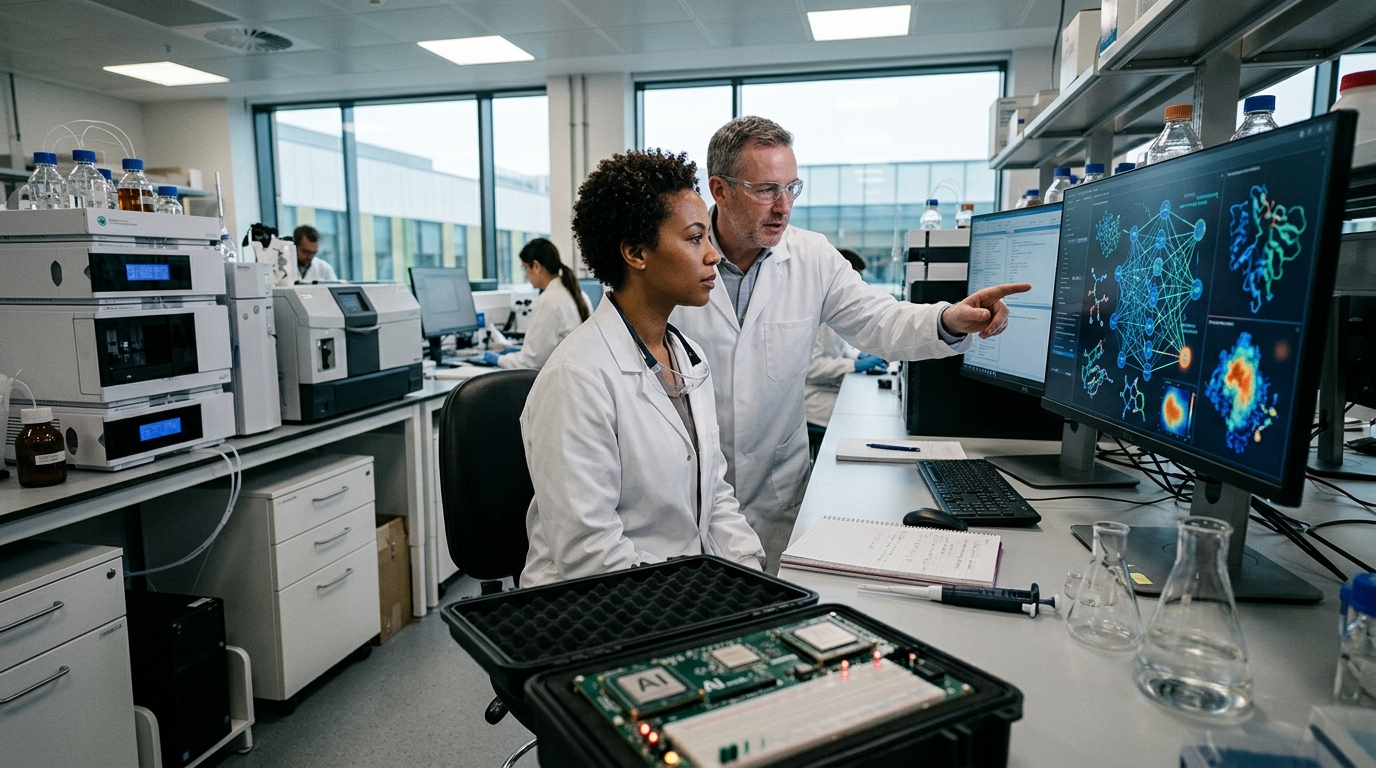
At the heart of the global pharmaceutical industry, AstraZeneca is conducting a quiet but profound revolution. The traditional method of drug discovery, a process often likened to finding a needle in a haystack, is being replaced by the surgical precision of algorithms. According to recent analyses and statements from company executives, the integration of Artificial Intelligence (AI) is no longer an experiment, but the central pillar significantly increasing the probability of success for new drug formulations.
Moving Beyond Trial and Error
For decades, developing a new drug took an average of 10 to 12 years and costs exceeding $2.5 billion. The most discouraging statistic was the failure rate: over 90% of candidate molecules failed during clinical trials. AstraZeneca, recognizing this economic and scientific bottleneck, has invested heavily in machine learning technologies to reverse the trend.
AI allows the company’s scientists to analyze vast volumes of biological data—from genomic sequences to clinical records—to identify the most suitable "targets" for a drug. Instead of testing thousands of compounds in the lab, algorithms simulate interactions in a digital environment, predicting which molecules are most likely to be both effective and safe for humans.
Strategic Partnerships and Digital Twins
AstraZeneca’s strategy is not limited to internal tools. The company has forged strategic alliances with tech giants and academic institutes, such as MILA in Montreal, to develop advanced Generative AI models. These models don't just analyze existing data; they "design" new molecules from scratch, optimizing their properties before they are even physically produced.
One of the most promising applications is "digital twins" of patients. Using data from previous trials, AI creates virtual models of human physiology. This allows AstraZeneca to predict how different population groups will react to a treatment, reducing the need for extensive and risky early-stage trials. As market analysts note, this approach increases the so-called "Probability of Success" (PoS), the holy grail of pharmaceutical strategy.
Impact on Oncology and Rare Diseases
Particular emphasis is placed on oncology, where AstraZeneca holds a leading position. AI helps decipher the complexity of cancer cells, which often develop resistance to treatments. By analyzing biopsy images using computer vision, researchers can identify biomarkers that the human eye might miss, enabling the creation of personalized therapies.
"Artificial Intelligence does not replace the scientist; it gives them a superpower: the ability to see patterns within the chaos of data," state R&D department executives.
Furthermore, in rare diseases, where data is inherently limited, AI can generate "synthetic data" to fill the gaps, accelerating the approval of orphan drugs that might otherwise remain on the shelves for decades.
Challenges and Ethical Dilemmas
Despite the optimism, the road is not without obstacles. The quality of AI outputs depends directly on the quality of input data. There is always the risk of "algorithmic bias" if the data comes primarily from specific ethnic groups, leading to drugs that are not equally effective for everyone.
Moreover, the issue of transparency arises. Regulatory bodies like the FDA and EMA are now tasked with evaluating drugs designed by algorithmic "black boxes." AstraZeneca is investing in "Explainable AI" (XAI) to justify every system decision to regulatory agencies. The stakes are high: if AI manages to reduce production costs, will we see a corresponding decrease in drug prices for the end consumer, or simply an increase in profit margins?