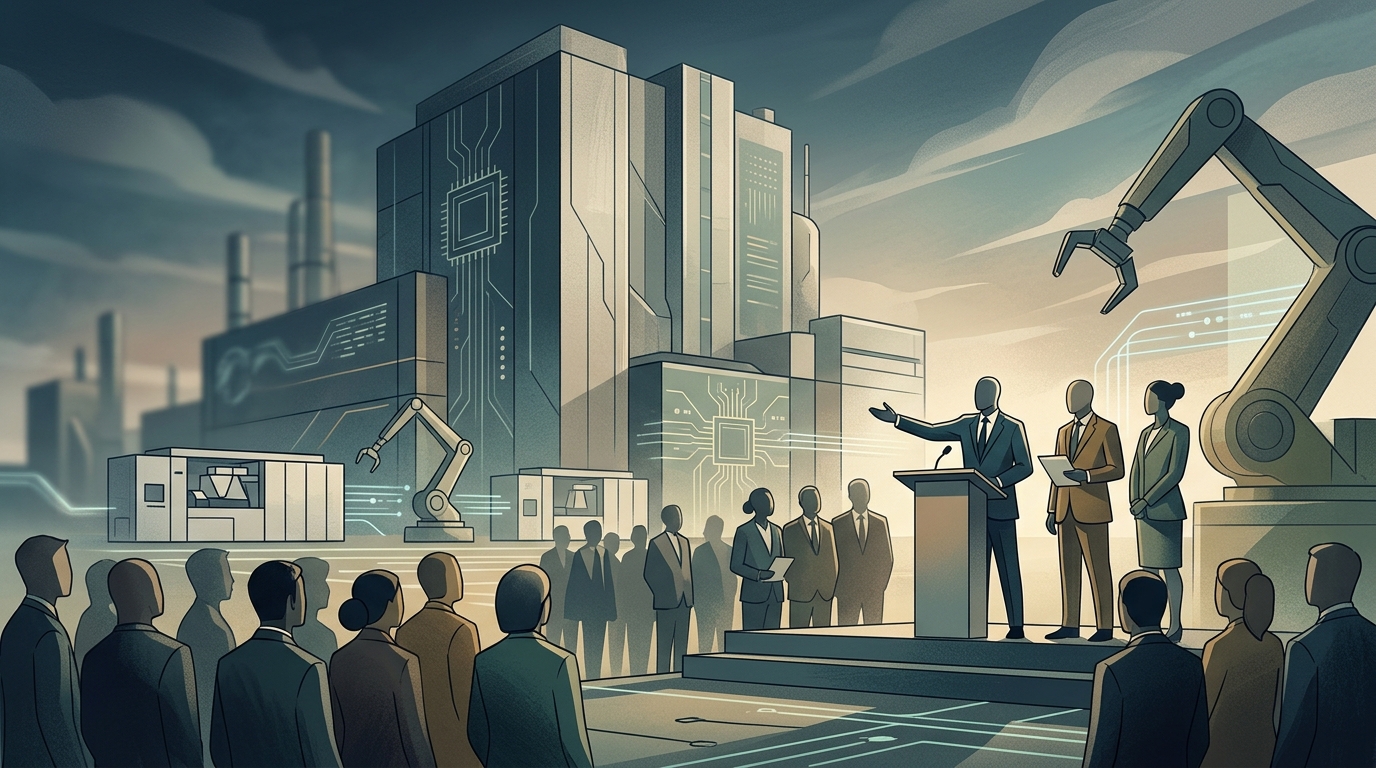
In a move destined to reshape the global technological landscape, Elon Musk has unveiled his ambitious 'Terafab' project. This is a monumental $55 billion investment aimed at manufacturing next-generation semiconductors specifically designed for Artificial Intelligence (AI) and advanced robotics. The heart of this venture beats in the Netherlands, as a strategic partnership with ASML—the monopoly leader in EUV (Extreme Ultraviolet) lithography systems—forms the cornerstone of Musk's master plan.
The Drive for Vertical Integration
For Musk, reliance on third-party suppliers like Nvidia or TSMC has always represented a strategic bottleneck for the growth of Tesla and xAI. Terafab is not merely a factory; it is Musk’s bid for total technological sovereignty. By designing and manufacturing his own chips, Musk aims to optimize the performance of the Dojo supercomputer and the Optimus humanoid robot while significantly reducing long-term production costs.
The $55 billion investment reflects Musk's conviction that the next phase of the global economy will be built on autonomous motion and embodied AI. Without control over the hardware, no company can guarantee the latency, speed, and security required by these frontier technologies. The choice of ASML as a primary partner underscores the importance of nanometric precision, as the new chips are expected to utilize High-NA EUV technology to achieve unprecedented transistor density.
Clashing with Semiconductor Giants
Musk's entry into semiconductor manufacturing places Tesla and its affiliates on a direct collision course with traditional giants like Intel, Samsung, and TSMC. While most tech companies follow the 'fabless' model—designing chips but outsourcing production—Musk is choosing the arduous path of manufacturing. This carries immense risks, as operating a semiconductor fab requires highly specialized labor and a continuous, massive influx of capital.
- Geopolitical Impact: This move bolsters the trend toward 'tech-sovereignty' in the West, potentially reducing reliance on Taiwanese foundries.
- Supply Chain Resilience: With Terafab, Musk shields his ventures from future chip shortages that could arise from international geopolitical tensions.
- Robotics Innovation: Specialized silicon will enable Optimus to process visual data in real-time with minimal power consumption, a key requirement for mobile robotics.
Financial Challenges and the Road Ahead
Despite the excitement, market analysts remain cautious. The $55 billion figure is staggering, even for the world's wealthiest individual. Funding this project will likely require new debt issuance or further stock sales, which could put downward pressure on Tesla's share price. However, if Terafab succeeds, the return on investment (ROI) could redefine market dynamics for decades to come.
"We are not just building a factory; we are building the foundation for an AI-driven civilization," Musk stated during the presentation, signaling the magnitude of his intentions.
In conclusion, Terafab represents Elon Musk's riskiest yet most promising gamble to date. Its success hinges on whether ASML can deliver the necessary high-end equipment on schedule and whether Musk’s engineering teams can master the extreme complexity of semiconductor fabrication at the 'Tera' scale. The world watches as the boundaries between automotive, AI, and hardware manufacturing continue to blur.