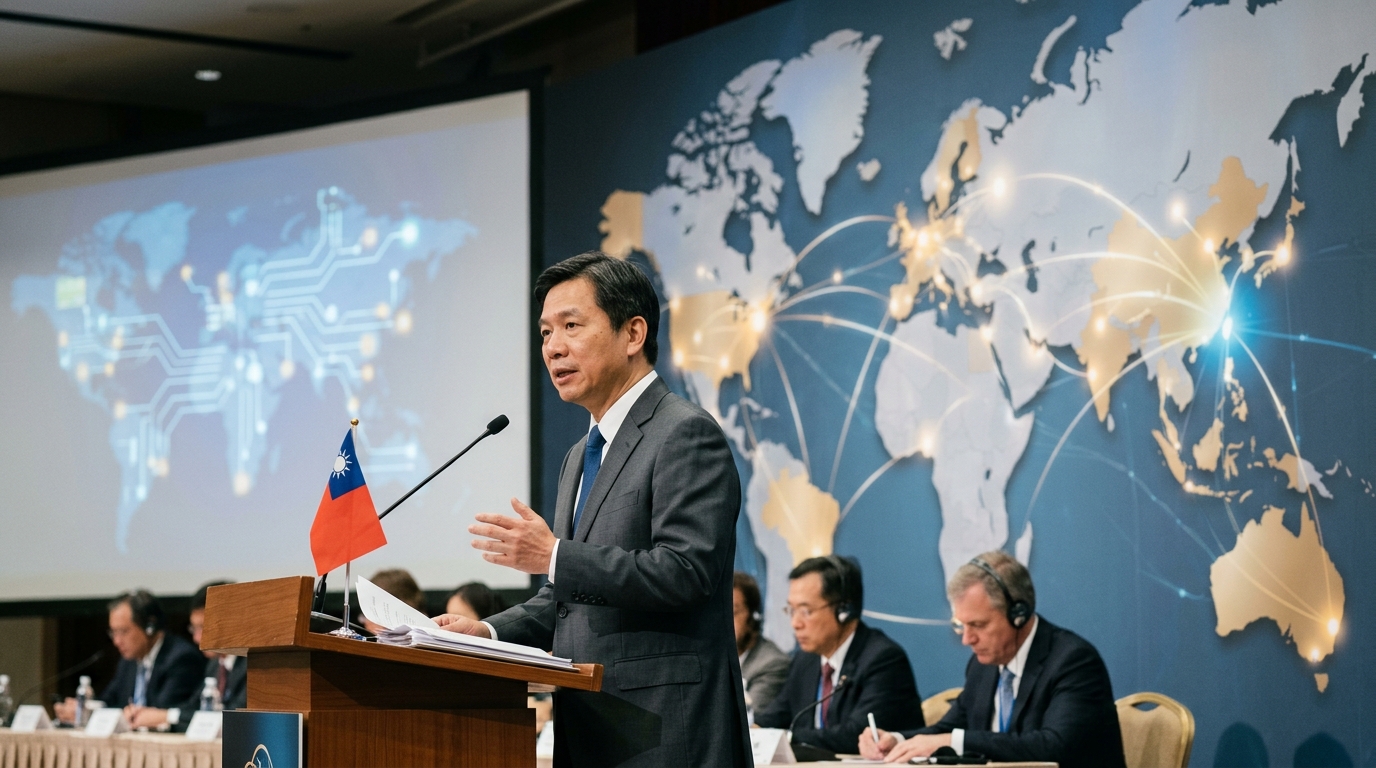
In the high-stakes theater of modern geopolitics, few geographic points carry the weight of Taiwan. While the island has been the epicenter of Washington-Beijing tensions for decades, the meteoric rise of Artificial Intelligence (AI) has transformed this political standoff into a struggle for the survival of the global digital economy. According to recent analyses by US strategic experts, Taiwan is no longer just a player in the semiconductor market; it is the very axis upon which the future of machine intelligence revolves.
The TSMC Monolith and the Monopoly of Precision
The heart of global AI beats within the fabrication plants of Taiwan Semiconductor Manufacturing Co. (TSMC). The company controls over 90% of the world's production of the most advanced semiconductors—those essential for training Large Language Models (LLMs) like OpenAI’s GPT-4 or Google’s Gemini. Without the 3nm and 5nm chips produced in Taiwan, the AI revolution would come to a grinding halt.
As highlighted by analysts from the Center for Strategic and International Studies (CSIS), Western reliance on Taiwan has birthed the concept of the "Silicon Shield." This theory posits that the global economic devastation resulting from a conflict in the Taiwan Strait is so immense that it serves as a deterrent against any military move by China. However, in the AI era, this shield appears more brittle than ever, as the demand for compute power grows exponentially, raising the stakes of control.
Beyond Silicon: The Packaging Ecosystem and CoWoS
Conversations often limit Taiwan's role to chip fabrication, but its influence extends much further. Advanced packaging technology is the new frontier. TSMC’s CoWoS (Chip on Wafer on Substrate) method is currently the only one capable of meeting the high-bandwidth memory requirements of Nvidia’s H100 and B200 GPUs. Without this specialized process, individual chips cannot communicate at the speeds required for generative AI workloads.
Furthermore, companies like Foxconn, Quanta, and Wistron—all headquartered in Taiwan—dominate the AI server manufacturing landscape. Over 80% of the servers powering the data centers of Microsoft, Amazon, and Meta globally are designed or assembled by Taiwanese firms. This means Taiwan controls the entire value chain: from the raw silicon design and fabrication to the final hardware infrastructure that hosts the cloud.
Geopolitical Risks and the 'Porcupine Strategy'
Washington, recognizing this dangerous over-reliance, is pushing for the localization of production through the CHIPS Act. However, experts warn that replicating Taiwan’s ecosystem on US soil will take decades and trillions of dollars. Taiwan possesses not just the machinery, but a unique engineering culture and a supply chain that operates with surgical precision, something that cannot be easily exported to Arizona or Ohio.
China, conversely, views Taiwan’s AI dominance as both a strategic threat and a golden opportunity. Should Beijing gain control over TSMC’s facilities, it would instantly achieve hegemony in the global technological race. This digital version of the "Malacca Dilemma" forces the US to bolster Taiwan’s defensive capabilities, employing a "porcupine strategy" intended to make the island too costly for China to annex.
"Taiwan is not merely a supplier; it is the custodian of human progress in the 21st century. If the chain breaks there, the digital world will plunge into a new Dark Age," a prominent US analyst remarked.
Conclusion: A Fragile Equilibrium
The future of Artificial Intelligence is inextricably linked to peace and stability in the Pacific. Taiwan has successfully made itself indispensable, but this very necessity places it in the crosshairs of superpower rivalry. For the global community, the challenge is twofold: protecting Taiwan’s autonomy and simultaneously diversifying production sources to prevent a systemic shock that could paralyze the modern world.