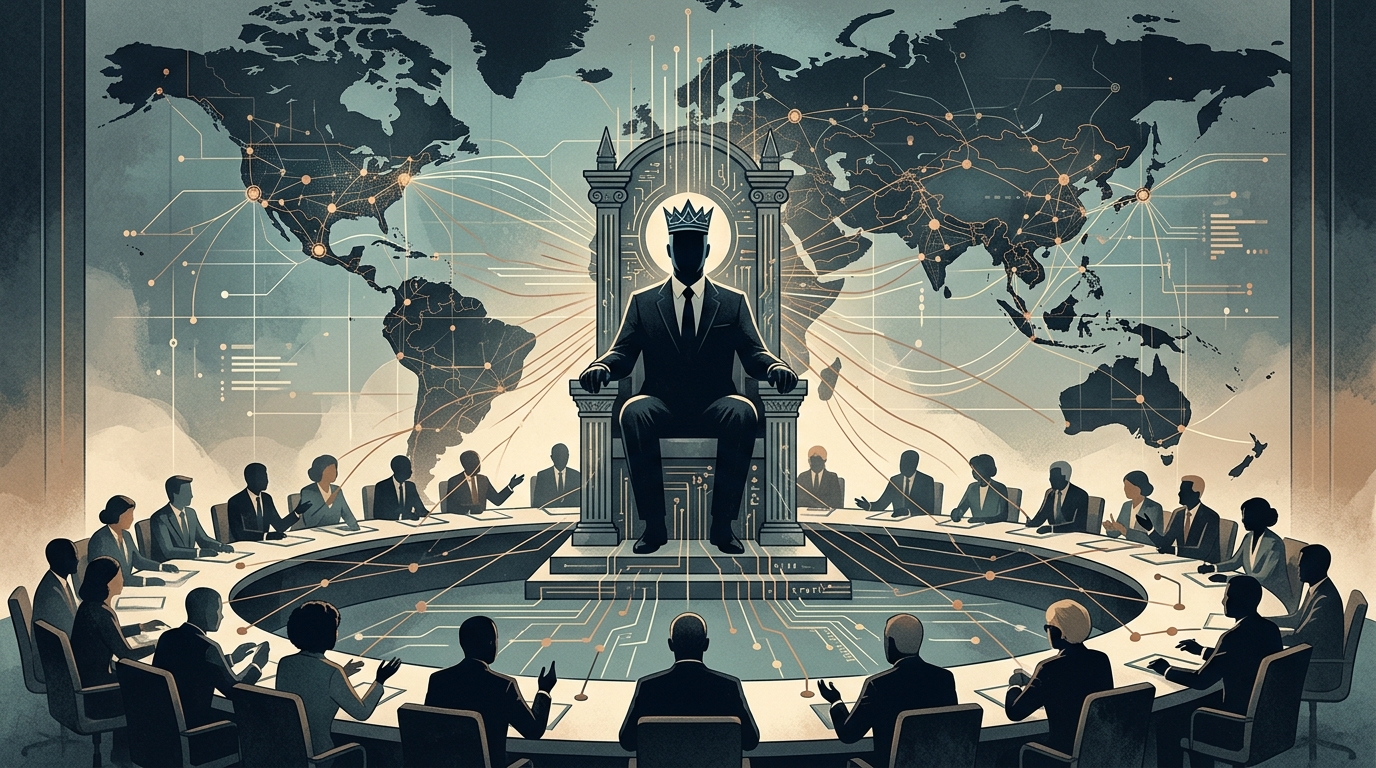
In a policy pivot that signals a new era of digital protectionism, Canadian Prime Minister Mark Carney has issued a stern warning regarding the risks posed by foreign Artificial Intelligence (AI) platforms. Addressing a high-level security summit in Ottawa, Carney articulated a vision where AI is no longer viewed merely as a driver of efficiency, but as a potential instrument of foreign interference and a threat to national sovereignty.
The Geopolitics of the Algorithm
Prime Minister Carney, who has increasingly focused on Canada’s strategic autonomy since taking office, argued that reliance on AI models developed and controlled by foreign entities—specifically those in the United States and China—exposes Canadians to unprecedented vulnerabilities. He suggested that these platforms could be utilized for "cognitive warfare," where algorithms are tuned to manipulate public sentiment or harvest sensitive behavioral data for foreign strategic advantages.
"We cannot afford to outsource the 'operating system' of our democracy to entities that are not bound by our laws, our ethics, or our national interests," Carney stated. This rhetoric marks a significant departure from previous Canadian administrations that prioritized seamless integration with Silicon Valley’s tech ecosystem. By June 2026, the landscape has shifted; AI is now the primary theater of geopolitical competition.
The Threat of Digital Dependency
At the heart of Carney’s warning is the concept of "algorithmic colonialism." This refers to a scenario where middle powers like Canada become digitally subservient to the tech hegemons. When the AI models used in healthcare, judicial sentencing, or financial credit scoring are trained on foreign datasets and reflect foreign cultural biases, the domestic ability to govern effectively is compromised.
- Data Sovereignty: Concerns that critical Canadian intellectual property and citizen data are being used to train foreign models without reciprocal benefit.
- Information Integrity: The risk of foreign-controlled LLMs (Large Language Models) subtly influencing political discourse during election cycles.
- Economic Leakage: The massive outflow of capital in the form of licensing fees to foreign cloud providers, stifling domestic innovation.
Canada’s Sovereign AI Strategy
To counter these threats, the Carney government is preparing to unveil the "Digital Shield Act." This legislative package is expected to mandate strict data residency requirements, ensuring that information generated by Canadians stays on Canadian servers. Furthermore, the Prime Minister announced a multi-billion dollar investment into "Sovereign Compute," a national initiative to build the supercomputing infrastructure necessary for Canada to develop its own foundational AI models.
"AI is the new electricity, but unlike electricity, this resource comes with its own inherent agenda and biases," the Prime Minister noted during his address.
While Canada is home to world-renowned AI research hubs like the Vector Institute and MILA, it has historically struggled to compete with the sheer scale of American and Chinese investment. Carney’s approach seeks to bridge this gap by treating AI infrastructure as a public utility, similar to the national railways of the 19th century—essential for nation-building and defense.
Conclusion: A New Social Contract for the AI Age
The Prime Minister's warning is a clarion call for a new social contract between the state, its citizens, and technology. As AI becomes more deeply embedded in the fabric of society, the question of who owns the code becomes a question of who holds the power. For Canada, the path forward involves a delicate balance: remaining an open, trading nation while building a digital fortress that protects its values and its people from the invisible influence of foreign algorithms. The world is watching to see if this model of "technological nationalism" will become the new standard for middle powers in the late 2020s.