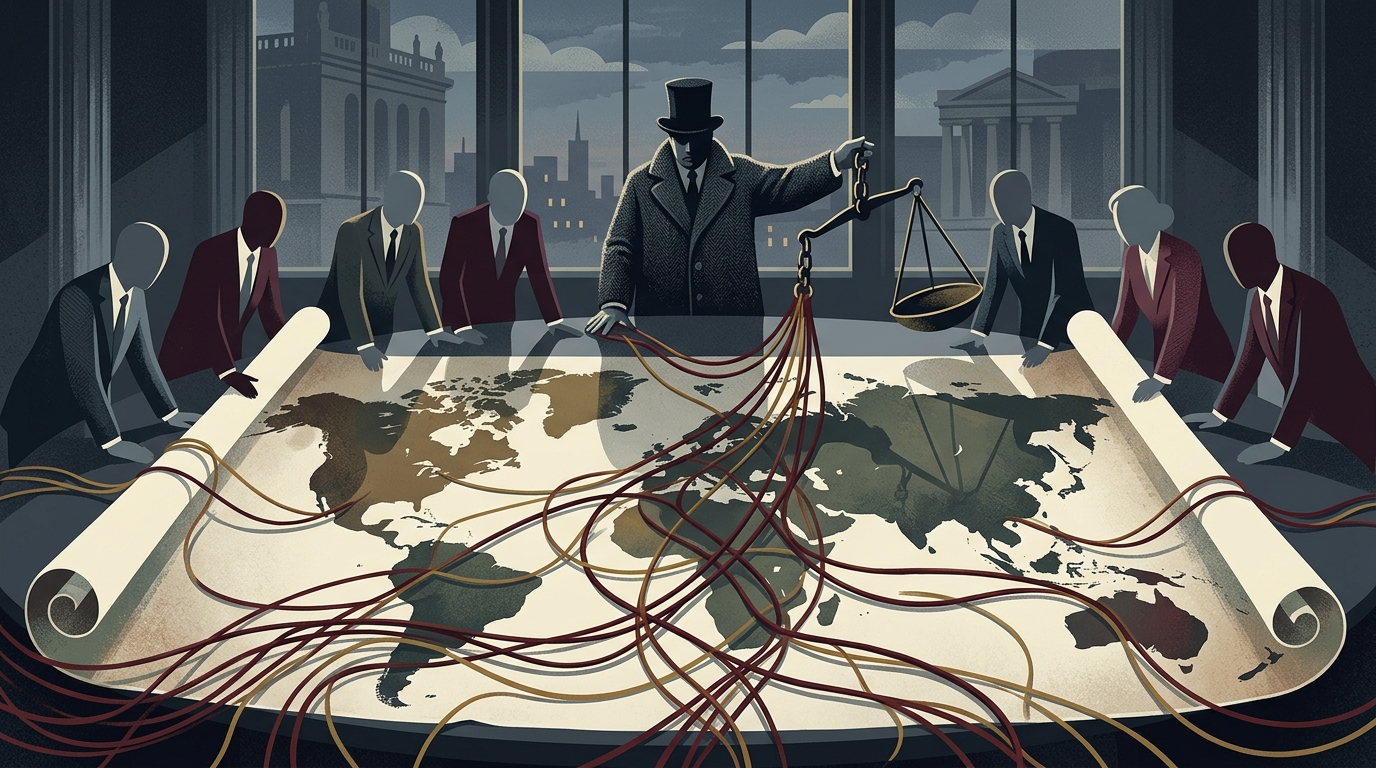
In an era where the global geopolitical chessboard is being rearranged under the pressure of Artificial Intelligence (AI), Mark Carney, the former Governor of both the Bank of England and the Bank of Canada, has re-emerged with a proposal that aims to rewrite the rules of the game. His recent intervention regarding Canada’s national AI strategy is not merely an economic manifesto; it is a profound political analysis of how 'middle powers' can survive and thrive between the clashing titans of the United States and China.
Carney’s Return and the Productivity Stakes
Canada has long been a pioneer in AI research, hosting some of the field's most brilliant minds, such as Turing Award winner Yoshua Bengio. However, the country faces a perennial problem: an inability to translate academic excellence into commercial success and national productivity. Carney, acting as an informal yet immensely influential advisor to the Trudeau government, argues that Canada must stop trying to replicate the Silicon Valley model and instead find its own 'middle ground.'
The Carney strategy centers on the concept of 'sovereign compute.' In a world where access to Nvidia chips is as critical as access to oil was in the 20th century, Carney proposes aggressive state intervention to build domestic infrastructure. This is not protectionism; it is strategic autonomy. According to Carney, if Canada does not control the infrastructure upon which its models run, it will remain a mere 'digital tenant' of American tech giants.
The Geopolitics of the Middle Ground
The most compelling aspect of Carney’s analysis is its geopolitical dimension. While the US focuses on unbridled innovation and China on state control, Canada can lead a group of nations that Carney calls 'trusted partners.' This approach is based on creating a regulatory framework that favors ethical AI, data protection, and transparency, positioning Canada as the ideal hub for international collaborations that bypass superpower polarization.
- Establishing a national compute reserve for researchers and startups.
- Strengthening incentives to keep intellectual property within national borders.
- Shaping international standards for 'Safe AI' in collaboration with the EU and the UK.
- Linking AI development to the green transition, leveraging Canada’s abundant clean energy.
Carney recognizes that Canada cannot win a subsidy war against the US (via the Inflation Reduction Act). Instead, he suggests using AI as a 'power multiplier' for existing economic sectors, such as natural resources and financial services. The idea is for AI not to be an isolated industry, but the operating system for the entire nation.
Challenges and the 'Complacency Trap'
However, this strategy is not without risks. Carney’s critics point out that Canada risks getting bogged down in a bureaucratic approach while the US private sector moves at warp speed. There is also the persistent issue of 'brain drain.' Despite investments, top Canadian scientists are still lured by the salaries and resources of Meta, Google, and OpenAI.
"Artificial Intelligence is not just a technological shift; it is a fundamental redistribution of global power. Countries that fall behind in infrastructure will lose their sovereignty," Carney warns.
In conclusion, Carney’s 'middle ground' is an attempt to define a new type of digital state—one that is large enough to innovate but agile enough to set ethical boundaries. For Canada, this gamble will determine whether it remains a global power or becomes a mere geographical expanse that exports raw materials and imports intelligence. The success of this strategy depends on whether the Canadian government can match Carney's vision with the necessary capital and political will.