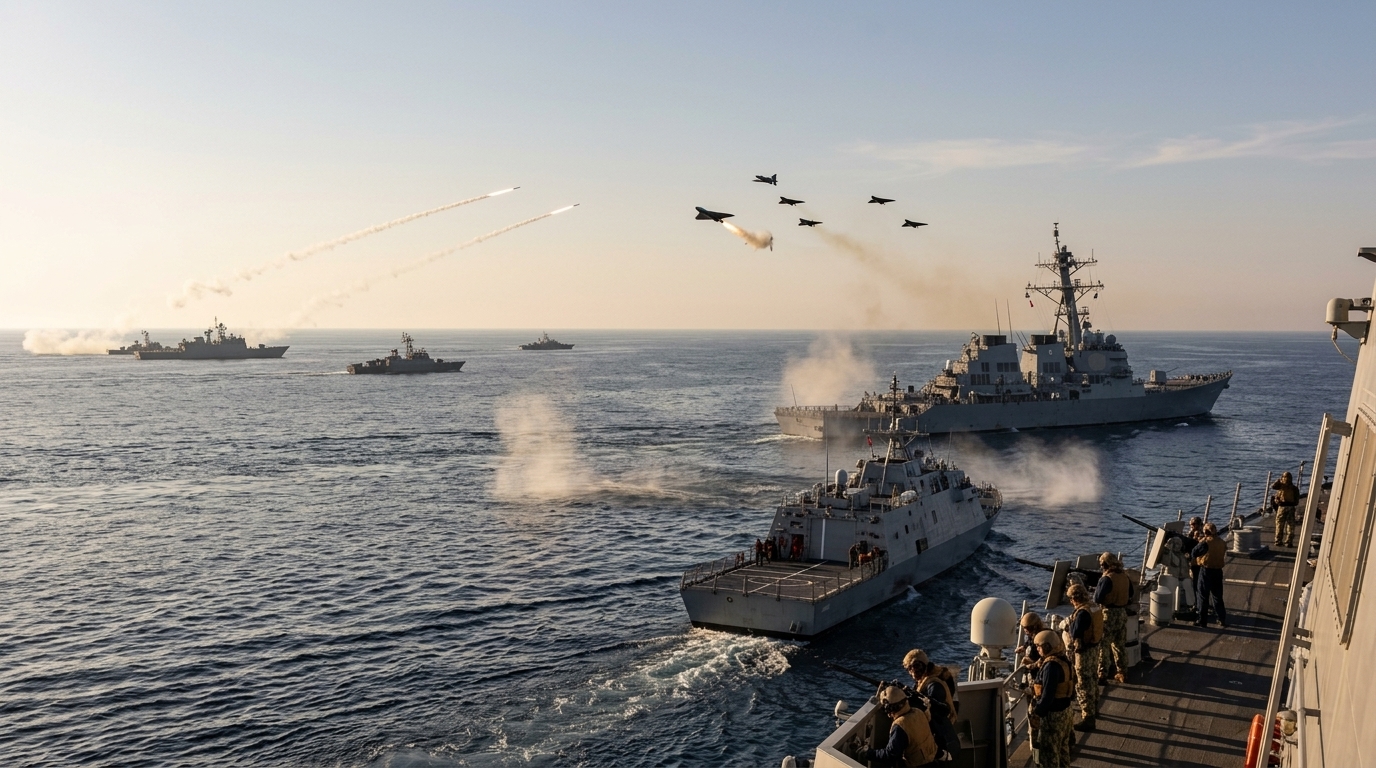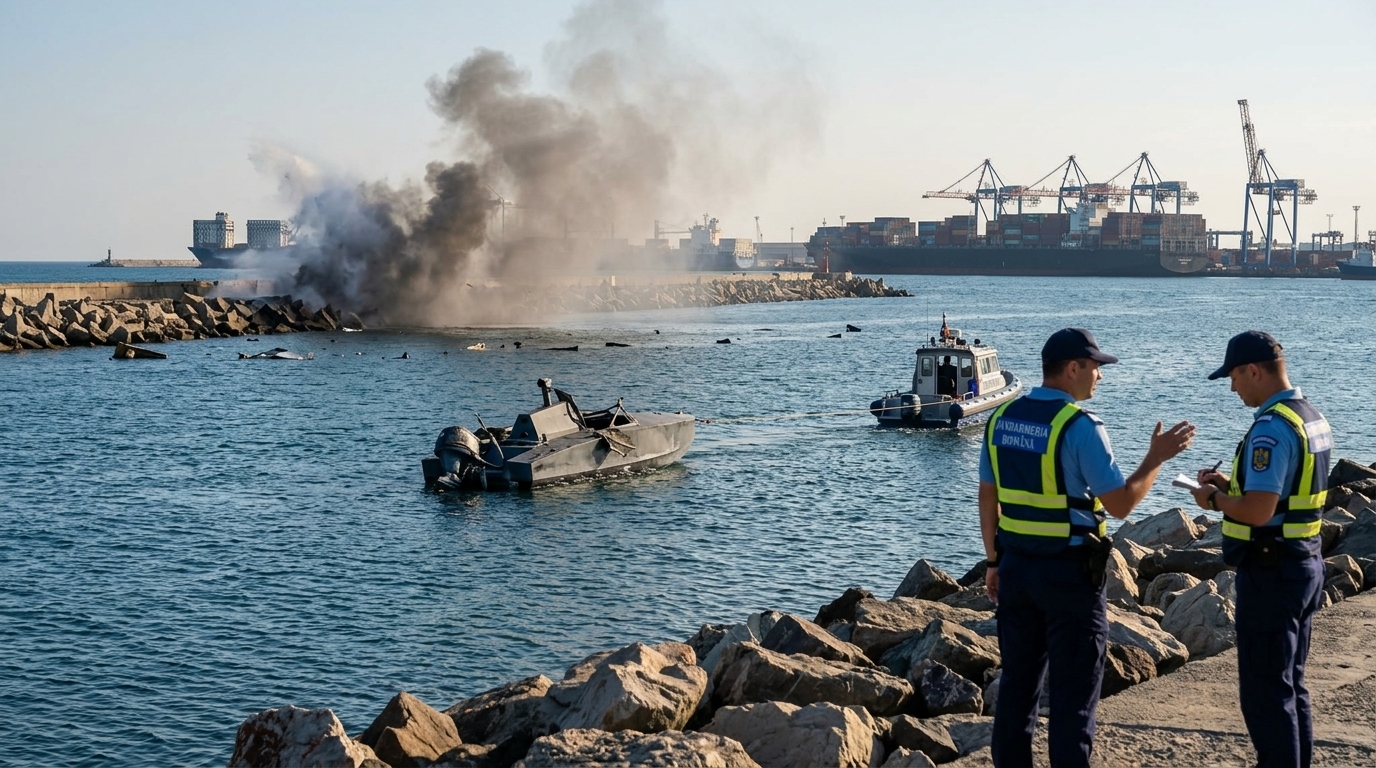
The tranquility of the Black Sea was violently shattered in the early hours of the morning when a sea drone (USV - Unmanned Surface Vehicle) exploded in the Port of Constanta, Romania's largest and most strategic maritime gateway. Although no casualties were reported, the incident triggered an immediate mobilization of the Romanian armed forces and security services, with the area cordoned off for forensic investigation. The Romanian Ministry of Defense confirmed that the drone was of a type similar to those used in ongoing regional conflicts, raising serious concerns about the security of critical infrastructure in NATO member states.
The Anatomy of an Asymmetric Threat
Sea drones have become the "invisible nightmare" of the Black Sea. These are small, high-speed vessels, often packed with hundreds of kilograms of explosives, guided via satellite links and integrated AI systems. Their ability to navigate just below the waterline makes them exceptionally difficult to detect using traditional radar systems. In the case of Constanta, analysts are primarily concerned with whether the drone reached the port due to a technical failure—drifting with the currents—or if it was a deliberate act of reconnaissance or sabotage.
The technology behind these systems has evolved at a breakneck pace. Many of these USVs utilize machine learning algorithms for obstacle avoidance and target recognition, allowing them to operate with minimal human intervention in environments where communications are jammed. The presence of such a weapon in a civilian and commercial port like Constanta is a stark reminder that the conflict in Ukraine is no longer contained within its borders; it is "bleeding" into the West through technological spillover.
The Strategic Significance of Constanta
The Port of Constanta is more than just a commercial hub; it is the primary exit point for grain exports from the region and a vital logistics node for NATO forces in Eastern Europe. Any instability or threat to its operations has direct implications for global food security and the Alliance's defensive posture. The Romanian government, in collaboration with its allies, has already begun investing in advanced anti-drone systems that employ artificial intelligence to analyze acoustic signals and perform visual recognition of maritime threats.
- Enhanced patrols using Autonomous Underwater Vehicles (AUVs).
- Installation of sensor networks capable of detecting low-signature targets.
- Tightening security protocols for commercial vessels entering the port.
The challenge remains immense. The Black Sea is littered with "stray" threats, from Soviet-era mines to sophisticated drones that have lost connection with their operators. The explosion in Constanta forces Bucharest to re-evaluate its readiness and seek further NATO assistance for territorial water surveillance.
Geopolitical Implications and the Future of Warfare
This incident highlights a broader trend: the transformation of commercial routes into battlefields through the use of cheap, expendable, and autonomous technologies. The "democratization" of drone technology means that not only states but also non-state actors can inflict significant damage on vital infrastructure. Romania, as a member of the EU and NATO, finds itself on the front lines of this new form of hybrid warfare.
"We are no longer in an era where conflicts are clearly demarcated. Technology has abolished distances, and the Black Sea has become a laboratory for the future of naval warfare," says a senior security analyst in Bucharest.
In conclusion, while the explosion in Constanta may not have resulted in loss of life, its tremors are being felt in decision-making centers across Europe. The need for a unified framework to counter autonomous maritime threats is more urgent than ever. The deployment of AI for defense is now the only viable response to AI used for offense, creating a perpetual cycle of technological competition on the waves of the Black Sea.