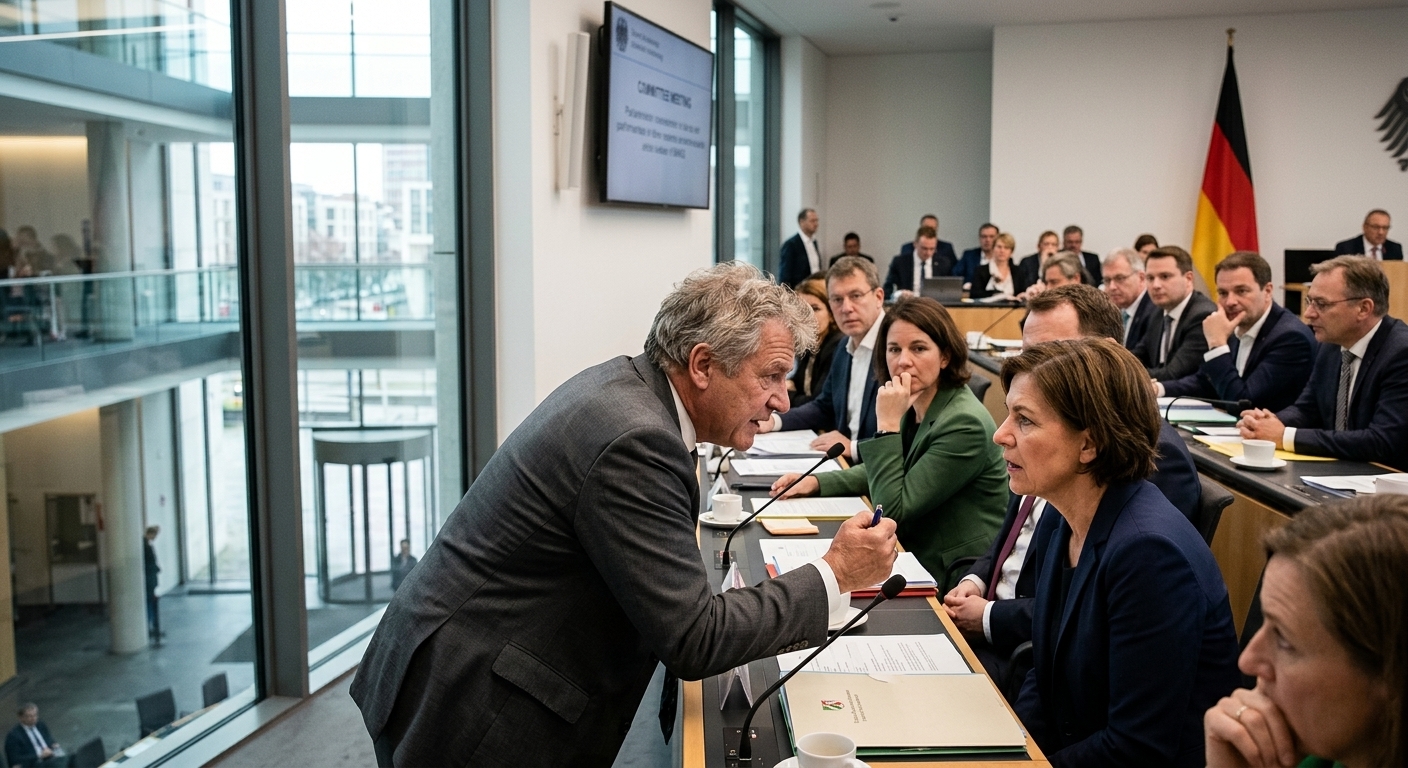
The political atmosphere in Berlin remains electric as the BAföG (Federal Training Assistance Act) student grant has transformed from a social welfare tool into a dangerous flashpoint for Olaf Scholz's coalition government. What began as a technical discussion about adjusting benefits for inflation has evolved into a broader ideological clash over the role of the state, social justice, and fiscal discipline in a period of prolonged uncertainty.
The Austerity Trap and Political Balances
The recent confrontation was sparked by statements questioning the need for further student support, with some voices within and outside the government speaking of "privileged" youth. Education Minister Bettina Stark-Watzinger of the Free Democrats (FDP) is in the crosshairs of the Social Democrats (SPD) and the Greens, who accuse her of stalling and a lack of empathy toward the economic pressures facing the younger generation. The FDP, adhering to its "debt brake" (Schuldenbremse) policy, argues that resources are limited and that BAföG reform must be cautious and targeted, avoiding horizontal increases that could strain the budget.
On the other hand, the Greens and the SPD emphasize that BAföG is not just a benefit, but the cornerstone of the German promise of equal opportunity. In a country where social background still plays a decisive role in a child's educational path, weakening the grant is equivalent to excluding the poorest strata from universities. This dispute is not just about numbers; it is about Germany's very identity as a social constitutional state.
The Cost of Living and Harsh Student Reality
The reality for students in major German cities is often bleak. In Munich, Berlin, Hamburg, and Frankfurt, rent costs have skyrocketed to levels that make the current maximum BAföG amount insufficient even for basic needs. According to recent studies, a large number of students live below the poverty line, forced to work multiple part-time jobs, which leads to prolonged study times or even dropping out.
- Housing costs in student dormitories have increased by an average of 15% over the last two years.
- Food prices remain high, disproportionately affecting low incomes.
- The digitalization of education requires additional spending on equipment that is not fully covered.
Criticism from the opposition and student unions focuses on the government appearing to have lost touch with everyday life. Referring to "privileged" students is seen by many as an insult to those struggling to balance lectures and shifts in an effort to secure a better future.
Social Mobility or Widening Inequalities?
The stake of the current crisis is the long-term prosperity of the German economy. At a time when Germany faces a massive shortage of skilled labor, restricting access to higher education seems suicidal. If education becomes a privilege for the few who have the financial support of their families, the country will lose a vast pool of talent and innovation.
"Investment in education is the only investment that yields guaranteed returns for the future of a society. When we discuss cuts to BAföG, we are essentially discussing cuts to our future," say representatives of the German Student Union (DSW).
The Scholz government is now called upon to find a middle ground that satisfies the FDP's fiscal concerns without betraying the social values of the other two partners. The delay in decision-making reinforces the sense of paralysis often attributed to the current coalition, giving ground to populist voices exploiting youth frustration. The outcome of this dispute will serve as a barometer for Germany's ability to reform without sacrificing its social cohesion.