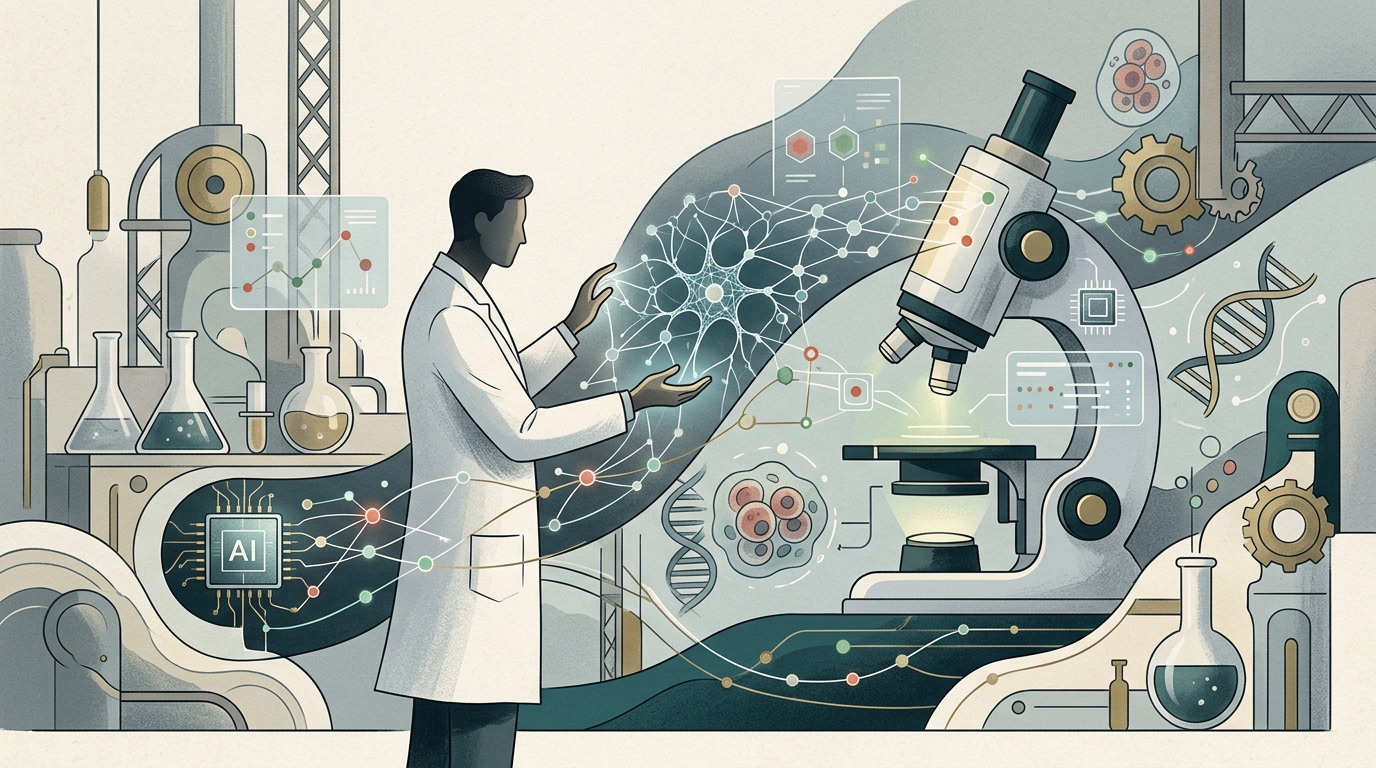
In an era where technology often promises more than it delivers, Dr. Joan LaRovere, Chief Medical Officer (CMO) of Boston Children’s Hospital, has made a profound statement that is resonating throughout the global medical community. Speaking on Bloomberg Tech, Dr. LaRovere characterized the current integration of Artificial Intelligence (AI) into healthcare as an 'Industrial Revolution' destined to fundamentally reshape how we diagnose, treat, and monitor patients.
The Industrial Revolution Analogy
The use of the term 'Industrial Revolution' is far from accidental. Just as the steam engine and electricity replaced manual labor and scaled production to unimaginable levels in the 18th and 19th centuries, AI is emerging as the 'cognitive lever' that will augment the capabilities of physicians. According to Dr. LaRovere, this is not about replacing the human element, but about 'bolstering' the potential of healthcare providers. Within the context of a world-class pediatric institution like Boston Children’s, the need for precision is paramount, and AI provides the tools to achieve that precision at scale.
Dr. LaRovere emphasized that we are at a critical tipping point. The ability to process vast amounts of data—from genomic sequences to medical imaging and patient histories—allows clinicians to identify patterns that would be impossible for the human eye to discern. This translates into faster diagnoses for rare pediatric conditions, where time is often the most critical factor for survival.
Enhancing Clinical Decision-Making
One of the primary pillars of this revolution is clinical decision support. AI can function as a vigilant 'co-pilot' for the physician. For instance, in neonatal intensive care units, algorithms can monitor vital signs in real-time and predict sepsis or cardiac arrest hours before the first clinical symptoms manifest. This predictive capability shifts the medical paradigm from reactive to proactive.
- Diagnostic Accuracy: Reducing errors through computer-aided detection (CAD) in imaging.
- Personalized Treatment: Tailoring pharmaceutical regimens based on a child's unique genetic profile.
- Administrative Relief: AI handling medical note transcription, allowing doctors to spend more time with patients.
Dr. LaRovere highlighted that relief from administrative burdens is perhaps the most immediate benefit of AI. Physician burnout is a global crisis. If AI can reduce the time spent in front of a screen for data entry, then medicine can return to its humanistic roots.
Challenges and Ethical Crossroads
Despite the optimism, the healthcare 'Industrial Revolution' is not without its risks. Dr. LaRovere acknowledged that ensuring data privacy and eliminating algorithmic bias are top priorities. In pediatrics, data is often limited and highly sensitive. If an algorithm is trained only on data from specific population groups, there is a risk of producing biased or incorrect results for children from different ethnic or socioeconomic backgrounds.
"We must ensure that the technology we build is inclusive and equitable. AI is a tool, and like any tool, its value depends on how we use it," Dr. LaRovere noted.
Furthermore, the issue of the 'black box' remains. Physicians must be able to understand why an AI arrived at a specific recommendation. Algorithmic transparency is essential for building trust between technology, the physician, and the family.
The Future of Care at Boston Children’s
Boston Children’s Hospital is already at the forefront, integrating generative AI tools to inform parents and guide clinical teams. Dr. LaRovere envisions a future where the hospital is not just a building, but a network of continuous monitoring and support, empowered by AI.
In conclusion, Dr. LaRovere’s statement is not merely a technological forecast but a call to action. The medical community must embrace this revolution while maintaining its critical thinking and ethical compass. If the first industrial revolution changed how we live, this new revolution promises to change how well—and for how long—we live.