Irritable Bowel Syndrome (IBS) has long been one of the most persistent enigmas in modern medicine. Despite its global prevalence, diagnosis and treatment have frequently relied on a 'trial and error' approach. However, a groundbreaking study published in the journal Cureus highlights how Artificial Intelligence (AI) is transforming our understanding of the brain-gut axis, paving the way for a truly personalized clinical paradigm.
The Complexity of the Brain-Gut Axis
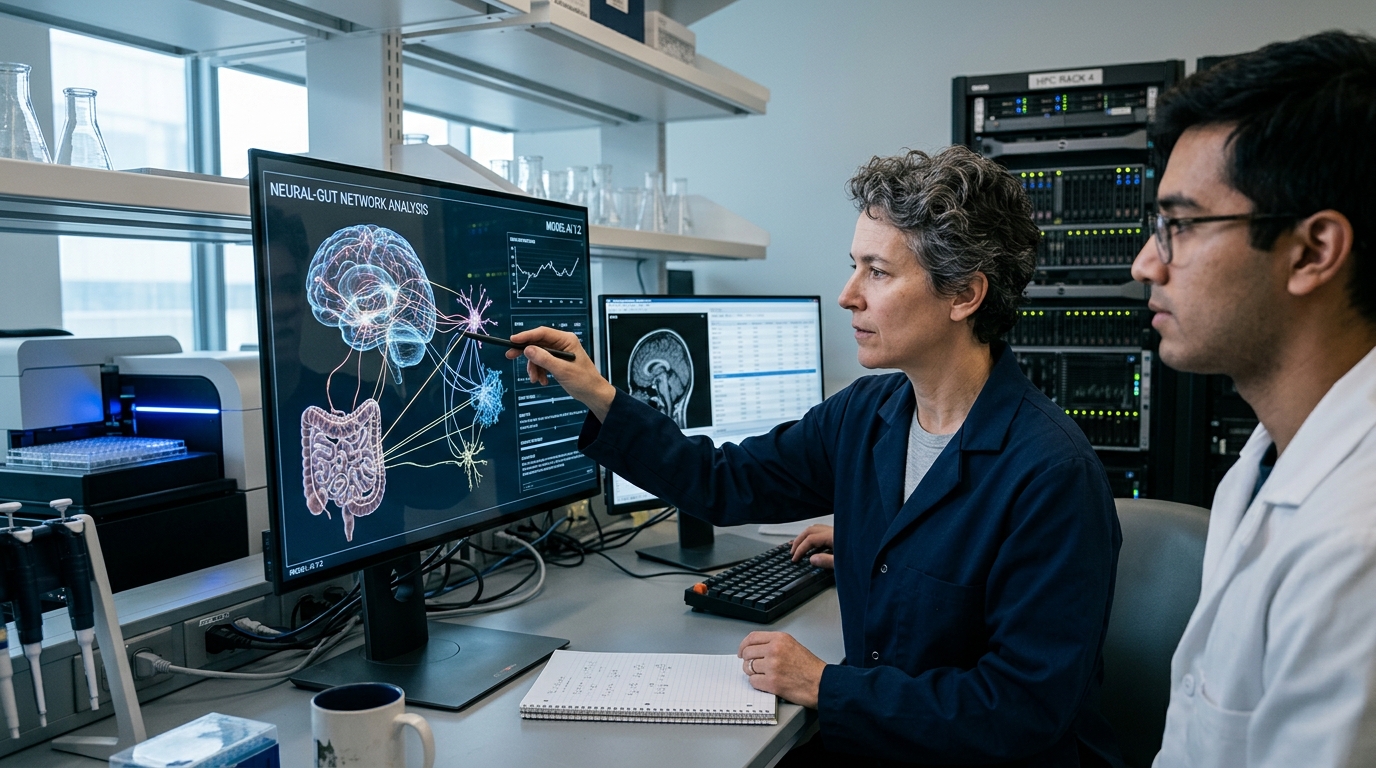
The brain-gut axis is a bidirectional communication system linking the central nervous system with the enteric nervous system. It is not merely a neural connection; it is a sophisticated network involving hormonal signaling, immune responses, and the gut microbiome. In IBS, this communication is disrupted. Patients often experience visceral hypersensitivity, where the brain interprets normal intestinal processes as signals of intense pain.
Traditional medicine struggles to analyze this vast volume of multi-dimensional data. Every patient possesses a unique microbiome profile, varying stress levels, and diverse dietary habits. This is precisely where Artificial Intelligence steps in. Through Machine Learning (ML), researchers can now process thousands of variables simultaneously, identifying patterns that would be invisible to the human eye.
How Machine Learning Enhances Diagnosis
One of the primary hurdles in managing IBS is the lack of a definitive biomarker. Diagnosis is typically achieved by excluding other conditions and assessing symptoms based on the Rome IV criteria. AI is shifting this landscape. By analyzing data from functional Magnetic Resonance Imaging (fMRI), deep learning algorithms can identify specific changes in brain connectivity associated with IBS.
- Microbiome Analysis: AI can categorize patients based on their gut bacterial composition, predicting who will respond to specific interventions like the low-FODMAP diet.
- Predictive Modeling: Utilizing data from wearables, clinicians can monitor the real-time relationship between stress, sleep, and symptom flare-ups.
- Psychometric Analysis: Natural Language Processing (NLP) allows for the analysis of patient-reported outcomes, revealing psychological factors that influence disease severity.
Toward Clinical Translation: Challenges and Prospects
Despite the promising outlook, the transition from laboratory research to clinical practice is fraught with obstacles. The 'black box' nature of certain algorithms makes it difficult to understand *why* an AI reached a specific diagnosis, which is crucial for building physician trust. Furthermore, data quality remains a concern. AI models are only as good as the data they are trained on, and in the case of IBS, data is often subjective and fragmented.
"Artificial Intelligence does not replace the gastroenterologist; rather, it provides them with a super-computational lens to see beyond the surface symptoms," the Cureus study notes.
In the near future, we anticipate the creation of 'digital twins' for patients. These are virtual models that allow doctors to simulate the effects of a medication or a dietary change before applying it to the actual patient. This approach will minimize side effects and maximize treatment efficacy, moving us closer to the ideal of precision medicine.
Ethical Dimensions and the Road Ahead
The integration of AI into healthcare brings data privacy issues to the forefront. Brain-gut axis data is exceptionally sensitive, as it links physical health with mental states. Ensuring anonymity and the secure storage of this information is paramount for the public acceptance of these technologies.
In conclusion, the application of Artificial Intelligence to the brain-gut axis represents a paradigm shift. We are moving from an organ-centric approach (focusing solely on the gut) to a holistic, systemic analysis of the human body. For the millions living with the 'invisible' burden of IBS, this technology offers not just better diagnostics, but the hope of a life liberated from the constant constraints of their symptoms.