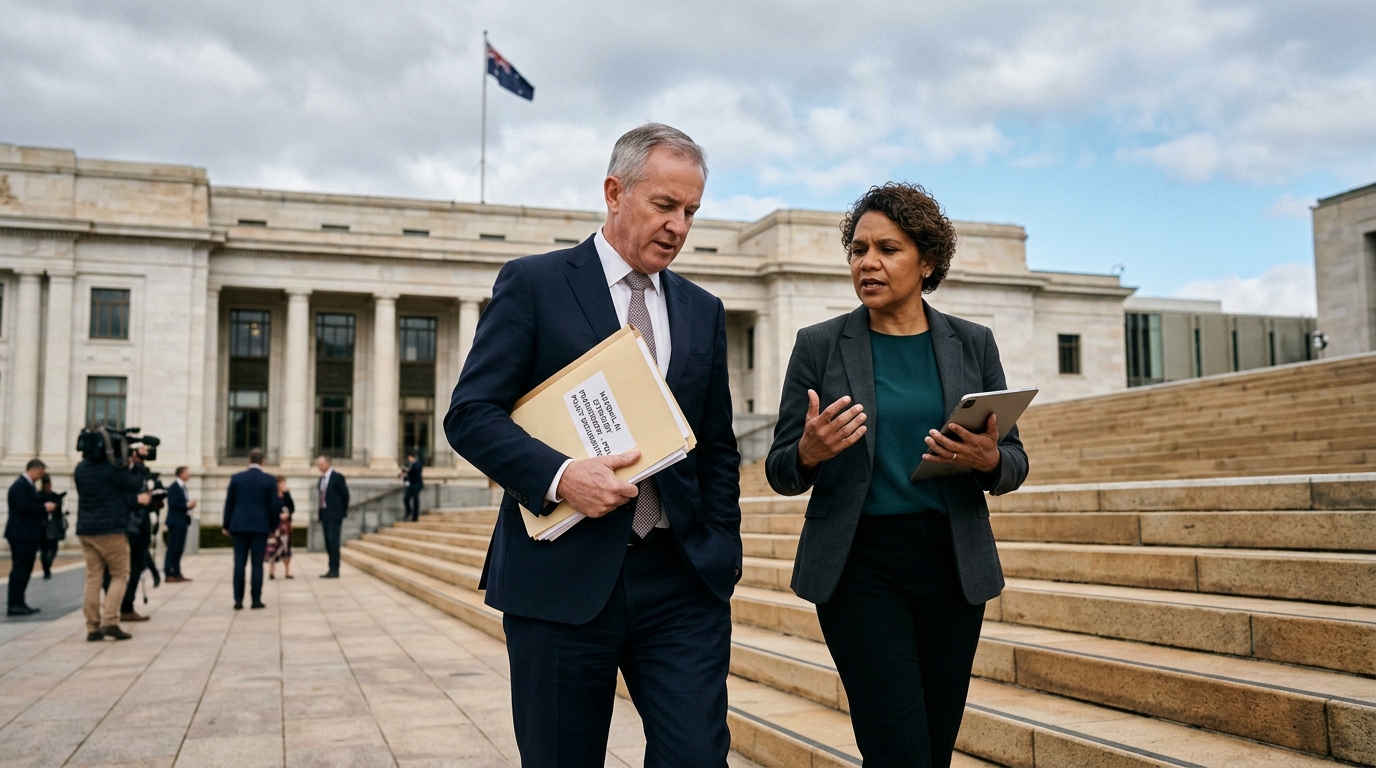
Australia, long celebrated as the "Lucky Country" for its vast natural resources and decades of uninterrupted economic growth, stands at a defining juncture. Despite its historical success, the nation has grappled with a decade of sluggish productivity growth, a trend that threatens the future standard of living for its citizens. A seminal report from UNSW Sydney suggests that the catalyst for a new era of prosperity lies not in the ground, but in the silicon: Artificial Intelligence (AI).
The Productivity Paradox and the AI Solution
Productivity is the fundamental engine of real income growth. When a nation produces more value per hour worked, it generates the fiscal space to fund world-class healthcare, infrastructure, and social safety nets. Australia’s recent productivity slump is therefore a matter of national urgency. The UNSW analysis posits that AI is a "General Purpose Technology"—a transformative force akin to the steam engine or electricity—capable of restructuring the entire economic landscape.
The integration of AI goes far beyond simple automation. While early industrial technologies replaced physical labor, AI is designed to augment cognitive functions. In the services sector, which accounts for approximately 80% of Australia's GDP, AI can handle administrative complexities and data processing, liberating human workers to engage in high-level strategic thinking, creative problem-solving, and empathetic customer interaction.
Strategic Sectors: Leveraging Sovereign Strengths
For Australia to truly benefit from AI, it must apply the technology to its unique economic pillars. The UNSW report highlights several key areas where AI can provide a competitive edge:
- Resources and Energy: By utilizing autonomous systems and sophisticated predictive modeling, Australia can maintain its global lead in mining while significantly reducing operational risks and carbon emissions.
- Healthcare: As the population ages, the healthcare system faces unprecedented strain. AI-driven diagnostics and personalized medicine can improve patient outcomes while optimizing the allocation of Medicare resources.
- Agribusiness: Precision agriculture powered by AI can help Australian farmers navigate climate volatility, ensuring food security and export competitiveness.
By focusing AI deployment on these critical sectors, Australia can insulate its economy from global shocks and create specialized, high-paying jobs that are difficult to outsource.
Human Capital: The Reskilling Imperative
A central theme of the UNSW research is that the AI revolution is as much about people as it is about algorithms. The fear of mass unemployment due to automation is a recurring historical trope, yet the reality is often the creation of new, unforeseen roles. However, this transition is not automatic; it requires deliberate policy intervention.
"The goal is not to protect jobs from technology, but to protect workers by equipping them with the skills to thrive alongside it," the report emphasizes.
This necessitates a radical overhaul of the national education framework. From primary schools to vocational training and universities, there must be a concerted effort to foster digital fluency, data ethics, and the "soft skills" that AI cannot replicate—such as leadership, emotional intelligence, and complex negotiation. Government-funded reskilling programs will be essential to ensure that no segment of the workforce is left behind.
Governance, Ethics, and the Path Forward
To unlock the full potential of AI, Australia must establish a regulatory environment that balances innovation with public trust. This involves creating robust frameworks for data privacy, algorithmic transparency, and ethical accountability. If the public perceives AI as a tool for surveillance or corporate exploitation, the social license required for its widespread adoption will vanish.
Furthermore, the report calls for a significant increase in sovereign R&D investment. Australia’s current spending on research and development lags behind the OECD average. By incentivizing private sector investment and fostering collaboration between academia and industry, the government can ensure that Australia is a creator of AI solutions, not just a passive consumer of foreign technology.
In conclusion, AI represents a generational opportunity for Australia to break the cycle of productivity stagnation. By embracing this technology with a focus on human capital and ethical governance, the nation can secure a future of shared prosperity, ensuring that the "Lucky Country" remains lucky by design, not just by chance.