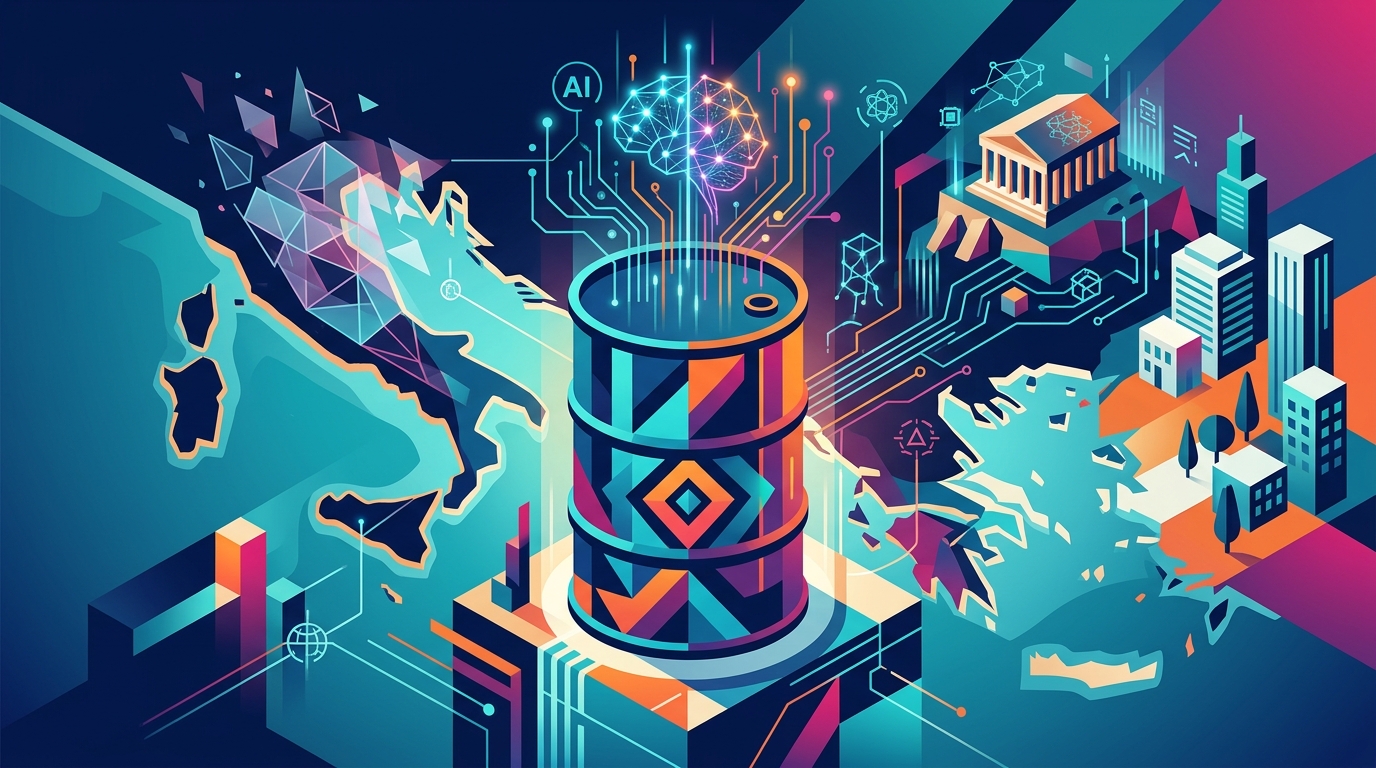
In the heart of Athens, where history meets the future, the conversation around Artificial Intelligence (AI) has long ceased to be a theoretical scenario for the few. Today, May 18, 2026, Greece stands before a historic challenge: to integrate AI not merely as another technological upgrade, but as the foundation of a new national economy. This "mandatory bet," as market analysts describe it, concerns not just large corporations but the total restructuring of the state, education, and the country's productive base.
Infrastructure Strategy: From Data Centers to the Real Economy
The last two years have been pivotal in placing Greece on the global IT map. Investments by giants like Microsoft, Google, and Amazon Web Services in local data centers were not just "votes of confidence" but the creation of the necessary physical infrastructure for AI development. With the completion of major hubs in Attica and Thessaloniki, the country now possesses the computational power to process data locally, reducing latency and enhancing security.
However, infrastructure is only the beginning. The real bet lies in the "vertical" application of AI. In tourism, for example, the use of predictive models now allows hotels to forecast demand with 95% accuracy, optimizing prices and reducing resource waste. In shipping, the Greek-owned fleet leads in adopting algorithms for autonomous navigation and emissions reduction, aligning with strict EU requirements for the green transition.
Public Administration: The Battle Against Bureaucracy
Perhaps the sector where AI can bring the most spectacular change is the public sector. Greek bureaucracy, a historical deterrent to growth, is under attack from Large Language Models (LLMs). The digitization of state records, which began in 2020, has now moved to the stage of "intelligent processing." Citizens and businesses can receive answers to complex legal and tax questions within seconds via AI assistants, while the judiciary is beginning to use tools for faster case classification.
This "leap" is not without risks. The need to retrain thousands of civil servants is imperative. The state must ensure that automation does not lead to social exclusion but to a job upgrade. The introduction of the "AI Ethics Framework" by the Greek government is a first step toward ensuring transparency and accountability for the algorithms that make decisions about citizens' lives.
Human Capital and the Brain Gain Bet
Greece's greatest advantage remains its human capital. After a decade of brain drain, AI offers a unique opportunity for the repatriation of scientists. The creation of world-class research centers, such as "Archimedes," has already begun to bear fruit, attracting researchers who wish to work on cutting-edge technologies from their homeland.
Nevertheless, education remains the weak link. Although universities produce excellent engineers, the connection with the labor market remains weak. The "mandatory bet" dictates a radical reform in curricula, not only in engineering schools but also in the humanities, as the ethics and philosophy of AI become as important as the code. Greece must decide whether it will be a mere consumer of technology or a co-creator of the new digital reality.
Conclusion: An Opportunity Not to be Missed
Artificial Intelligence for Greece is not one choice among many; it is the only path to avoid stagnation in a world moving at the speed of light. The success of this bet will be judged by the country's ability to combine infrastructure investment with investment in people. If Greece manages to harness this technology, it will be able to transform from a country of services and tourism into a significant player in the global digital economy. Time is pressing, and the decisions made today will determine the prosperity of future generations.