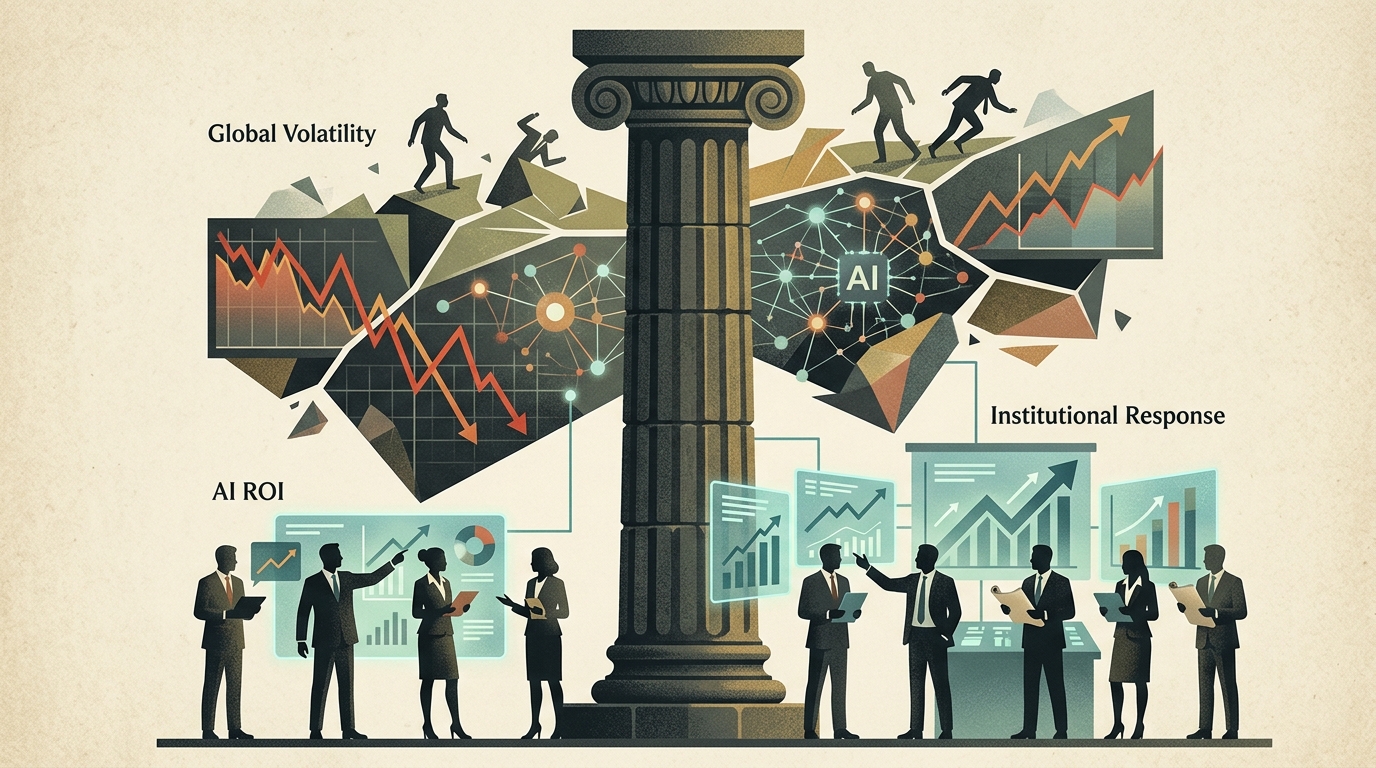
In the tradition of establishing order through law, the Greek Parliament has recently ratified the national framework for the implementation of the European Artificial Intelligence Act (AI Act). This marks a definitive shift in the Hellenic Republic's strategy—moving from the preliminary stage of state digitization toward a comprehensive integration of AI within the public and private sectors. As a political analyst, I view this not merely as a technical update, but as the construction of an institutional 'Regulatory Sandbox' designed to provide clarity in a volatile global market.
The Architecture of Oversight
The new legislation establishes a national mechanism for enforcement, including supervisory authorities and sanction frameworks. Central to this governance is a risk-based approach, where obligations are tiered according to the potential threat an application poses to health, safety, or fundamental rights. Under this framework, high-risk systems—such as those used in healthcare or personnel evaluation—will require human oversight and stricter controls, while common informational chatbots will operate under different requirements. This tiered structure reflects a democratic commitment to safety without stifling the innovative spirit of the one-third of Greek SMEs already utilizing AI.
"Technology gains meaning when it translates into social benefit and sustainable development." — Dimitris Papastergiou, Minister of Digital Governance
Infrastructure and the Future of Labor
Governance requires more than just rules; it requires the physical and intellectual capital to sustain them. The development of the 'DAEDALUS' supercomputer and the 'Pharos' AI Factory provides the backbone for this transition, offering resources to universities and private enterprises alike. However, as we build these tools, we must consider the broader economic horizon. Analysts like Nouriel Roubini suggest that the AI revolution may eventually necessitate a form of universal basic income (UBI) or even 'socialism' through state ownership stakes in tech firms, as AI and robotics are forecast to replace a significant portion of the workforce within the next 25 years.
Human Agency in the AI Era
As we navigate this transition, the philosophical question of agency remains paramount. Yann LeCun’s vision for the future suggests that AI should function as a highly intelligent consultant, while humans retain the critical role of setting the "what" and the "why." In my analysis, the Greek institutional framework is a necessary step toward ensuring that as the "how" is increasingly automated, the democratic core of our society continues to define the purpose and direction of our collective progress.