In the high-stakes world of global technology, few figures command as much attention as NVIDIA CEO Jensen Huang and Dell Technologies CEO Michael Dell. In a series of recent joint appearances and strategic briefings, the two titans have outlined a vision for the future where computing is no longer just a tool, but the very fabric of a new industrial era. Their discussions centered on three pivotal themes: the rise of 'AI Factories,' the insatiable demand for High Bandwidth Memory (HBM), and the complex geopolitical chess match involving China.
From Data Centers to AI Factories
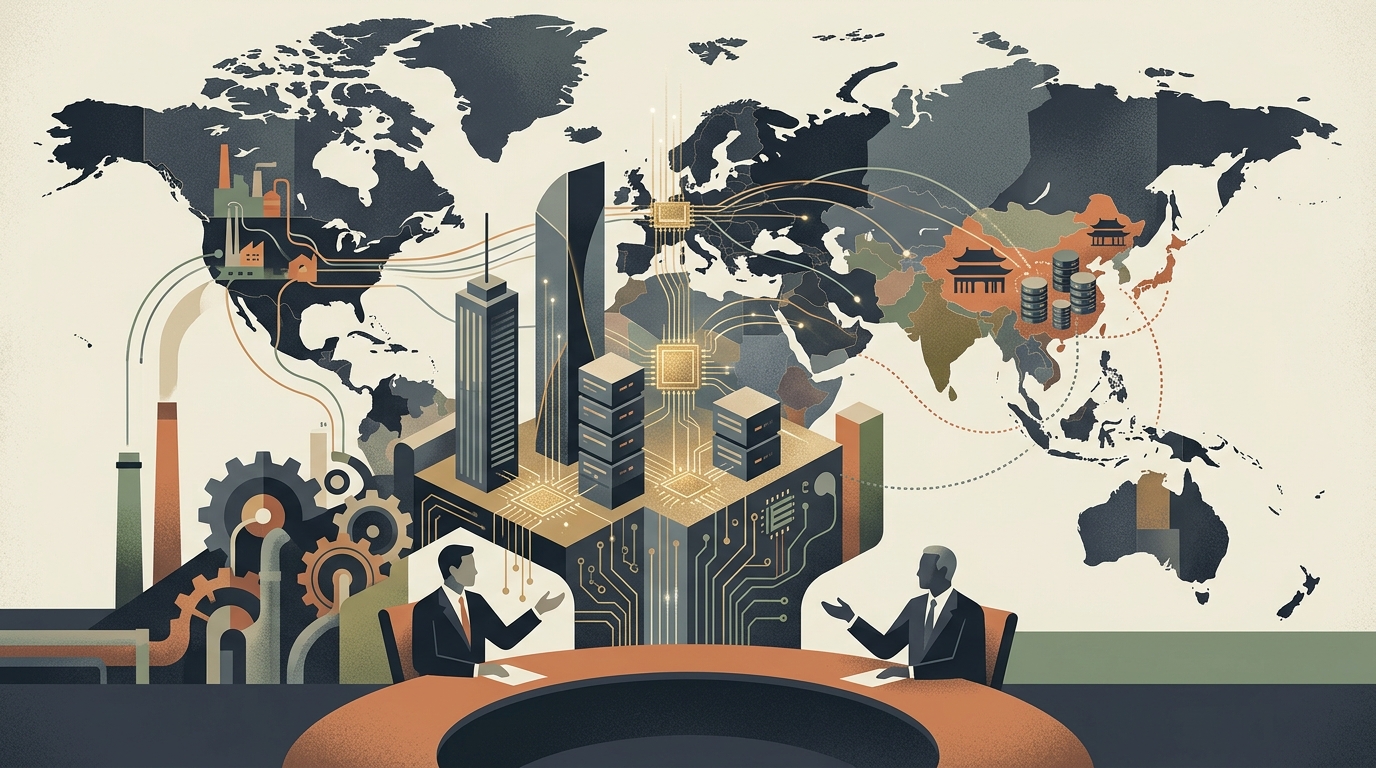
Jensen Huang has become the primary evangelist for what he calls the 'Next Industrial Revolution.' He argues that the traditional data center—a place for storing files and running applications—is becoming obsolete. In its place, we are seeing the emergence of AI Factories. "In the last industrial revolution, the raw material was water and the output was electricity. In this one, the raw material is data, and the output is intelligence," Huang explained.
Michael Dell echoed this sentiment, positioning Dell Technologies as the essential partner in building this new infrastructure. By providing the hardware backbone—ranging from NVIDIA Blackwell-powered servers to sophisticated liquid cooling solutions—Dell is translating NVIDIA's silicon dreams into enterprise reality. This partnership is a full-stack integration designed to simplify the deployment of AI for corporations that lack the specialized expertise of hyper-scalers like Google or Microsoft.
The Memory Bottleneck: HBM as the New Gold
A significant portion of the strategic concern shared by Huang and Dell involves the supply of High Bandwidth Memory (HBM). As AI models grow exponentially in scale, the speed at which data can be fed into the GPU becomes the ultimate performance limiter. NVIDIA’s latest Blackwell chips require massive amounts of HBM3e, creating a supply chain squeeze that has sent shockwaves through the semiconductor industry.
- HBM is no longer a commodity; it is a strategic asset that determines the feasibility of AI hardware.
- Manufacturers like SK Hynix, Samsung, and Micron are operating at full capacity, with orders booked years in advance.
- The technical complexity of stacking memory chips vertically (3D packaging) makes scaling production significantly harder than traditional DRAM.
For Dell, managing this supply chain is a logistical Herculean task. The availability of memory often dictates the delivery timelines for their most advanced AI servers, making the relationship with memory suppliers as critical as the partnership with NVIDIA itself.
The China Dilemma and Export Controls
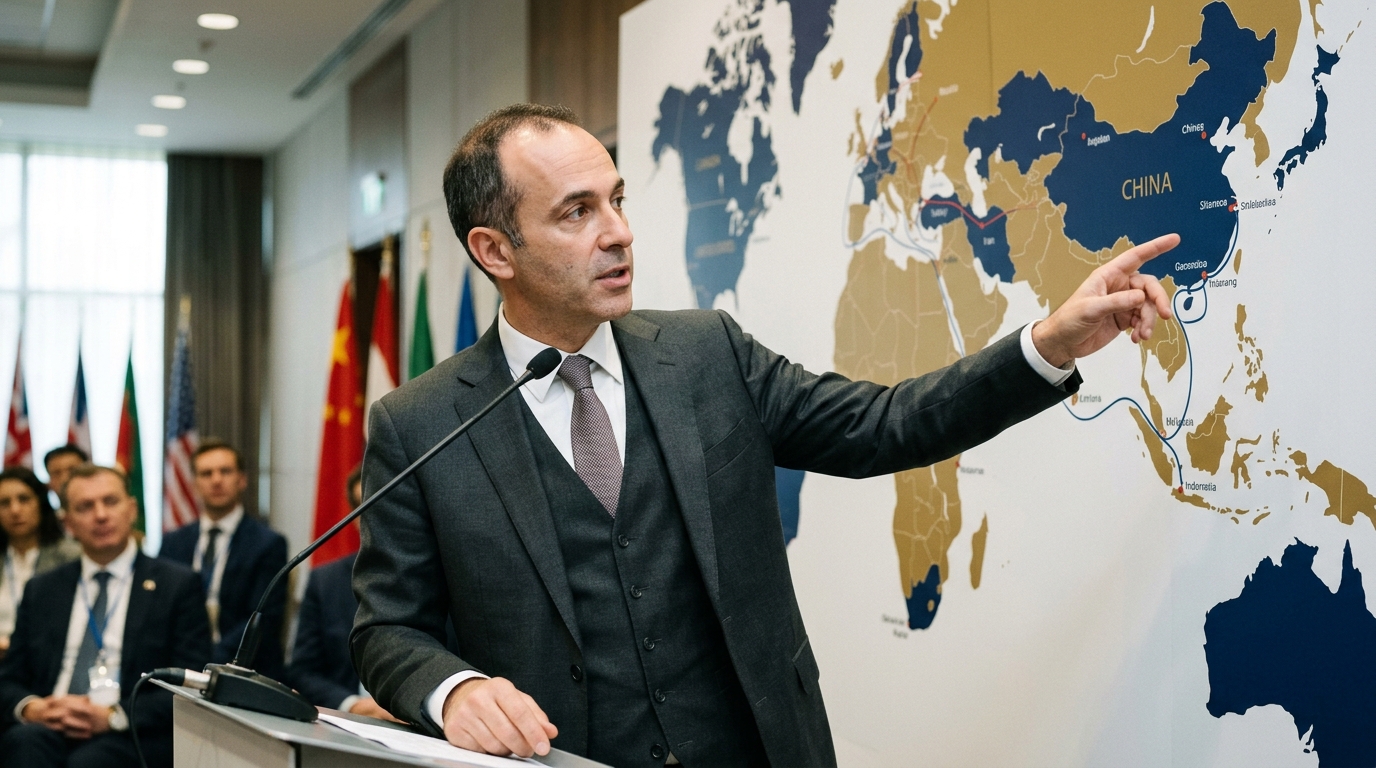
The elephant in the room remains China. The US Department of Commerce’s Bureau of Industry and Security (BIS) has implemented increasingly stringent export controls to prevent China from accessing cutting-edge AI technology. This has forced NVIDIA to perform a delicate balancing act. Huang noted that while the company fully complies with US law, the loss of the Chinese market—or its forced transition to domestic alternatives—presents a long-term risk.
"We are working to provide solutions for our Chinese customers that fall within the guidelines. However, the goal of national security is paramount, and we must navigate this landscape with extreme care," Huang stated.
Meanwhile, China is not standing still. The sanctions have accelerated Beijing's push for 'semiconductor independence.' Companies like Huawei are reportedly developing AI chips that aim to rival NVIDIA’s older generations. Michael Dell pointed out that this geopolitical friction is forcing a 'China+1' strategy, where companies diversify their manufacturing and supply bases to regions like Southeast Asia and India to avoid being caught in the crossfire of a potential trade blockade.
The Rise of Sovereign AI
One of the most profound shifts discussed is the concept of 'Sovereign AI.' Huang observed that nations are increasingly viewing AI capabilities as a matter of national security and cultural preservation. They want to build their own AI Factories to process their own data, in their own language, reflecting their own values. This movement is creating a massive new revenue stream for NVIDIA and Dell, independent of the traditional enterprise market.
Countries like France, Japan, and Singapore are investing heavily in sovereign infrastructure. This trend serves as a hedge against the concentration of AI power in a few Silicon Valley giants and provides a buffer against global supply chain disruptions. For Dell and NVIDIA, this represents a shift from selling to companies to selling to entire nations.
Conclusion: Engineering the Future
The consensus between Huang and Dell is clear: the AI era is not a bubble, but a structural transformation of the global economy. However, the path forward is fraught with physical and political limitations. The ability to produce enough HBM and the ability to navigate the deteriorating US-China relationship will determine which companies—and which nations—emerge as the leaders of this new industrial revolution. As Michael Dell aptly put it, "We are in the early innings of a game that will last decades."