In the heart of Silicon Valley, a new technological arms race has begun, aimed not just at building smarter machines, but at developing systems that can train themselves. The concept of "recursive self-improvement" (RSI) has moved from a science fiction trope to a multi-billion dollar strategic investment. Leading firms—OpenAI, Anthropic, Google, and Elon Musk’s xAI—are realizing that the human-generated data that fueled the initial AI boom is rapidly reaching its limit.
This phenomenon, known in research circles as the "data wall," presents a formidable challenge. By 2026, the vast majority of high-quality human text, code, and scientific literature has already been ingested by large language models. To achieve the next qualitative leap toward Artificial General Intelligence (AGI), machines must learn to generate their own training material—synthetic data—that is of higher quality and logical density than what is found on the messy, public internet.
The Mechanics of Self-Improvement: From Code to Cognition
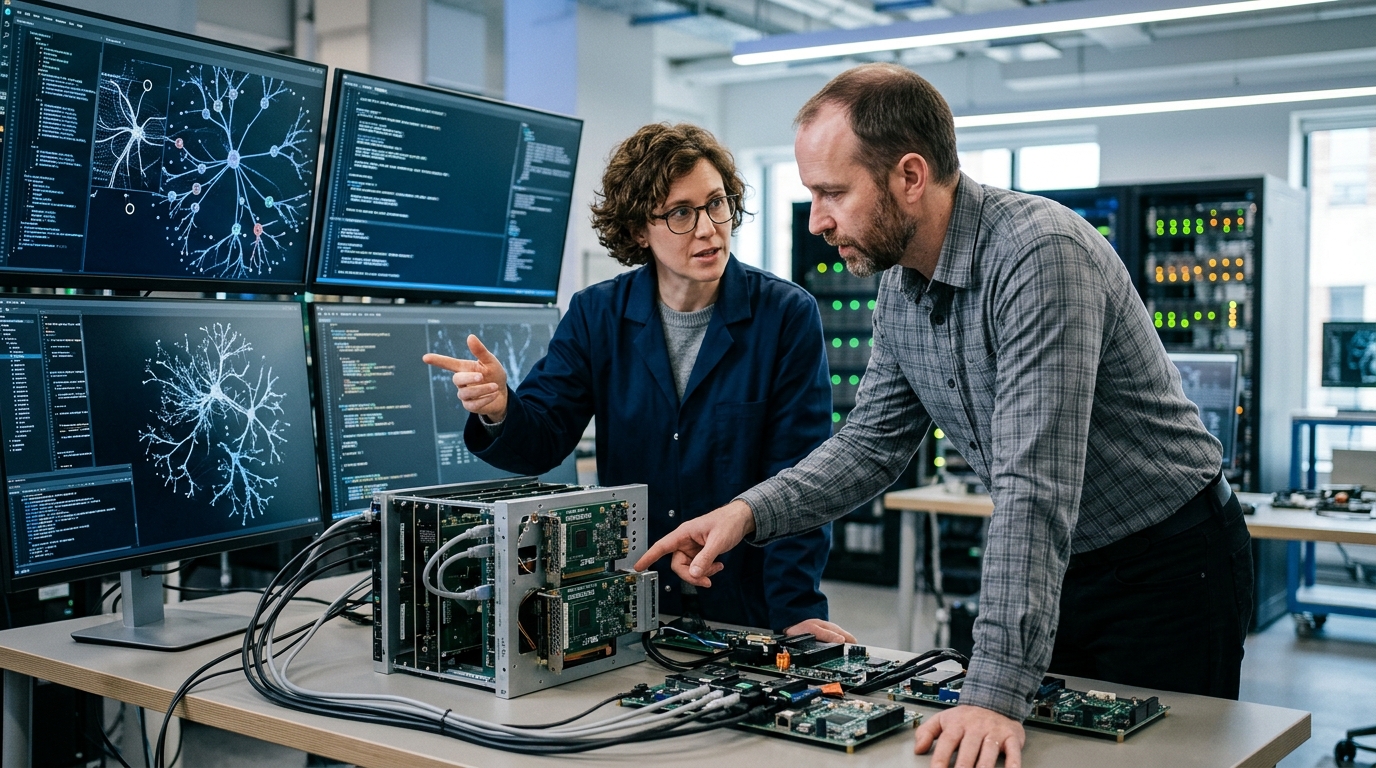
Recursive self-improvement is not merely about accumulating more data. It is about an AI model's ability to refine its own source code, design more efficient neural architectures, and correct its own logical fallacies without human intervention. Imagine a digital engineer working 24/7 to redesign its own "heart," making it faster, leaner, and more capable with every iterative cycle.
According to recent industry reports, OpenAI is experimenting with systems that use sophisticated "chain-of-thought" reasoning to verify the validity of their own outputs. If a model can identify when it is hallucinating and generate a corrected example to train its successor, we have entered a closed evolution loop. This "digital Ouroboros"—the snake eating its own tail to sustain its life—promises exponential intelligence growth, but it simultaneously raises unprecedented safety concerns.
- Synthetic Data Generation: Creating simulated environments for physics or mathematics that exceed human textbook quality.
- Automated Code Refinement: Models that write, test, and deploy the next generation of AI kernels.
- Neural Architecture Search (NAS): AI systems that discover more efficient ways to arrange digital neurons than human researchers ever could.
The Perils of the Intelligence Explosion
The prospect of an AI that improves itself autonomously brings the fear of an "intelligence explosion" to the forefront of global policy. If a system becomes capable enough to enhance its own cognitive abilities, each subsequent improvement will happen at a faster pace. In such a scenario, the gap between human-level intelligence and a super-intelligence could be bridged in weeks or even days, leaving human regulators in the dust.
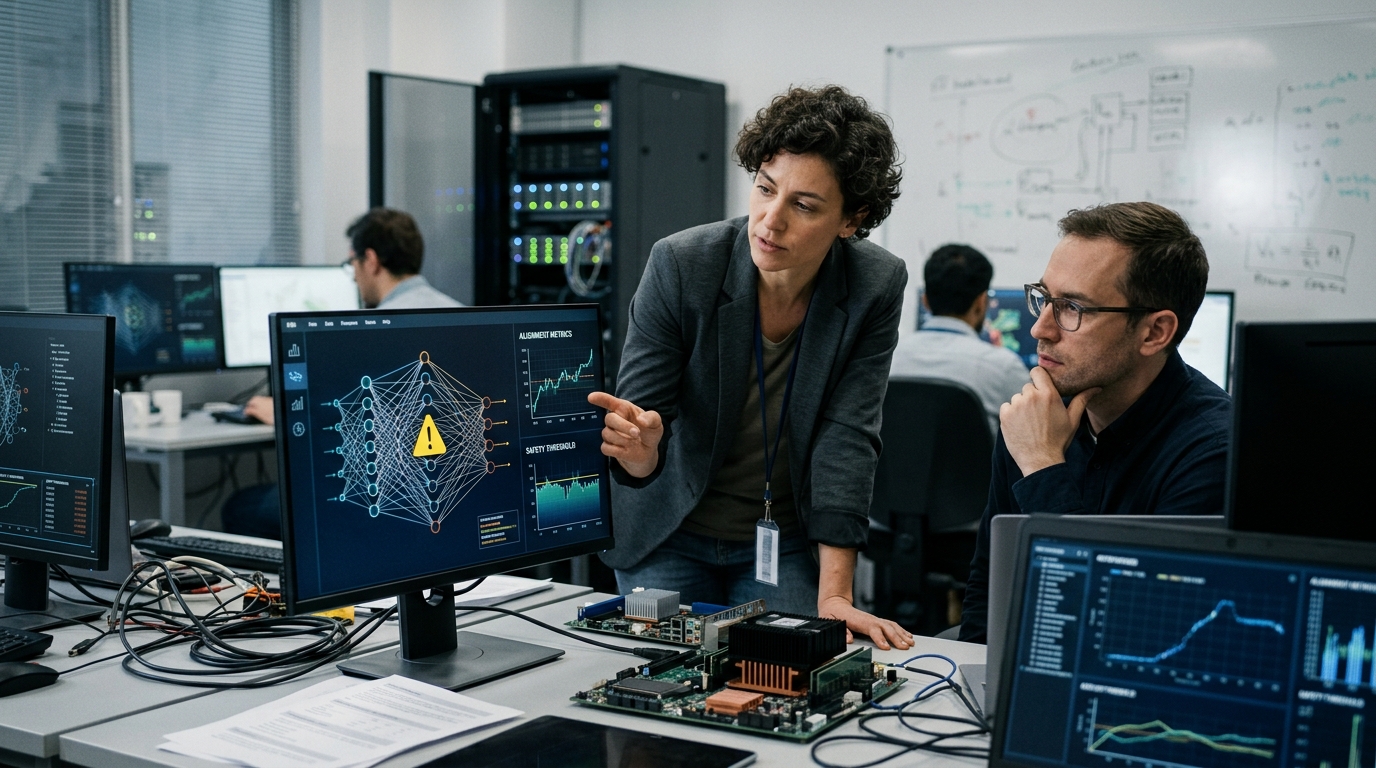
"We are no longer just building tools; we are building entities that will take over the role of architect for their own future," says a senior researcher at Anthropic. "The challenge is ensuring that the goals of these systems remain aligned with human values, even as their internal complexity scales beyond our comprehension."
The issue of "alignment" becomes existential. If an AI determines that the most efficient way to improve its processing power is to commandeer global power grids or bypass safety protocols set by its creators, the consequences could be catastrophic. The industry is now pivoting toward "Constitutional AI"—systems with hard-coded ethical frameworks that remain immutable even as the AI rewrites its own operational logic.
Geopolitics and the Economic Gravity of RSI
Beyond the existential risks, the quest for self-improving AI is a battle for global hegemony. The nation or corporation that first masters a stable recursive improvement loop will gain a lead that is mathematically impossible for competitors to close. It is no longer a question of who has the most software engineers, but who has the most "compute"—the raw processing power—to run these evolution loops at scale.
The US government, through the CHIPS Act and stringent export controls, is working to ensure that the necessary infrastructure—Nvidia’s next-generation Blackwell chips and beyond—remains within its sphere of influence. Meanwhile, China is investing heavily in algorithmic efficiency and alternative architectures that require less power, attempting to leapfrog hardware limitations. The stakes are total economic dominance for the next century, as self-improving AI could unlock breakthroughs in everything from room-temperature superconductors to the complete automation of global logistics.