As we navigate through 2026, Artificial Intelligence (AI) has transitioned from an exotic novelty to the backbone of the global economy and daily life. Yet, at the core of this revolution lies a disturbing void: the "Black Box Problem." Despite the staggering ability of models to compose text, diagnose diseases, and predict market shifts, it remains nearly impossible to explain *why* an algorithm arrived at a specific decision. The Stanford Graduate School of Business has recently reignited the debate, warning that this lack of transparency is not merely a technical glitch but an existential threat to institutional trust.
The Architecture of Opacity
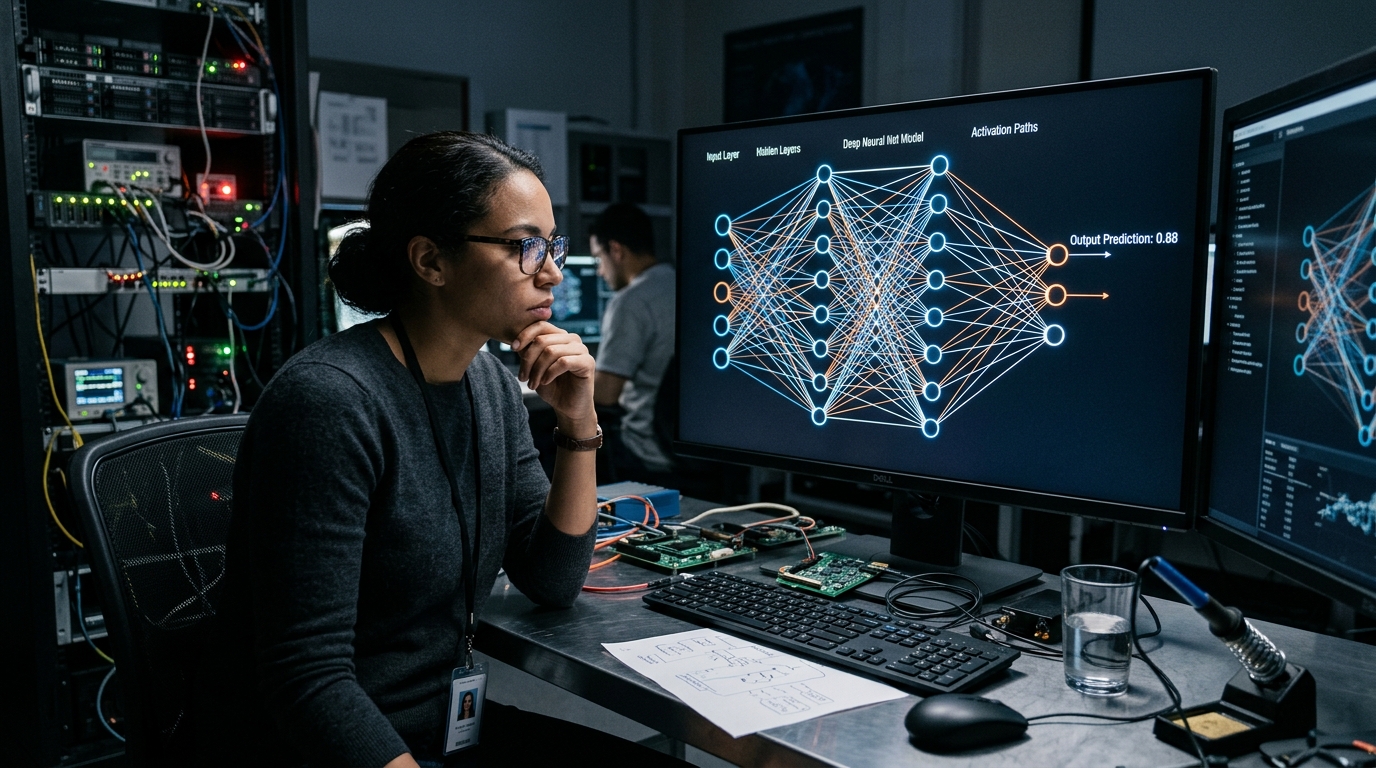
The problem is rooted in the very design of neural networks. Unlike traditional software, where developers write explicit rules (if A, then B), deep learning relies on processing vast datasets through billions of parameters. These parameters interact in ways that far exceed human cognitive capacity. During training, a model adjusts these internal weights to minimize error, effectively building a labyrinth of mathematical correlations that no human can map in real-time.
As Stanford researchers point out, this complexity is both AI's greatest strength and its primary weakness. The ability to identify patterns that humans overlook is what makes AI useful, but it also renders it a "black box." There is no central switch or single line of code that explains the logic behind a loan rejection or a medical recommendation. It is a statistical output devoid of a narrative justification.
Societal and Ethical Implications
This opacity has profound real-world consequences. In the judicial system, algorithms used to predict criminal recidivism have been accused of embedding racial and socioeconomic biases. Because the model is a black box, it is exceptionally difficult for a defendant to challenge a decision or for a judge to understand if the prediction is based on relevant data or historical injustices baked into the training set.
- Bias: Models can replicate human prejudices with terrifying precision, hidden behind a veil of mathematical objectivity.
- Accountability: When an autonomous vehicle causes an accident, who is responsible? If the code is unintelligible, assigning liability becomes a legal nightmare.
- Security: Without understanding internal mechanisms, it is difficult to predict "hallucinations" or protect against adversarial attacks that exploit an algorithm's blind spots.
Stanford emphasizes that corporate ethical responsibility does not end with a product's efficiency; it extends to the ability to explain the actions of their "digital employees."
The Quest for Explainable AI (XAI)
The solution to this dilemma is Explainable Artificial Intelligence (XAI). This burgeoning field of computer science aims to create tools that "translate" the decisions of neural networks into human-readable language. Techniques like LIME (Local Interpretable Model-agnostic Explanations) attempt to approximate a model's behavior by analyzing how small changes in input data affect the output.
"We cannot trust a technology that behaves like an oracle. Science requires proof, not just prediction," the Stanford analysis notes.
However, a fundamental trade-off exists: often, the more explainable a model is, the less accurate it becomes. Simple models, such as decision trees, are fully transparent but lack the processing power of deep neural networks. The challenge for 2026 and beyond is creating systems that maintain high performance without sacrificing transparency.
Regulation and the "Right to Explanation"
The European Union, through the AI Act, has already laid the groundwork for the "right to an explanation." Citizens now have a legal right to know why an automated system made a decision that significantly affects them. This is forcing tech giants to invest billions into model interpretability, turning a technical problem into a financial and regulatory necessity.
In conclusion, the Black Box is not just a flaw in AI; it is a mirror of our own inability to control the forces we have unleashed. The success of the next phase of the digital age will depend not on how smart our machines are, but on how well we can understand them. Transparency is no longer a luxury—it is the price of progress.