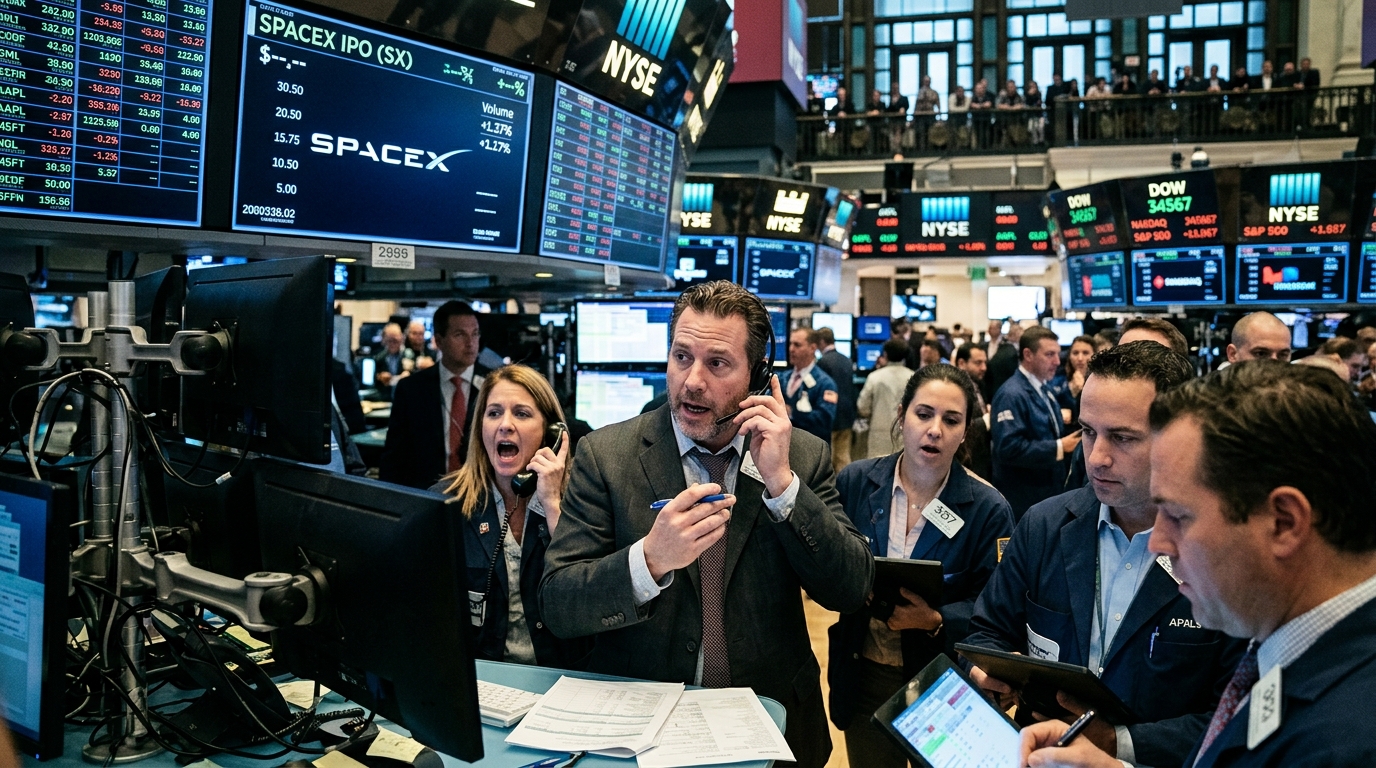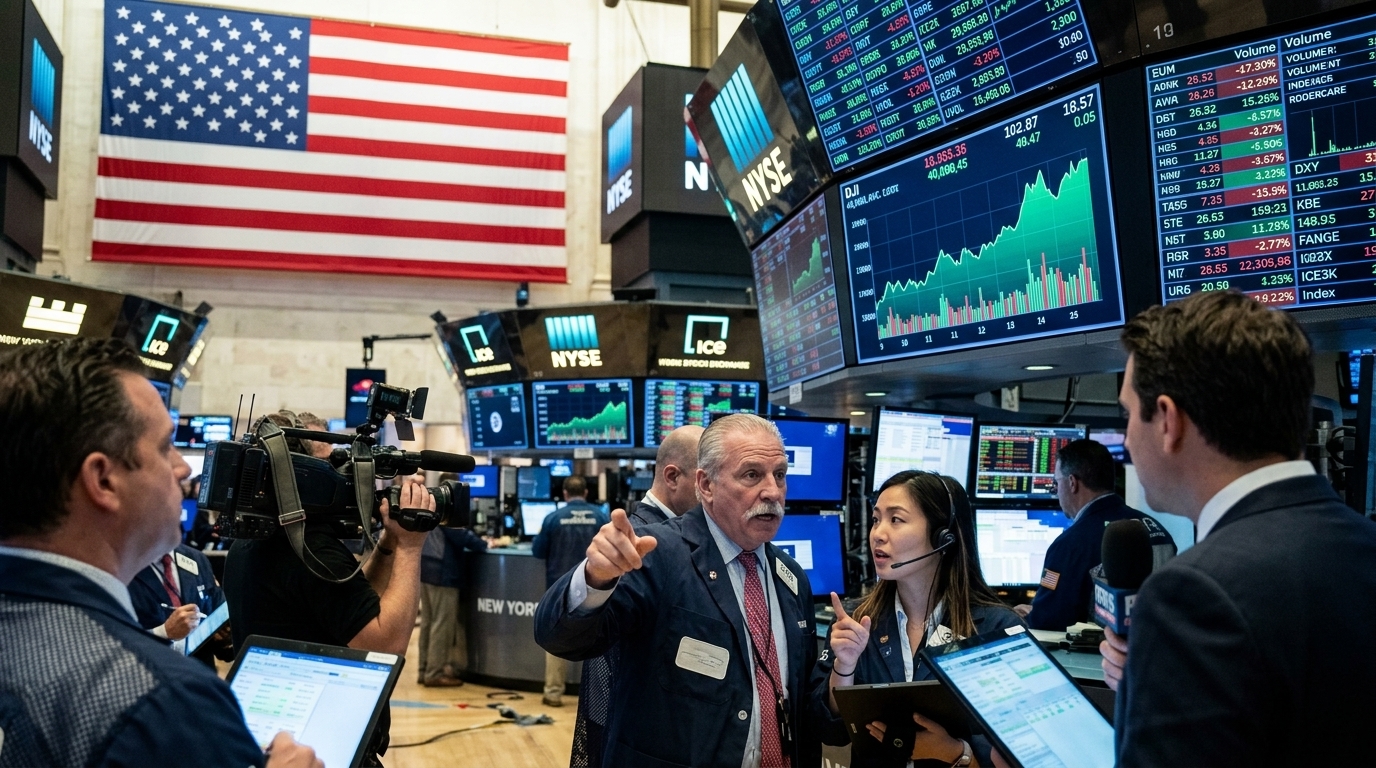
Wall Street is witnessing one of the most compelling periods in its modern history, as the convergence of a technological revolution and geopolitical diplomacy creates an explosive cocktail for growth. During the latest session, all three major indices—the S&P 500, Nasdaq, and Dow Jones—shattered previous records, confirming that investor confidence remains unshaken despite the challenges of recent years. The driving force behind this euphoria is none other than Artificial Intelligence (AI), which has transitioned from a theoretical promise into a tangible profit engine, coupled with encouraging signs of de-escalation between the West and Iran.
The AI Dominance: From Hype to Profitability
For many analysts, 2026 marks the year of AI's "maturation." If 2023 and 2024 were years of excitement and speculation, the current year demonstrates the technology's ability to transform corporate structures and expand profit margins. Semiconductor giants, with Nvidia maintaining its leadership position, continue to post results that exceed even the most optimistic forecasts. However, the rally is no longer confined to chipmakers. We are now seeing a diffusion of value across the entire ecosystem: from cloud computing and cybersecurity firms to traditional enterprises integrating AI to optimize their supply chains.
The market seems to have priced in the reality that AI is not a bubble akin to the dot-com era, but a structural shift in the global economy. Investments in data centers have reached record levels, with Big Tech companies committing hundreds of billions of dollars to the infrastructure of the future. This capital expenditure acts as a powerful multiplier for the U.S. economy, creating high-skilled jobs and boosting productivity in sectors that had remained stagnant for decades. The integration of generative AI into enterprise software is now showing measurable returns on investment, justifying the premium valuations seen on the Nasdaq.
The Geopolitical Factor: Hope for the Middle East
Alongside the technological triumph, Wall Street is drawing strength from the diplomatic arena. Recent reports of potential de-escalation in tensions with Iran have acted as a catalyst for reduced volatility. Markets detest uncertainty, and the risk of a generalized conflict in the Middle East had been the "black cloud" hanging over the New York Stock Exchange for months. The prospect of a diplomatic breakthrough offers more than just humanitarian relief; it ensures the stability of energy prices, which is crucial for global trade.
The drop in oil prices following news of the talks provided a much-needed reprieve from inflationary pressures, allowing the Federal Reserve to maintain a more flexible stance regarding interest rates. Investors believe that if the geopolitical chessboard stabilizes, the "soft landing" scenario for the U.S. economy is not just possible, but the most likely outcome. Lower borrowing costs, combined with technological growth, create the ideal environment for further equity gains. The reduction in the geopolitical risk premium has allowed risk-on sentiment to return to the floors of the NYSE and CBOE.
Investor Psychology and the Path Ahead
The shift in market psychology is striking. While a year ago there was intense fear of a recession, today "FOMO" (Fear Of Missing Out) dominates the narrative. Institutional investors are aggressively positioning themselves in growth stocks, while retail investors are returning in force, pushing trading volumes to record levels. However, seasoned analysts warn of the need for caution. Extreme optimism can often lead to overvaluations that are not supported by underlying fundamentals. The concentration of gains in a few tech giants remains a point of concern for those advocating for a more diversified market breath.
In conclusion, Wall Street stands at a historic crossroads. Artificial Intelligence provides the technological foundation for a new era of prosperity, while diplomacy seeks to secure the peaceful environment necessary for sustained growth. Whether these records will hold depends on the ability of corporations to continue innovating and the capacity of governments to avoid the pitfalls of conflict. For now, the Wall Street bull is charging ahead, fueled by silicon chips and the promise of peace.