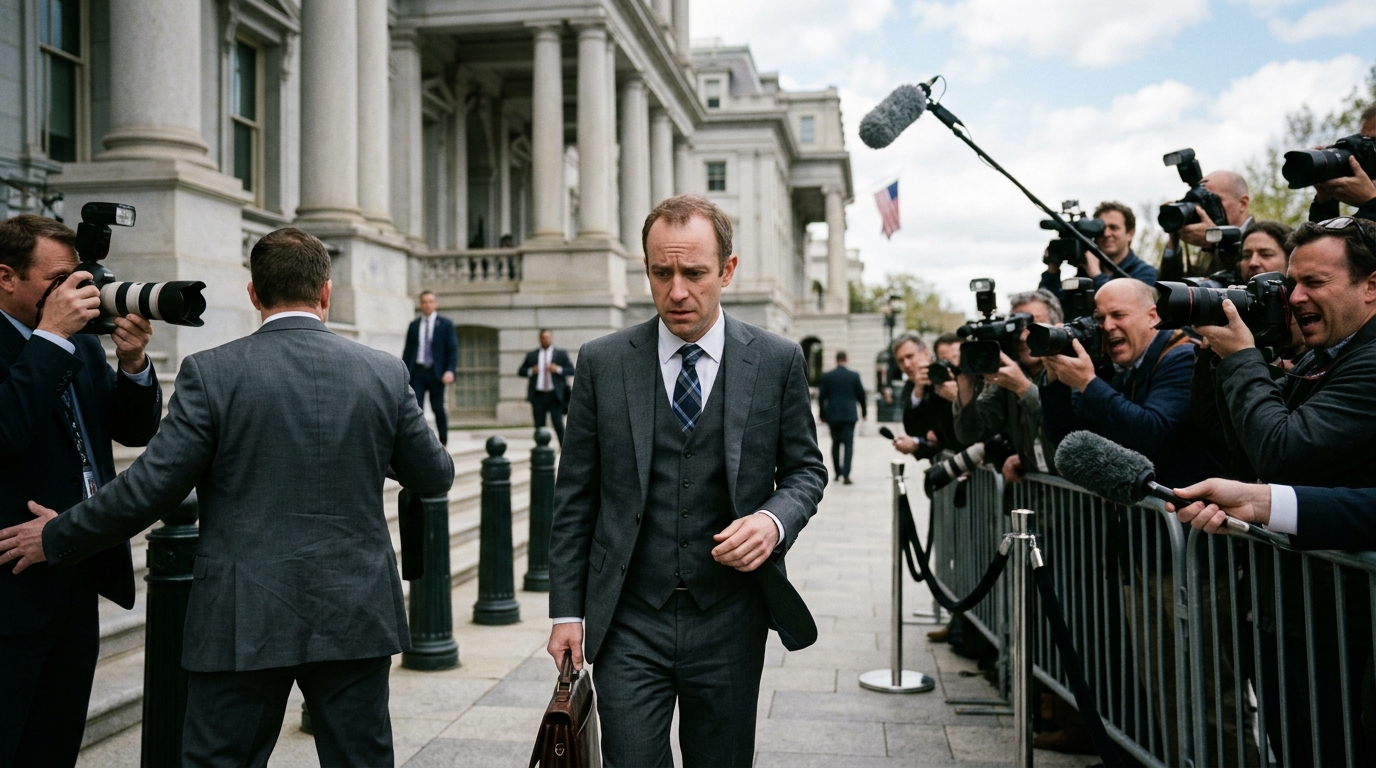
In a development that has sent ripples through the corridors of power in Washington, a newly appointed White House AI official was forced to resign just four days after taking office. The news, first broken by The Washington Post, illuminates the intense internal friction and vetting failures plaguing the current administration in a sector deemed vital to United States national security.
The speed of the departure suggests a profound misalignment between the White House’s political priorities and the official's background, which appears to have been insufficiently scrutinized prior to the appointment. In an era where Artificial Intelligence is not merely a technological tool but a primary theater of geopolitical competition, such administrative lapses are interpreted as signs of weakness and lack of coordination.
The Anatomy of a Vetting Failure
The appointment was intended to bolster the team overseeing the implementation of the landmark Executive Order on Safe, Secure, and Trustworthy Artificial Intelligence. However, almost immediately following the announcement, reports began to surface regarding the official's past statements or activities that were deemed incompatible with the administration's stance. While the White House has avoided providing specific details for the dismissal, sources close to the administration cite "issues that arose during the supplemental screening process."
This case is not an isolated incident but reflects a broader challenge in finding personnel who possess both the high-level technical expertise and the "clean" political profile required for such high-visibility roles. The AI talent pool is dominated by individuals often hailing from the private sector or academia, environments where discourse is traditionally more candid and less filtered by the demands of statecraft and diplomacy.
The Stakes of Vetting in a Polarized Era
In today's hyper-polarized political environment, every appointment is subjected to intense scrutiny not just by security agencies, but by partisan actors on social media. The failure to anticipate these reactions indicates an underestimation of the opposition’s reach and public sentiment. AI is a subject that evokes strong emotions, ranging from fears of job displacement to concerns over digital surveillance and algorithmic bias.
Furthermore, this removal creates a leadership vacuum at a critical juncture. With global adversaries investing billions into their own AI models, the U.S. cannot afford delays in policy formulation due to internal organizational hurdles. AI governance requires stability, continuity, and, above all, figures who can command trust from both the public and the global markets.
Implications for National AI Strategy
The official's departure raises questions about the administration's ability to fulfill its ambitious promises for technology regulation. The 2023 Executive Order set strict deadlines, many of which require constant oversight by specialized staff. Without the right people at the helm, there is a tangible risk that regulations will become unenforceable or rendered obsolete by the sheer pace of technological advancement.
- A lack of leadership can lead to inconsistency in the enforcement of safety standards across federal agencies.
- Relationships with Silicon Valley tech giants may be strained as companies seek clear and stable regulatory signals.
- International cooperation to establish global ethical norms for AI requires a strong and consistent American voice.
In conclusion, this incident serves as a stark lesson in the necessity of more meticulous selection processes. In a world moving at the speed of algorithms, Washington’s bureaucracy must adapt, ensuring that the individuals tasked with taming Artificial Intelligence are the most qualified for the job—both in terms of technical prowess and political viability. The four-day tenure of this official will likely be remembered as a cautionary tale of how not to manage the most important technology of the 21st century.