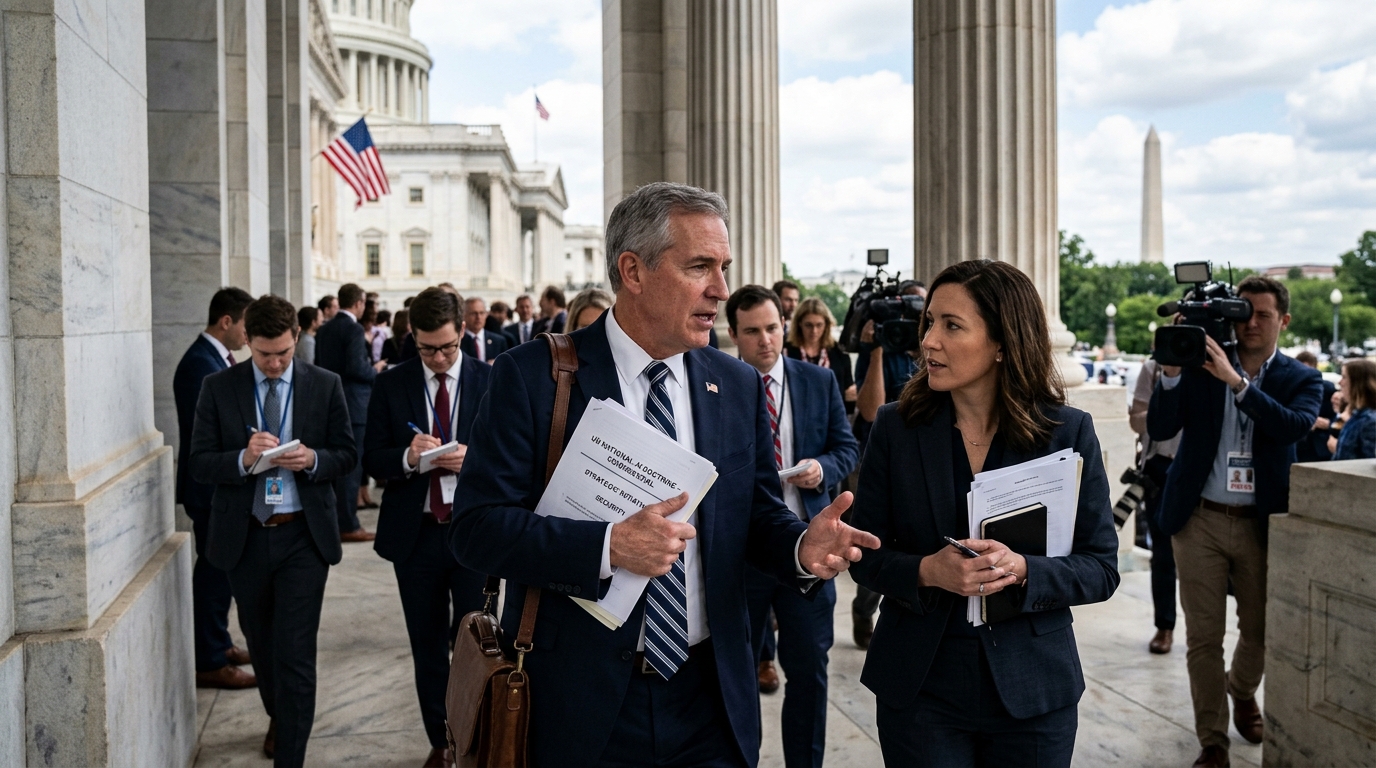
In an era where digital prowess translates directly into geopolitical hegemony, Washington has made a move that many analysts describe as the most significant state intervention in the tech market in decades. The new Executive Order on Artificial Intelligence, recently detailed, is not merely a set of guidelines but a roadmap for the nationalization—in a broad sense—of AI safety standards. This move reflects a growing realization that the unchecked development of frontier models could jeopardize national security, economic stability, and social cohesion.
The Architecture of Safety: Red-Teaming as a State Requirement
The core of the new order focuses on mandatory transparency. For the first time, companies developing AI models with computing power exceeding specific thresholds are required to share their safety test results—the so-called "red-teaming" process—with the government. These are simulated attacks or misuse scenarios designed to highlight a system's vulnerabilities. The invocation of the Defense Production Act underscores the gravity of the situation: AI is no longer treated as a commercial product but as a resource critical to national defense.
The establishment of the AI Safety Institute under the oversight of NIST (National Institute of Standards and Technology) serves as the institutional counterweight to the autonomy of tech giants. The Institute will set the benchmarks for what constitutes a "safe" model, stripping Silicon Valley of the privilege of self-regulation. This shift of power from the private to the public sector has sparked intense reactions, with critics warning of bureaucratic suffocation that could hand the lead to China.
Market Impact and the Specter of Monopoly
One of the most intriguing aspects of the order is the attempt to foster competition. The White House acknowledges that the astronomical cost of training large language models creates natural monopolies. The order includes provisions to support small and medium-sized enterprises (SMEs) and researchers through access to federal computing resources. However, there is a risk that stringent compliance requirements may act as "barriers to entry." Large incumbents like Microsoft, Google, and Meta possess the legal and financial resources to navigate the bureaucracy, while a startup might buckle under the weight of federal oversight.
- Mandatory reporting for models using more than 10^26 floating-point operations (FLOPs).
- Protection of workers from automation-driven displacement and algorithmic surveillance.
- Tightening rules for AI use in immigration, sentencing, and judicial processes.
- Attracting global talent through streamlined Visa processes for AI experts.
Geopolitics and the Clash of Standards
On the international stage, the executive order is an attempt by the United States to lead the global conversation on AI governance. While the European Union has adopted the AI Act—a comprehensive legislative framework—the U.S. is choosing a more flexible yet equally interventionist approach through executive action. The goal is clear: to establish a "Western standard" that isolates the technological approaches of authoritarian regimes. Washington fears that if it does not set the rules, Beijing will, with potentially catastrophic consequences for human rights and global security.
In conclusion, the new executive order marks the end of the "Wild West" era for Artificial Intelligence. The state is returning as a regulator, protector, and primary customer. The challenge for the coming years will be maintaining the delicate balance between the necessity for safety and the imperative of innovation, in a world moving at the speed of an algorithm.