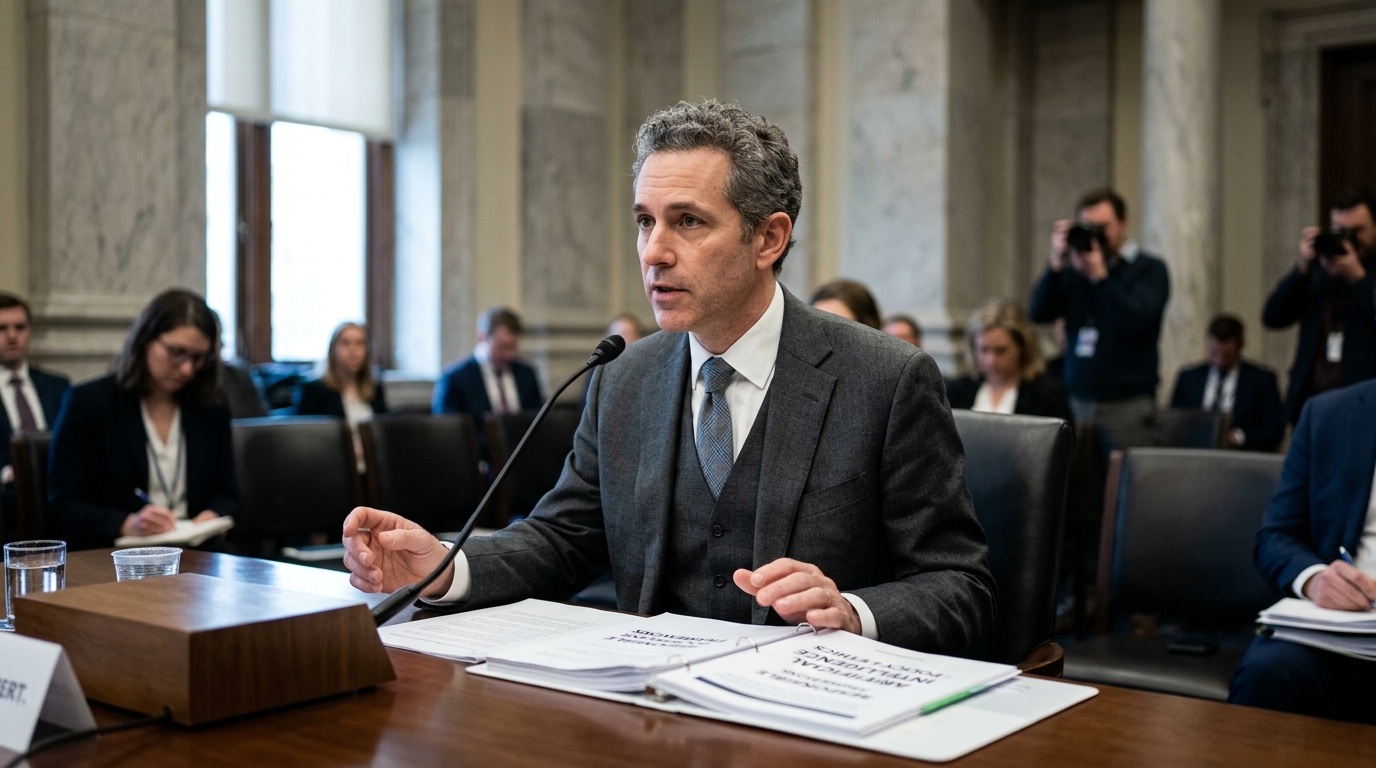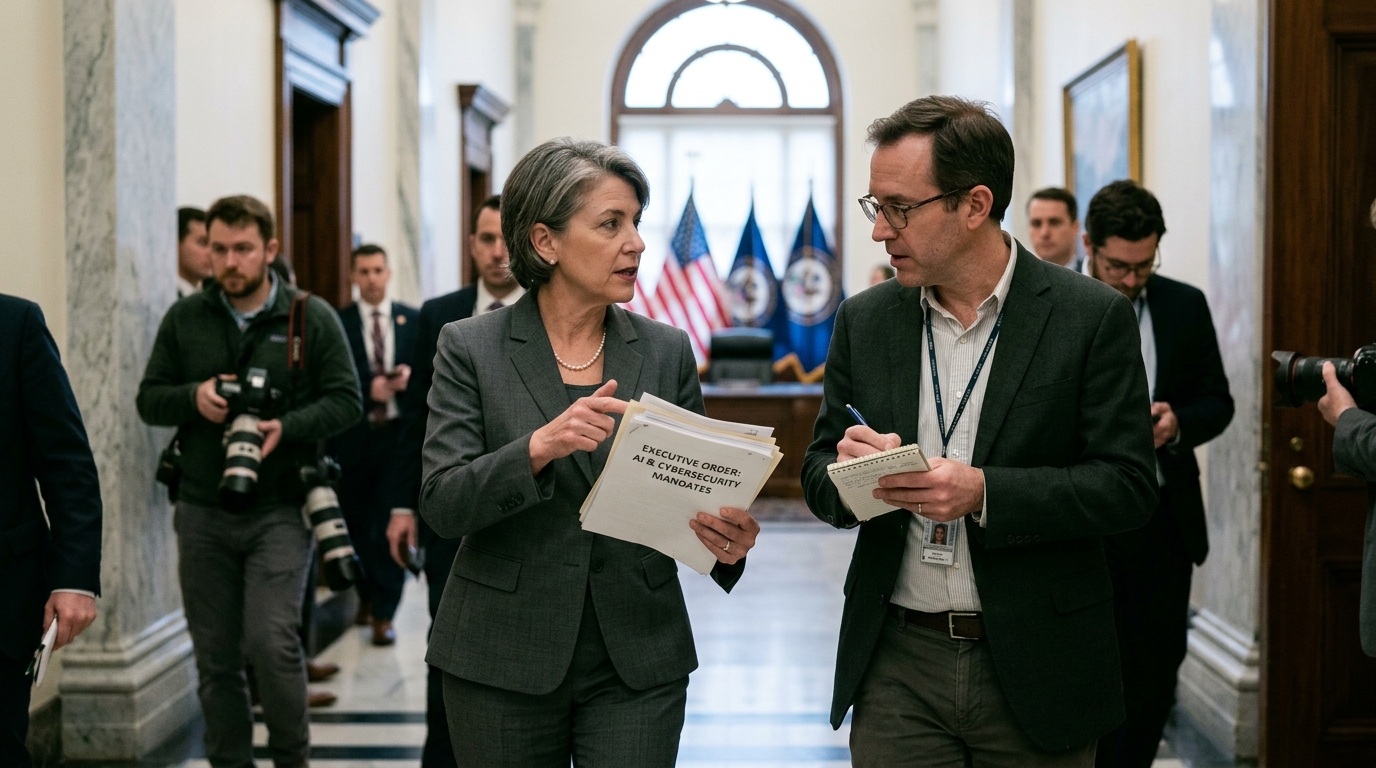
In a pivotal moment for global technological governance, the United States is moving forward with the implementation of more stringent cybersecurity directives, a direct consequence of the landmark Executive Order on Artificial Intelligence. This development, extensively detailed by the Federal News Network, represents more than just a bureaucratic shift; it is a structural reimagining of how the state and private entities perceive digital defense in the era of Large Language Models (LLMs) and autonomous decision-making.
From Voluntary Pledges to Mandatory Directives
For years, the relationship between Silicon Valley and Washington D.C. relied on a framework of "goodwill." Tech giants promised to self-regulate, while the government provided non-binding guidelines. However, the sheer velocity of Generative AI's evolution has rendered this model obsolete. The new directives stemming from the Executive Order signal the end of this grace period. Now, federal agencies, under the guidance of CISA (Cybersecurity and Infrastructure Security Agency) and NIST (National Institute of Standards and Technology), are enforcing specific audit protocols.
One of the most significant pillars is the mandatory "red-teaming"—simulating sophisticated cyberattacks—before powerful models are released to the public or integrated into federal systems. Companies are no longer asked to merely state that their products are safe; they must prove they have withstood exhaustive testing by independent third parties. This creates a new industry standard where security is baked into the software development lifecycle (SecDevOps) rather than being an afterthought.
Securing Critical Infrastructure
The U.S. government's primary concern lies within critical infrastructure: power grids, water systems, financial institutions, and telecommunications. Integrating AI into these systems offers immense efficiency gains but simultaneously expands the attack surface for state and non-state actors. The new mandates require service providers to maintain a "Software Bill of Materials" (SBOM) for the AI tools they employ. This is essentially an "ingredients list" that allows security analysts to know exactly which data and algorithms comprise a system, enabling faster vulnerability detection.
"Cybersecurity in the age of AI is no longer a technical issue, but a fundamental parameter of national sovereignty," industry analysts suggest.
Furthermore, there is a heavy emphasis on protecting against "adversarial machine learning," where attackers attempt to manipulate a model's training data to force incorrect conclusions or bypass security safeguards. NIST’s updated guidelines provide a clear framework for identifying and mitigating these sophisticated threats, which often go undetected by traditional antivirus software.
The Geopolitical Dimension and International Alignment
While these directives directly govern the U.S. federal government and its contractors, their impact is global. Given the scale of the American market and the dominance of U.S. tech firms, these standards tend to become de facto global norms. The European Union, through its AI Act, has already laid its own foundations, and we are now witnessing a concerted effort to align standards across the Atlantic. The need for common protocols is urgent, as cyber threats recognize no borders.
However, there is another side to this coin: the competition with China. Washington views AI security as a tool of geopolitical power. By restricting access to critical technologies and imposing rigorous standards, the U.S. seeks to maintain its technological edge while ensuring that AI developed in the West aligns with democratic values and principles of transparency. This "security-first" approach also serves as a defensive wall against foreign influence operations and industrial espionage facilitated by AI.
Implementation Challenges for the Private Sector
Despite the strategic necessity, implementing these directives is fraught with challenges. Small and medium-sized tech enterprises have voiced concerns regarding the cost of compliance. The requirements for continuous auditing, certifications, and detailed documentation could potentially stifle innovation, favoring large incumbents who possess the vast resources needed to navigate the bureaucratic maze. Furthermore, there is a critical shortage of specialized talent. The labor market is currently lacking professionals who possess both deep cybersecurity expertise and a sophisticated understanding of neural network architectures.
In conclusion, the new directives emerging from the Executive Order represent a bold step toward organizing a previously chaotic landscape. Their success will be judged by the administration's ability to balance the absolute need for security with the imperative for continuous technological progress. As of June 2026, the global community is entering a phase of maturity where Artificial Intelligence ceases to be a "mysterious black box" and becomes a controlled, accountable tool at the service of society.