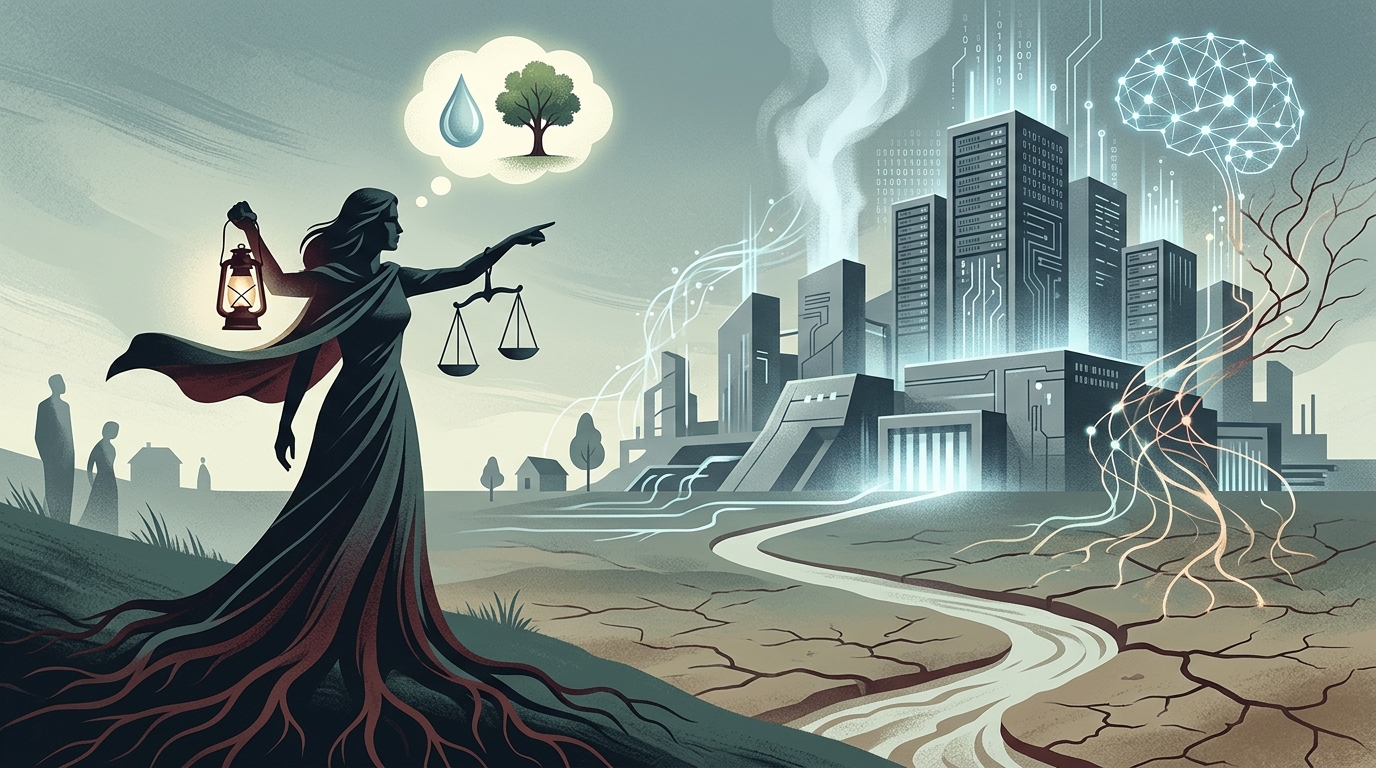
The promise of Artificial Intelligence (AI) has always been one of absolute meritocracy. In the world of algorithms, productivity is supposed to be measurable, neutral, and free from the human biases that have plagued the labor market for centuries. However, a recent study—highlighted by Fortune—shatters this utopia. The findings are revealing: when a woman uses AI to complete a task, she is judged far more harshly than a male colleague doing the exact same thing.
The Efficiency Paradox
The research, which examined how managers and peers perceive the use of tools like ChatGPT or Claude in daily work, shows a deeply rooted double standard. While men who adopt AI are often characterized as "innovative," "forward-thinking," and "strategic," women doing the same are met with suspicion. For women, the use of technology is frequently interpreted by observers as a "lack of effort" or an "inability to produce original thought."
This phenomenon is not accidental. It is inextricably linked to social stereotypes that expect women to provide the "human touch" and "care" in their work. When a woman delegates part of her work to a machine, it is perceived as a betrayal of this expectation of emotional and manual involvement. Conversely, male identity in the workplace has historically been linked to the mastery of tools. Thus, a man using AI is seen as "taming" the technology, while a woman is seen as being "replaced" by it.
The Psychology of Bias
Researchers found that negative judgment toward women using AI directly impacts performance reviews. In experimental scenarios, participants rated the outcome of a task lower when they knew a woman had used AI, compared to the same task being performed by a man with the help of the same tool. This "AI penalty" for women can have devastating career consequences, from wage stagnation to exclusion from leadership positions.
- Women are judged more on the process than the result.
- AI usage is seen as a "shortcut" for women, but "optimization" for men.
- There is an unconscious expectation that women must work "harder" to prove their worth.
"Technology is neutral, but the social context in which it operates remains deeply biased. AI does not fix inequality; it often crystallizes it," the study notes.
Risks of Widening the Gap
If this trend continues, AI, instead of being the great equalizer, will act as a new mechanism of exclusion. Women may find themselves in a tragic dilemma: either avoid AI to escape negative judgment, thus falling behind in productivity, or use it and suffer social and professional devaluation. This "digital glass ceiling" is more dangerous than the traditional one because it hides behind the cloak of technological progress.
To address this issue, businesses must establish clear evaluation criteria that focus on the final product rather than the method of tool usage. Training executives on unconscious bias is more necessary than ever. Artificial intelligence can automate tasks, but it cannot—yet—automate justice. That remains a purely human responsibility.