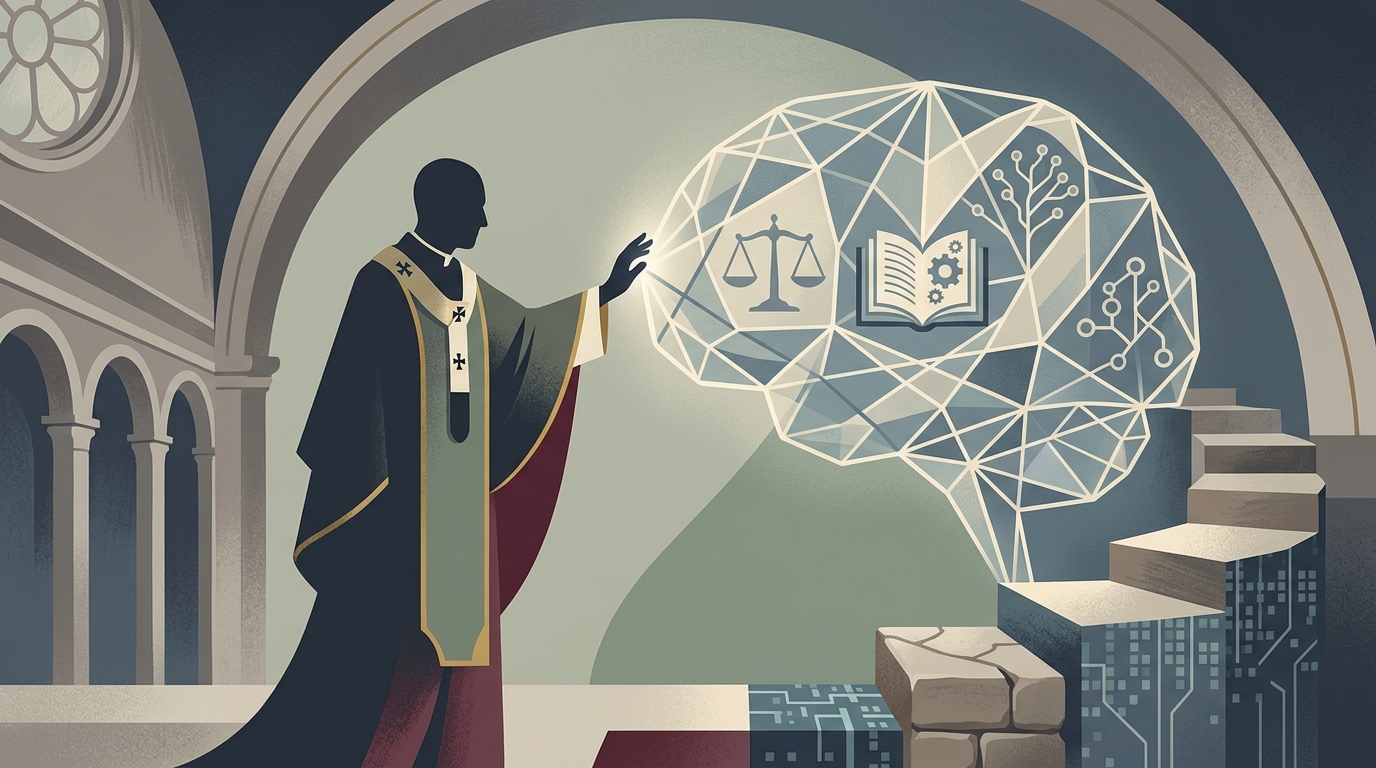
In the heart of the Vatican, beneath frescoes celebrating human creativity and the divine, a meeting took place that only a few years ago would have seemed like science fiction. The presentation of the new Papal Encyclical on Artificial Intelligence was not merely a theological statement, but a strategic alliance. The invitation of Chris Olah, co-founder of Anthropic, to stand alongside cardinals, underscores a critical shift: the Catholic Church is now seeking technical answers to ethical questions it has been posing for centuries.
Ethics as Architecture: The Anthropic Model
But why Anthropic? In a world where OpenAI and Google dominate the headlines, the choice of Olah’s company was far from accidental. Anthropic has built its reputation around the concept of "Constitutional AI." This is a method where the model is trained to follow a specific set of principles—a "constitution"—rather than relying solely on human feedback, which can be inconsistent or biased.
This approach resonates deeply with Church traditions. The Vatican, through the doctrine of "Natural Law," has long argued that there are universal moral truths that should govern human behavior. Anthropic’s attempt to encode ethics directly into the machine's "brain" is the technological equivalent of this theological pursuit. Olah, renowned for his work on "interpretability," offers the Church something Silicon Valley often ignores: the ability to peer into the "black box" of algorithms and understand the *why* behind a decision.
The Challenge of Digital Feudalism
Pope Francis’s Encyclical is not limited to abstract concepts. It offers a scathing critique of what it calls the "technocratic paradigm," a state where technology serves only profit and power, leaving the vulnerable on the margins. Anthropic’s presence serves as a bridge toward "responsible capitalism." Structured as a Benefit Corporation, the company is legally committed to balancing profits with social good.
The Pope warns that without moral guidance, AI could exacerbate inequalities, turning citizens into mere data to be exploited. The alliance with Anthropic sends a message to other Silicon Valley players: innovation without accountability is a form of "digital feudalism." The Church, with its immense influence in the Global South, wants to ensure that AI does not become another tool of colonialism but a means for promoting human dignity.
The "Rome Call" and Global Governance
This event is a continuation of the "Rome Call for AI Ethics," an initiative launched in 2020 that has already garnered signatures from giants like Microsoft and IBM, as well as representatives from Islam and Judaism. Integrating Anthropic into this framework adds a new layer of technical validity. It is no longer just about well-wishing; it is a discussion about technical standards.
Critics, of course, wonder: Should a religious authority have a say in code? The Vatican's answer is categorical. Since code affects the human soul and social cohesion, it is a field for moral intervention. Anthropic, for its part, gains a moral legitimacy that no marketing campaign could buy. In an era where trust in technology is wavering, the Pope’s "blessing" is a powerful asset.
Conclusion: A New Anthropology
The meeting between Olah and the Pope symbolizes the need for a "new anthropology" in the digital age. As machines begin to simulate thought, creativity, and even empathy, the question of "what it means to be human" acquires a sense of urgency. The Vatican is not trying to halt progress, but to "humanize" it through the lens of universality and care for one's neighbor. Anthropic provides the tools, and the Church provides the vision. Whether this collaboration can successfully rein in market forces remains to be seen, but the beginning was made in one of the world's most iconic rooms.