
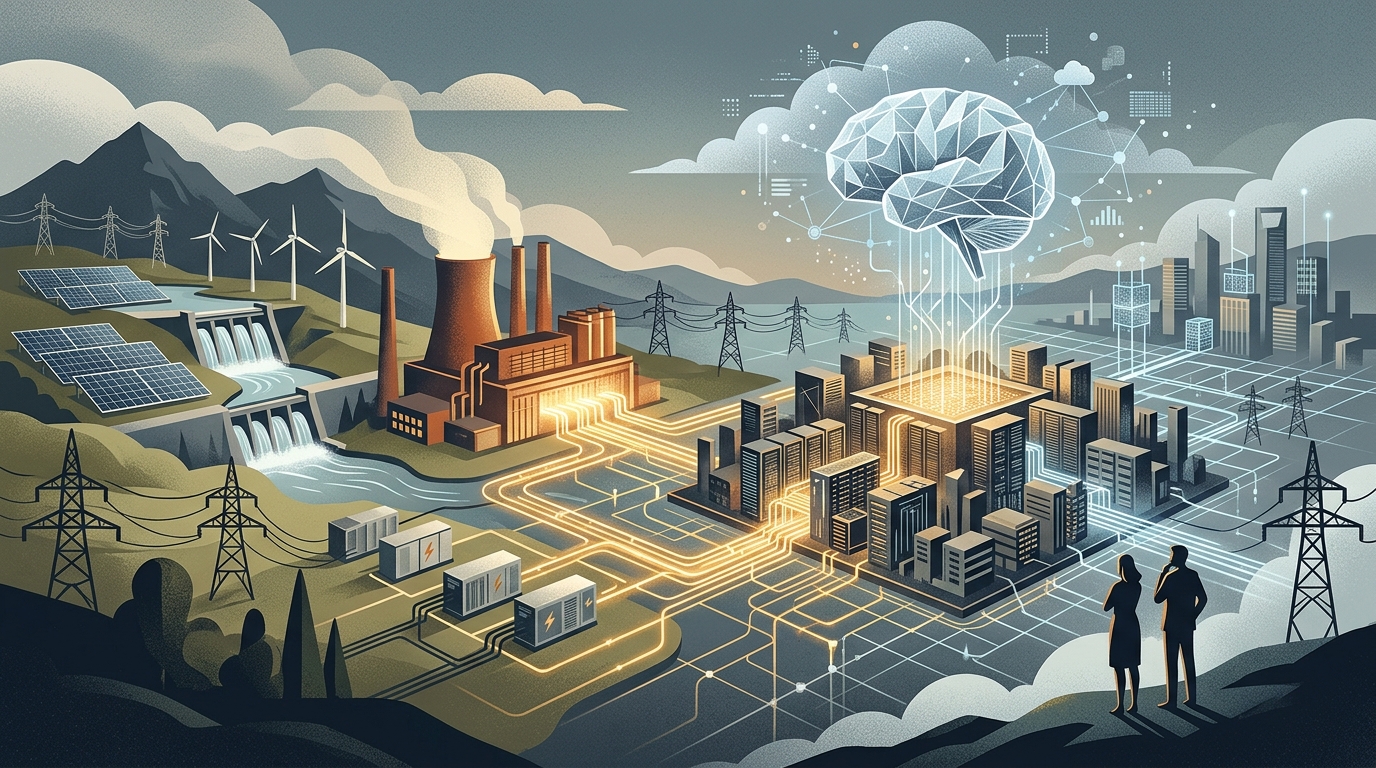
As we navigate the mid-point of 2026, the global markets are witnessing a profound structural shift. The initial 'AI hype'—characterized by speculative surges in software and crypto-proxies—is maturing into a rigorous 'Infrastructure Era.' This week's retreat of Bitcoin to the $62,000 level, coupled with a cooling of purely speculative AI trades, signals that investors are no longer satisfied with promises of future utility. They are looking for the physical foundations that make Artificial Intelligence possible: energy, data centers, and the grid.
The Energy-AI Nexus: Utilities as Growth Stocks
The narrative that utilities are 'boring' defensive plays has been thoroughly dismantled. In the current landscape, utility companies have emerged as the new tech titans. The sheer scale of the energy-first data center architecture is staggering, as evidenced by the recent $6.2 billion hydro and AI project in Lesotho. This is not merely an expansion of capacity; it is a total redesign of the energy-compute relationship. Alphabet’s $80 billion infrastructure gambit further underscores this hegemony, shifting focus from agentic AI software to the massive hardware and power requirements needed to sustain it.
"We are moving from an era of speculative capital to one of structural ROI. The market is finally pricing in the reality that there is no intelligence without massive, reliable power."
This transition is reflected in the $98 trillion surge in global wealth minted by the AI sector. However, the distribution of this wealth is increasingly favoring those who control the physical layer. The 'Great Software Rebound' we are observing is not a return to 2023-style speculation, but a recognition that software value is only unlocked when integrated with robust, energy-efficient infrastructure.
The Greek Strategic Pivot: Motor Oil and Quest Group
Closer to home, the Greek corporate landscape is demonstrating remarkable foresight in this energy-AI nexus. Motor Oil Group’s €4 billion strategic pivot toward the energy transition is a textbook example of how traditional industrial giants are reinventing themselves for the 2030 climate goals. By investing heavily in sustainable energy and circular economy projects, Motor Oil is positioning itself as a critical player in the regional energy supply chain that will power the Mediterranean's growing data center clusters.
Similarly, Quest Group’s emphasis on ESG strategy as a driver of long-term value highlights the evolving requirements of the digital era. For Greek enterprises, the message is clear: digital transformation and energy sustainability are two sides of the same coin. The 'Greater Riviera' economic geography is being redefined not just by tourism or development, but by sustainable business intelligence and the infrastructure that supports it. For investors, the 'Alpha' in the current market lies at the intersection of energy resilience and technological scalability.